Bromomethylcyclopropane → 8-(Cyclopropylmethyl)-1,4-dioxaspiro[4.5]decane-8-carbonitrile
Reaction equation

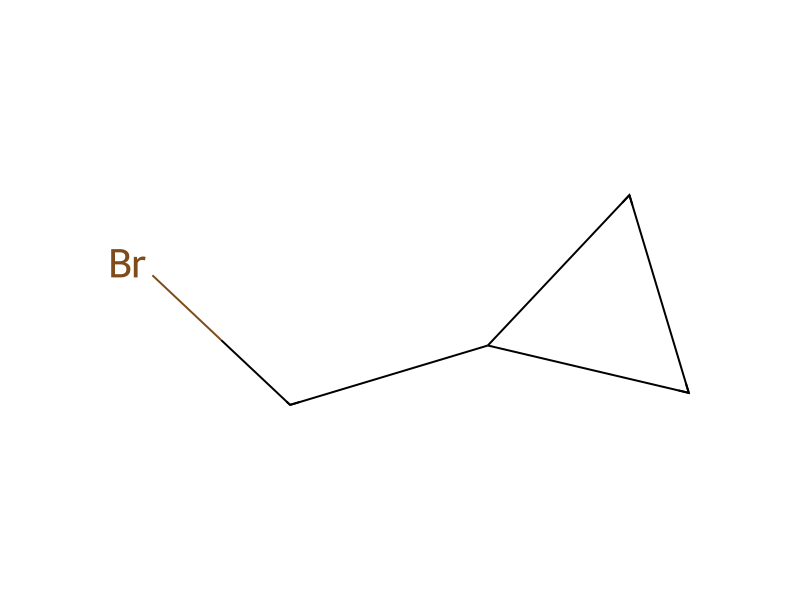
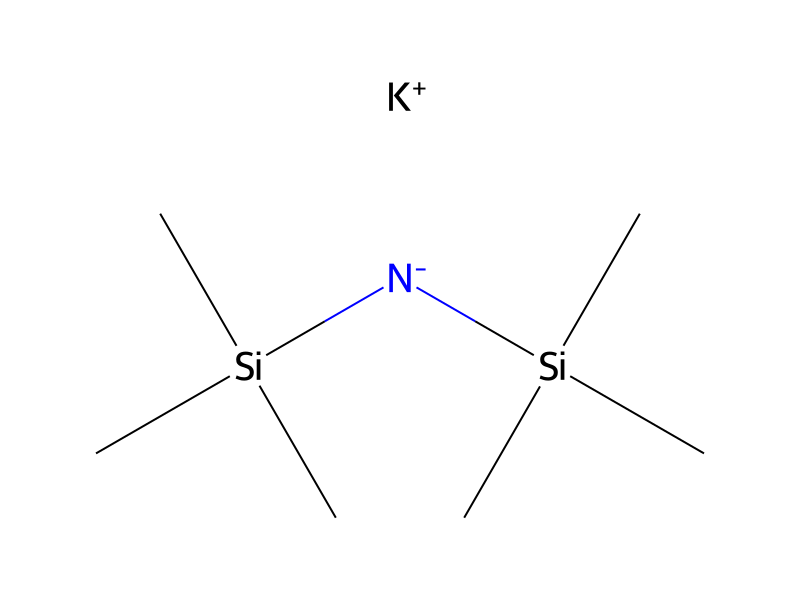
[O:1]1[C:5]2([CH2:10][CH2:9][CH:8]([C:11]#[N:12])[CH2:7][CH2:6]2)[O:4][CH2:3][CH2:2]1.Br[CH2:14][CH:15]1[CH2:17][CH2:16]1.C[Si]([N-][Si](C)(C)C)(C)C.[K+]>C1COCC1>[CH:15]1([CH2:14][C:8]2([C:11]#[N:12])[CH2:9][CH2:10][C:5]3([O:4][CH2:3][CH2:2][O:1]3)[CH2:6][CH2:7]2)[CH2:17][CH2:16]1Participants



Procedure
To a stirred solution of 1,4-dioxaspiro[4.5]decane-8-carbonitrile (20 g; 119.6136 mmol) and (bromomethyl)cyclopropane (17.76 g 12.6 ml; 131.57 mmol) in THF (100 ml) at −10° C. was added KHMDS (0.5M solution in toluene; 263.15 ml ; 131.57 mmol) dropwise and the solution allowed to warm to ambient temperature with stirring for 18 hours. The reaction was cooled in an ice bath and quenched with sat. ammonium chloride solution and the solvent evaporated. The residue was partitioned between EtOAc (300 ml) and water (100 ml adjusted to pH 4 with 1 N HCl). The organic phase was separated, dried over MgSO4, filtered and evaporated to give an orange oil. (21.0 g) 1H NMR δ (ppm)(CDCl3): 3.99-3.89 (4H, m), 2.08 (2H, d, J=13.5 Hz), 1.96-1.72 (9H, m), 0.96-0.82 (1H, m), 0.59-0.53 (2H, m), 0.17 (2H, q, J=5.1 Hz).
Workup
- temperatureThe reaction was cooled in an ice bath
- customquenched with sat. ammonium chloride solution
- customthe solvent evaporated
- customThe residue was partitioned between EtOAc (300 ml) and water (100 ml adjusted to pH 4 with 1 N HCl)
- customThe organic phase was separated
- dry with materialdried over MgSO4
- filtrationfiltered
- customevaporated
- customto give an orange oil
Sources & evidence
- ORD record
- ord-05a39fda985b4432897ad1ac6c3b4ceb
- Source dataset
- uspto-grants-2009_12
- Patent number
- US07626056B2
Reaction notes
Loading…