Bromide ion → 1-(2-Vinylphenyl)ethanone
Reaction equation

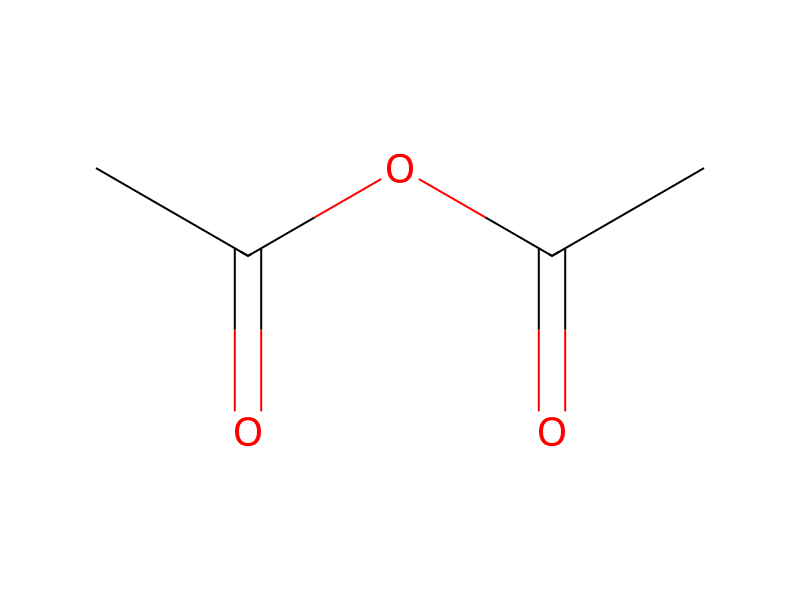
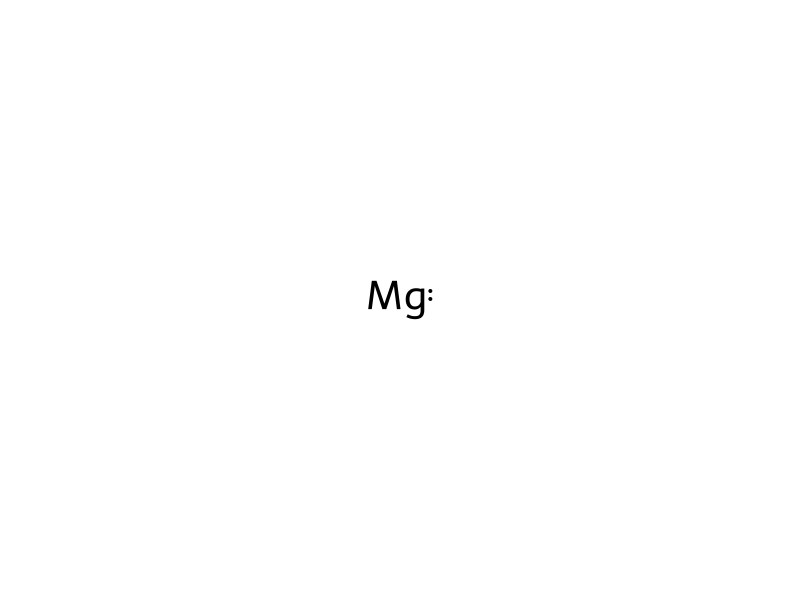
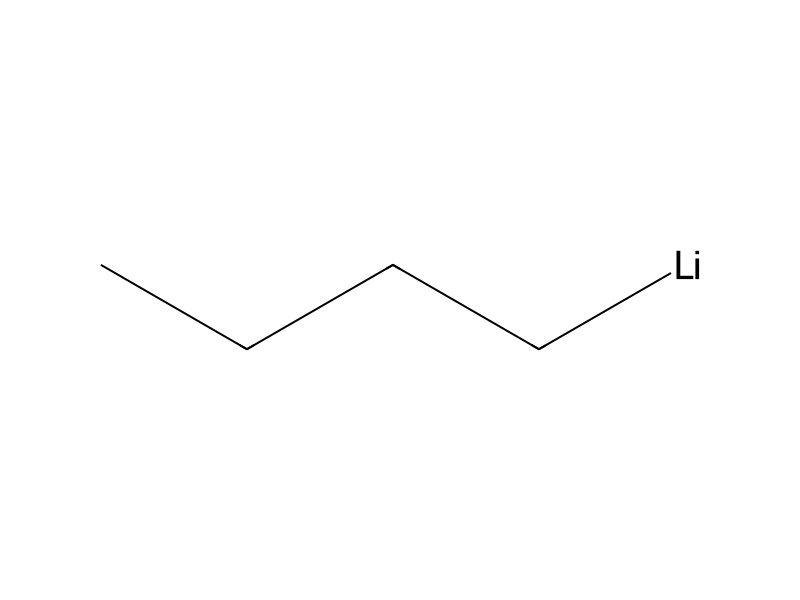
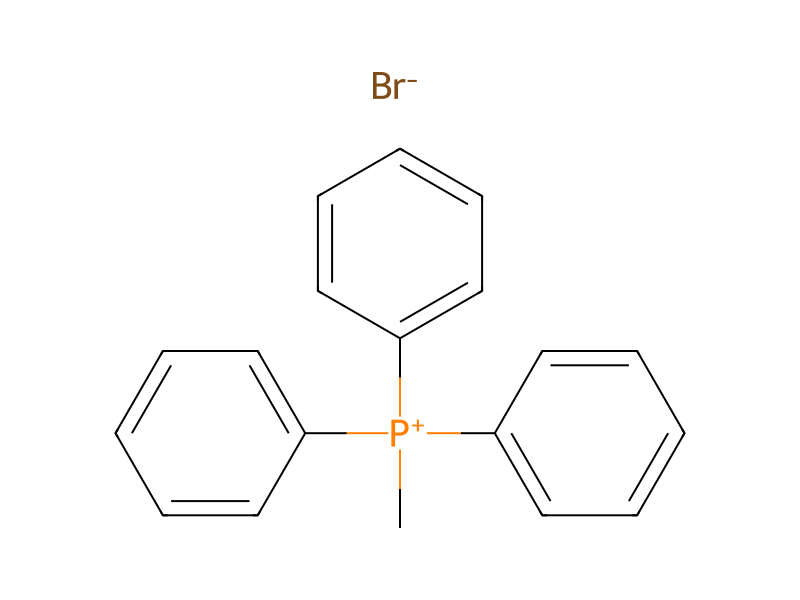
C([Li])CCC.BrC1C=CC=C[C:8]=1[CH:9]=[O:10].Br[C:16]1[CH:23]=[CH:22][CH:21]=[CH:20][C:17]=1[CH:18]=[CH2:19].[Mg].[Br-].C(OC(=O)C)(=O)C.C(=O)=O.C(O)(C)C>[Br-].C[P+](C1C=CC=CC=1)(C1C=CC=CC=1)C1C=CC=CC=1.C1COCC1>[CH:18]([C:17]1[CH:20]=[CH:21][CH:22]=[CH:23][C:16]=1[C:9](=[O:10])[CH3:8])=[CH2:19]Participants
Reactant 7




Product 1

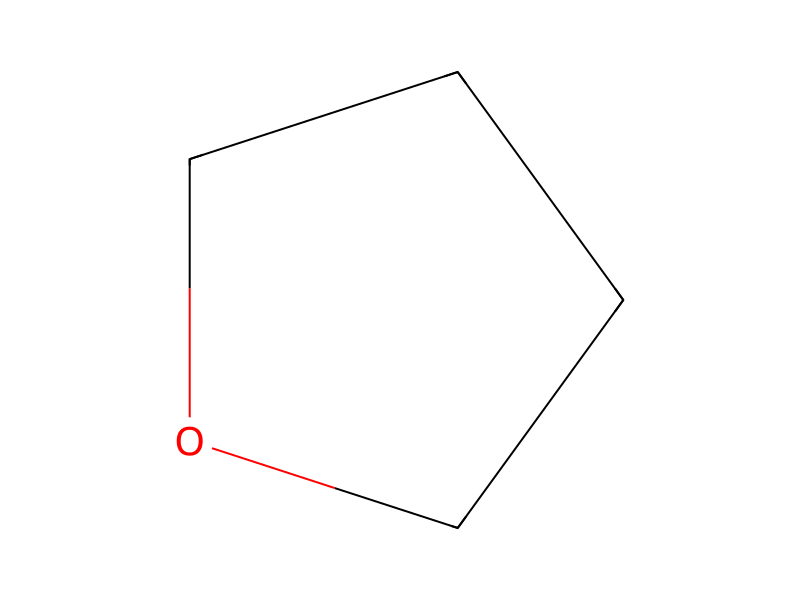
Reagents, catalysts & solvents 2
Procedure
Into a 3 necked 500 mL round bottom flask, equipped with a cooling condenser, a self equalizing addition funnel and a rubber septum, methyl triphenyl phosphonium bromide (54.5 g, 0.153 moles, Aldrich) was suspended in THF (120 mL). After flashing with nitrogen for 30 minutes, the flask was cooled to 0° C. n-Butyl lithium (61 mL, 2.5 M in hexane, 153 mmole) was added via a syringe. After stirring for 1.5 hours, a solution of 2-bromobenzaldehyde (25.0 g, 135.1 mmole) in THF (100 mL) was dripped into the flask slowly (2 hours). After stirred for 48 hours, the reaction mixture was quenched with brine (250 mL). The aqueous layer was extracted with toluene (100 mL×2). The toluene layer was diluted with hexane to precipitate triphenylphosphine oxide. After rotary evaporating off the solvent, the crude product was purified by column chromatography (silica gel 60-200 mesh), with 100% hexane as eluding solvent. First fraction, yield 11.5 g (41%). 8.8 Grams (48 mmole) of o-bromostyrene was used for the next reaction. Into a 3-necked round bottom flask fitted with condenser, self-equalizing funnel, a stopper and charged with magnesium (10 g, pre-activated), o-bromostyrene in 30 mL THF was added to cover Mg. After initiation of the reaction, the rest of bromide solution was added slowly and the mixture was refluxed for 1.5 hours. Into another 3-necked flask, acetic anhydride (10 g, 98 mmole) was dissolved in THF (30 mL) and the flask was cooled with dry ice/isopropanol. The Grignard reagent was transferred slowly (circa 1 hour) via a cannula needle and the mixture was stirred for 2.5 hours at −70° C. After allowing to warm to room temperature, the mixture was then quenched with aqueous ammonium chloride and extracted with ethyl acetate (100 mL×2). After washing with water, dried over sodium sulfate and removal of the solvent, yellow oil was obtained. Yield: 6.5 gram (93%). 1H-NMR (CDCl3, δ): 5.3 (d, 1H), 5.6 (d, 1H); 7.2 (q, 1H), 7.3 (t, 1H), 7.4 (t, 1H); 7.55 (d, 1H); 7.6 (d, 1H). 13C-NMR: 30, 116, 127, 128, 130, 132, 136, 137.5, 138, 201. Epoxidation using a method similar to that described above did not provide a clean product.
Workup
- customInto a 3 necked 500 mL round bottom flask, equipped with a cooling condenser
- additionaddition funnel
- additionwas added via a syringe
- customwas dripped into the flask slowly (2 hours)
- stirringAfter stirred for 48 hours
- customthe reaction mixture was quenched with brine (250 mL)
- extractionThe aqueous layer was extracted with toluene (100 mL×2)
- additionThe toluene layer was diluted with hexane
- customto precipitate triphenylphosphine oxide
- customAfter rotary evaporating off the solvent
- customthe crude product was purified by column chromatography (silica gel 60-200 mesh), with 100% hexane
- customInto a 3-necked round bottom flask fitted with condenser, self-equalizing funnel
- additionwas added
- customAfter initiation of the reaction
- temperaturethe mixture was refluxed for 1.5 hours
- custom(circa 1 hour)
- stirringthe mixture was stirred for 2.5 hours at −70° C
- customthe mixture was then quenched with aqueous ammonium chloride
- extractionextracted with ethyl acetate (100 mL×2)
- washAfter washing with water
- dry with materialdried over sodium sulfate and removal of the solvent
- customyellow oil was obtained
- customabove did not provide a clean product
Sources & evidence
- ORD record
- ord-5481f51b6aa9495da62c03b6503f9224
- Source dataset
- uspto-grants-2010_06
- Patent number
- US07741375B2
Reaction notes
Loading…