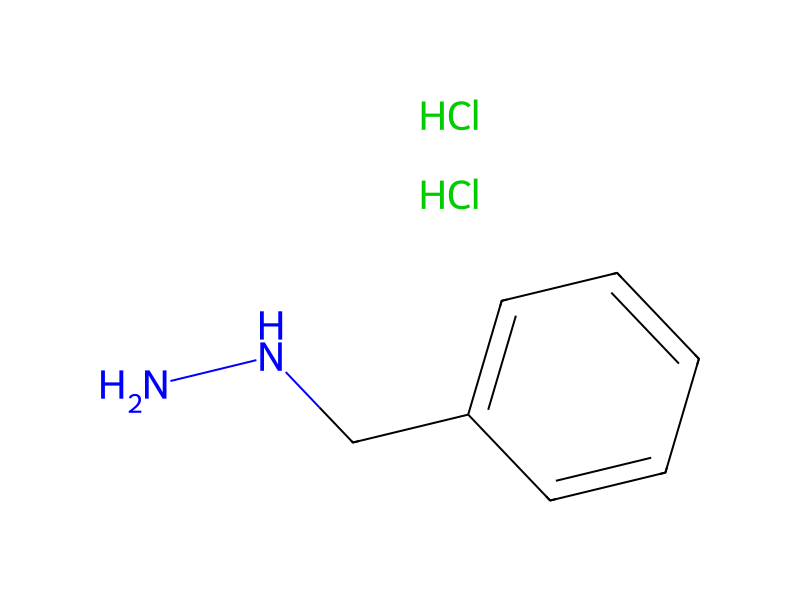
Benzylhydrazine dihydrochloride → 1-Benzyl-3-cyclobutylindazol-6-ol
Reaction equation

[CH:1]1([C:5]([C:7]2[CH:12]=[CH:11][C:10]([OH:13])=[CH:9][C:8]=2F)=O)[CH2:4][CH2:3][CH2:2]1.C([O-])(=O)C.[Na+].Cl.Cl.[CH2:22]([NH:29][NH2:30])[C:23]1[CH:28]=[CH:27][CH:26]=[CH:25][CH:24]=1>C1(C)C(C)=CC=CC=1>[CH2:22]([N:29]1[C:8]2[C:7](=[CH:12][CH:11]=[C:10]([OH:13])[CH:9]=2)[C:5]([CH:1]2[CH2:4][CH2:3][CH2:2]2)=[N:30]1)[C:23]1[CH:28]=[CH:27][CH:26]=[CH:25][CH:24]=1Participants
Reactant 3


Product 1

Reagents, catalysts & solvents 1

Procedure
Cyclobutyl(2-fluoro-4-hydroxyphenyl)methanone (6.967 g) which can be prepared according to the method described in Reference example 9, etc., sodium acetate (14.16 g; manufactured by Kanto Chemical Co., Inc.), and benzylhydrazine-dihydrochloride (10.55 g; manufactured by Sigma-Aldrich Co.) were suspended in xylene (85 mL; manufactured by Wako Pure Chemical Industries, Ltd.). By using a dean-stark apparatus, the mixture was stirred overnight at reflux. After cooling to room temperature, solid obtained after filtering the precipitate was dissolved in water and ethyl acetate. The aqueous layer was extracted twice with ethyl acetate. The organic layer was combined, washed twice with water and brine and dried over anhydrous sodium sulfate. After the solvent was evaporated under reduced pressure, the title compound was obtained (8.003 g).
Workup
- temperatureat reflux
- customsolid obtained
- filtrationafter filtering the precipitate
- dissolutionwas dissolved in water
- extractionThe aqueous layer was extracted twice with ethyl acetate
- washwashed twice with water and brine
- dry with materialdried over anhydrous sodium sulfate
- customAfter the solvent was evaporated under reduced pressure
Sources & evidence
- ORD record
- ord-7578d6dca10a4a5b960df9f8e8cf0be6
- Source dataset
- uspto-grants-2012_11
- Patent number
- US08304443B2
Reaction notes
Loading…