Hydrochloric Acid → 1-(2-ethoxyethyl)-3-ethyl-4-nitro-1H-pyrazole-5-carboxamide
Reaction equation

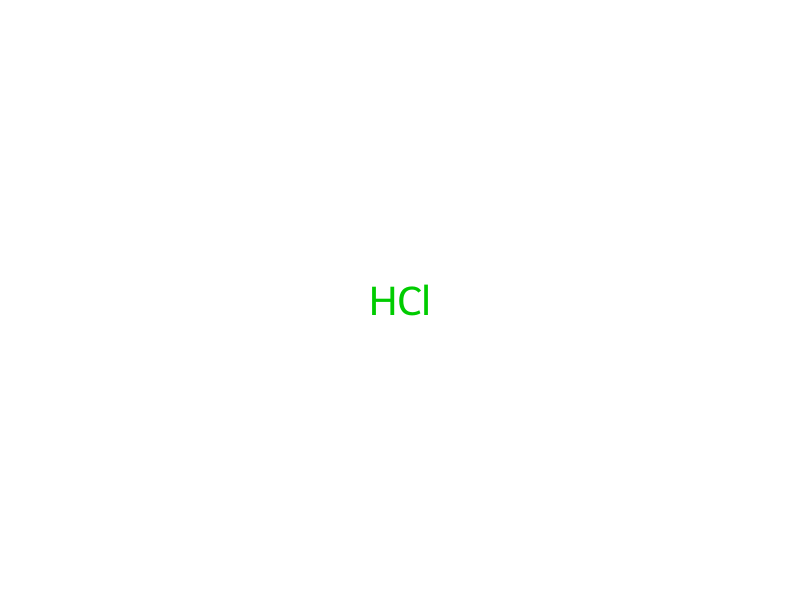
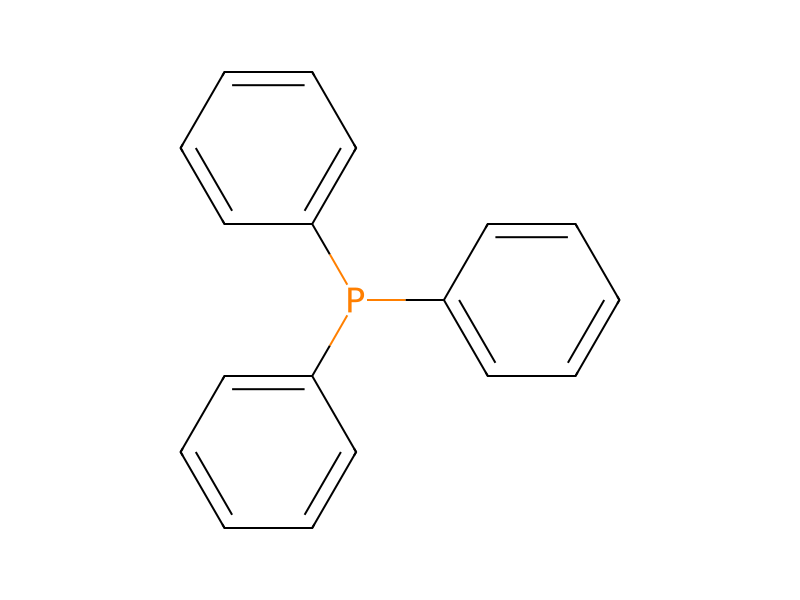
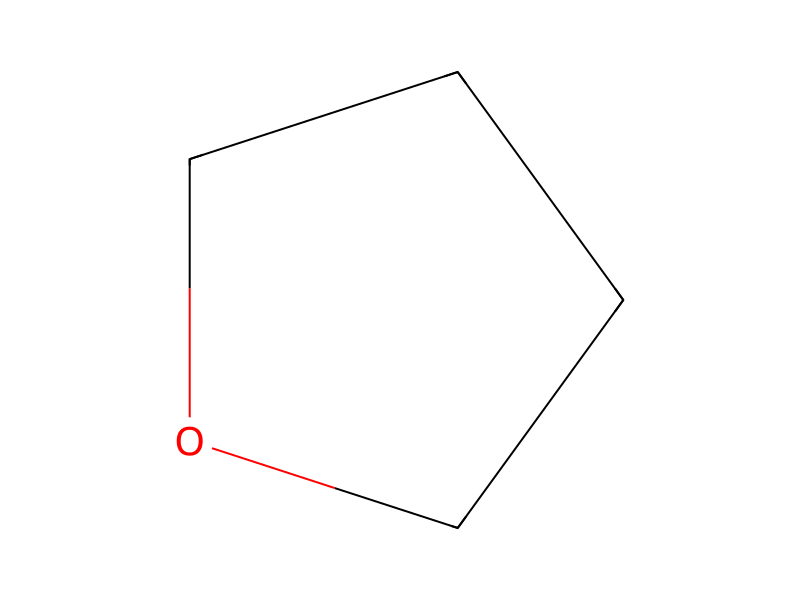
[CH2:1]([C:3]1[C:7]([N+:8]([O-:10])=[O:9])=[C:6]([C:11]([NH2:13])=[O:12])[NH:5][N:4]=1)[CH3:2].C1(P(C2C=CC=CC=2)C2C=CC=CC=2)C=CC=CC=1.[CH2:33]([O:35][CH2:36][CH2:37]O)[CH3:34].N(C(OC(C)(C)C)=O)=NC(OC(C)(C)C)=O.Cl>O1CCCC1>[CH2:33]([O:35][CH2:36][CH2:37][N:5]1[C:6]([C:11]([NH2:13])=[O:12])=[C:7]([N+:8]([O-:10])=[O:9])[C:3]([CH2:1][CH3:2])=[N:4]1)[CH3:34]Participants
Reactant 5



Product 1

Reagents, catalysts & solvents 1
Procedure
A 1 L flask was charged with 3-ethyl-4-nitropyrazole-5-carboxamide (prepared as described in EP 1176142 at page 18) (15.0 g, 81 mmol), triphenylphosphine (25.6 g, 97.8 mmol), and tetrahydrofuran (120 mL). The resulting mixture was cooled by placing the flask in a 0° C. bath and 2-ethoxyethanol (9.5 ml, 98 mmol) was added to the flask. A solution of di-tert-butyl azodicarboxylate (22.5 g, 97.8 mmol) in tetrahydrofuran (90 mL) was then added to the flask over a period of 2.5 hours. The mixture was stirred with cooling for an additional hour and then warmed to room temperature and stirred for one additional hour. The mixture was again cooled to 0° C., treated with 6M hydrochloric acid (40 ml), and heated to 40° C. for one hour. The mixture was partially concentrated and extracted between ethyl acetate and water. The aqueous layer was back-extracted with ethyl acetate. The combined organic layers were washed with water, washed with brine, dried over magnesium sulfate, filtered and then concentrated. The resulting viscous oil was treated with 2-propanol and this mixture was then concentrated. The resulting material was treated with 2-propanol and heated. Upon cooling, the resulting crystals were filtered, rinsed with cold 2-propanol, and dried to afford 16.5 g of the title compound.
Workup
- temperatureThe resulting mixture was cooled
- customin a 0° C.
- temperaturewith cooling for an additional hour
- stirringstirred for one additional hour
- temperatureThe mixture was again cooled to 0° C.
- temperatureheated to 40° C. for one hour
- concentrationThe mixture was partially concentrated
- extractionextracted between ethyl acetate and water
- extractionThe aqueous layer was back-extracted with ethyl acetate
- washThe combined organic layers were washed with water
- washwashed with brine
- dry with materialdried over magnesium sulfate
- filtrationfiltered
- concentrationconcentrated
- additionThe resulting viscous oil was treated with 2-propanol
- concentrationthis mixture was then concentrated
- additionThe resulting material was treated with 2-propanol
- temperatureheated
- temperatureUpon cooling
- filtrationthe resulting crystals were filtered
- washrinsed with cold 2-propanol
- customdried
Sources & evidence
- ORD record
- ord-89c7f447b8cd4c87814e7da4178cef39
- Source dataset
- uspto-grants-2013_08
- Patent number
- US08518956B2
Reaction notes
Loading…