1-Acetylnaphthalene → 5-Methyl-2-[3-(1-naphthyl)-3-oxo-1-propenyl]-4-piperidinopyridine
Reaction equation

[OH-].[Na+].[C:3]([C:6]1[C:15]2[C:10](=[CH:11][CH:12]=[CH:13][CH:14]=2)[CH:9]=[CH:8][CH:7]=1)(=[O:5])[CH3:4].[CH3:16][C:17]1[C:18]([N:25]2[CH2:30][CH2:29][CH2:28][CH2:27][CH2:26]2)=[CH:19][C:20]([CH:23]=O)=[N:21][CH:22]=1>CO>[CH3:16][C:17]1[C:18]([N:25]2[CH2:30][CH2:29][CH2:28][CH2:27][CH2:26]2)=[CH:19][C:20]([CH:23]=[CH:4][C:3]([C:6]2[C:15]3[C:10](=[CH:11][CH:12]=[CH:13][CH:14]=3)[CH:9]=[CH:8][CH:7]=2)=[O:5])=[N:21][CH:22]=1Participants


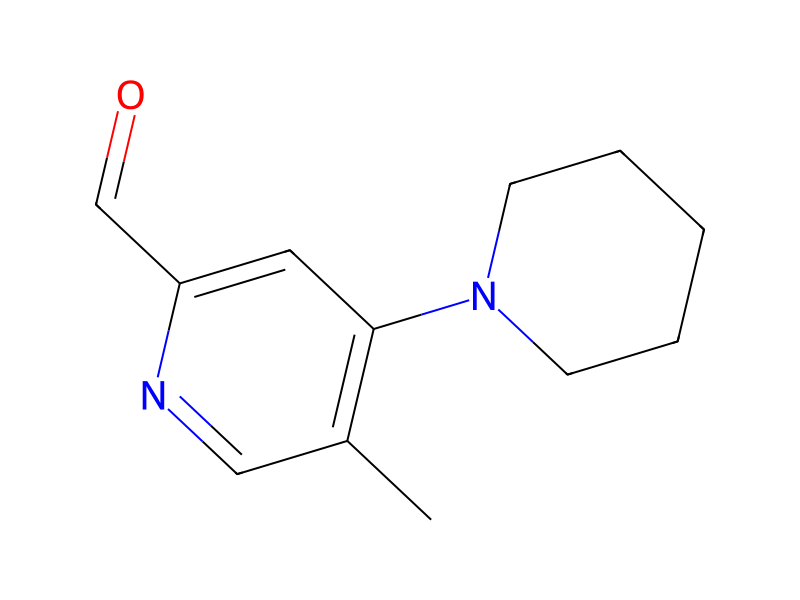


Procedure
A 10% aqueous solution of sodium hydroxide (1.6 ml) and then 174 mg of 1-acetylnaphthalene at about 4° C. were added to a solution of 204 mg (1.0 mmole) of 5-methyl-4-piperidino-2-pyridinecarbaldehyde in 3 ml of methanol, and the mixture was allowd to stand overnight at the above temperature. The reaction mixture was concentrated under reduced pressure. The residue was mixed with water, and then extracted with dichloromethane. The dichloromethane layer was dried over anhydrous sodium sulfate, and concentrated under reduced pressure. The residue was purified by silica gel column chromatography (eluted with dichloromethane) to give 5-methyl-2-[3-(1-naphthyl)-3-oxo-1-propenyl]-4-piperidinopyridine. The product was treated with an ethanol solution of hydrogen chloride to form its hydrochloride. Recrystallization from methanol/ether gave 350 mg (yield 75%) of the captioned compound as crystals.
Workup
- concentrationThe reaction mixture was concentrated under reduced pressure
- additionThe residue was mixed with water
- extractionextracted with dichloromethane
- dry with materialThe dichloromethane layer was dried over anhydrous sodium sulfate
- concentrationconcentrated under reduced pressure
- customThe residue was purified by silica gel column chromatography (eluted with dichloromethane)
Sources & evidence
- ORD record
- ord-93448bd2bccd454486a47019453ee87f
- Source dataset
- uspto-grants-1989_06
- Patent number
- US04839353
Reaction notes
Loading…