Peptide oostatic hormone → 4-Propyl cyclohexanepropanal
Reaction equation

[CH2:1]([C:4]1[CH:9]=[CH:8][C:7]([CH2:10][CH2:11][CH:12]=[O:13])=[CH:6][CH:5]=1)[CH2:2][CH3:3].C[C@H](NC([C@H]1N(C([C@@H](NC([C@@H](N)CC2C=CC(O)=CC=2)=O)CC(O)=O)=O)CCC1)=O)C(N1[C@H](C(N2[C@H](C(N3[C@H](C(N4[C@H](C(N5[C@H](C(N6[C@H](C(O)=O)CCC6)=O)CCC5)=O)CCC4)=O)CCC3)=O)CCC2)=O)CCC1)=O>Cl.CO>[CH2:1]([CH:4]1[CH2:9][CH2:8][CH:7]([CH2:10][CH2:11][CH:12]=[O:13])[CH2:6][CH2:5]1)[CH2:2][CH3:3]Participants
Reactant 2


Product 1

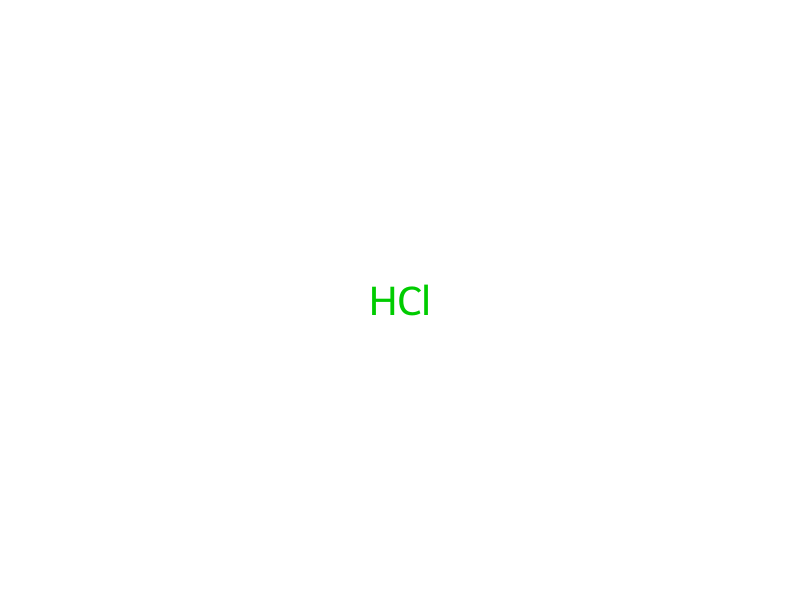
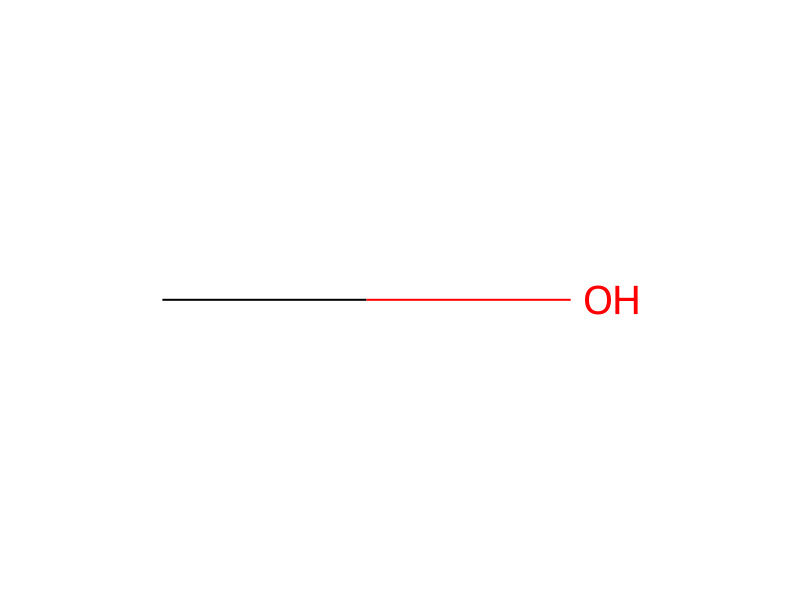
Reagents, catalysts & solvents 2
Conditions
- Temperature
- 0 °C
Procedure
A reaction flask was charged with 3-(4-propyl-phenyl)-propionaldehyde (240 g, prepared as above), methanol (200 mL), and TMOF (150 g). The reaction mass was cooled to 0° C. and hydrochloric acid (37%, 1 g) was added in one portion. The reaction was exothermic and the temperature rose to 23° C. The reaction mass was quenched with sodium methoxide in methanol (25%, 10 g) and the solvent was removed by evaporation. The crude intermediate product 3-(4-propyl-phenyl)-propionaldehyde dimethylacetal (300 g), 2-propanol (100 mL), and rutheniium on alumina (3 g) were then charged to a 1 L zipper autoclave. The autoclave was purged with nitrogen followed by hydrogen. The autoclave was pressurized with 500 psi hydrogen and heated to 150° C. for 6 hours. The autoclave vessel was then cooled to an ambient temperature, depressurized, and purged with nitrogen. The reaction mass was filtered through celite to remove the catalyst and further hydrolyzed in the presence of water (2 L) containing hydrochloric acid (37%, 2 g) at 90° C. for 5 hours. The organic layer was separated and washed with saturated sodium carbonate solution (500 mL). Subsequent fractional distillation afforded 4-propyl cyclohexanepropanal (188 g), which had a boiling point of 107° C. at a pressure of 7 mmHg
Workup
- customrose to 23° C
- customThe reaction mass was quenched with sodium methoxide in methanol (25%, 10 g)
- customthe solvent was removed by evaporation
- additionThe crude intermediate product 3-(4-propyl-phenyl)-propionaldehyde dimethylacetal (300 g), 2-propanol (100 mL), and rutheniium on alumina (3 g) were then charged to a 1 L zipper autoclave
- customThe autoclave was purged with nitrogen
- temperatureheated to 150° C. for 6 hours
- temperatureThe autoclave vessel was then cooled to an ambient temperature
- custompurged with nitrogen
- filtrationThe reaction mass was filtered through celite
- customto remove the catalyst
- additionfurther hydrolyzed in the presence of water (2 L) containing hydrochloric acid (37%, 2 g) at 90° C. for 5 hours
- customThe organic layer was separated
- washwashed with saturated sodium carbonate solution (500 mL)
- distillationSubsequent fractional distillation
Sources & evidence
- ORD record
- ord-f4371e8b2ca74ca387ffc3461361b569
- Source dataset
- uspto-grants-2012_05
- Patent number
- US08188023B2
Reaction notes
Loading…