Thiophenol → Amino-noscapine
Reaction equation

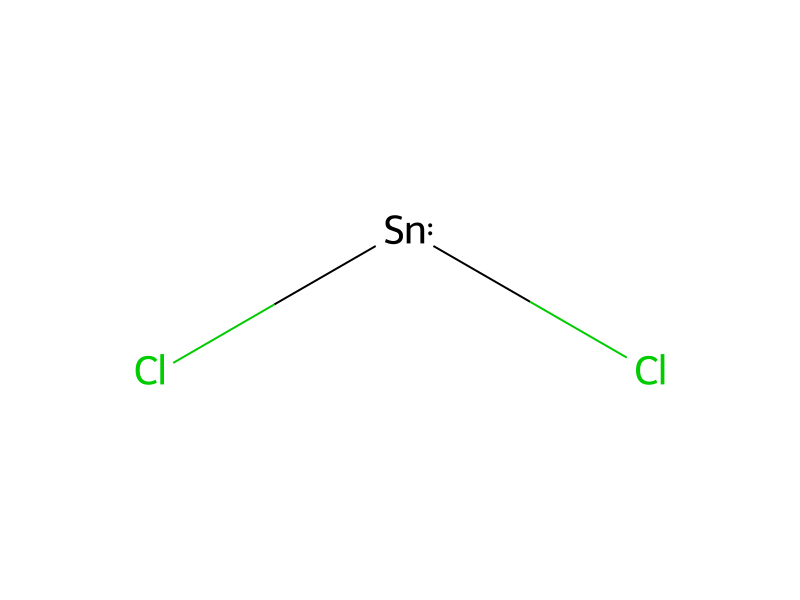
Cl[Sn]Cl.C1(S)C=CC=CC=1.C1(N(C2C=CC=CC=2)C2C=CC=CC=2)C=CC=CC=1.[N:30]([C:33]1[C:34]2[CH2:35][CH2:36][N:37]([CH3:62])[C@@H:38]([C@@H:48]3[C:56]4[C:51](=[C:52]([O:59][CH3:60])[C:53]([O:57][CH3:58])=[CH:54][CH:55]=4)[C:50](=[O:61])[O:49]3)[C:39]=2[C:40]([O:46][CH3:47])=[C:41]2[O:45][CH2:44][O:43][C:42]=12)=[N+]=[N-]>C1COCC1>[CH3:62][N:37]1[C@@H:38]([C@H:48]2[O:49][C:50](=[O:61])[C:51]3[C:52]([O:59][CH3:60])=[C:53]([O:57][CH3:58])[CH:54]=[CH:55][C:56]2=3)[C:39]2[C:40]([O:46][CH3:47])=[C:41]3[O:45][CH2:44][O:43][C:42]3=[C:33]([NH2:30])[C:34]=2[CH2:35][CH2:36]1Participants
Reactant 4



Product 1

Reagents, catalysts & solvents 1

Procedure
To a 50-mL of round-bottomed flask containing a solution of SnCl2 in THF (10 mL) were added thiophenol and triphenylamine. The reaction mixture was added slowly to a solution of azido-noscapine (3, 0.2 g, 0.440 mmol) in THF (5 mL) and the reaction mixture stirred at room temperature. The reaction progress was monitored by thin-layer chromatography at 30 minutes intervals. The reaction was found to be completed after 2 h, the solvent was removed in vacuo. The residue was diluted with chloroform (20 ml) and was added sodium hydroxide solution (20 mL). the aqueous phase was separated and extracted with chloroform (2×20 mL). the combined organic phase was dried over sodium sulfate and concentrated to obtain amino-noscapine as colorless oil, which was then treated with ethereal HCl to obtain its salt as white crystals. Yield, 83%; mp (HCl. Salt) 112.2-112.6° C.; IR: 1725, 1362 cm−1; 1H NMR (CDCl3, 400 MHz): δ 7.12 (d, 1H, J=7.4.0 Hz), 7.02 (d, 1H, J=7.4 Hz), 6.02 (s, 2H), 5.92 (d, 1H, J=4.0 Hz), 4.42 (d, 1H, J=4.0 Hz), 4.20 (bs, 2H), 4.02 (s, 3H), 3.85 (s, 3H), 3.80 (s, 3H), 2.74-2.64 (m, 2H), 2.61-2.56 (m, 2H), 2.52 (s, 3H); 1H NMR (CDCl3+D2O, 400 MHz): δ 7.12 (d, 1H, J=7.4.0 Hz), 7.02 (d, 1H, J=7.4 Hz), 6.02 (s, 2H), 5.92 (d, 1H, J=4.0 Hz), 4.42 (d, 1H, J=4.0 Hz), 5.12 (bs, confirms NH2 group), 4.02 (s, 3H), 3.85 (s, 3H), 3.80 (s, 3H), 2.74-2.64 (m, 2H), 2.61-2.56 (m, 2H), 2.52 (s, 3H); 13C NMR (CDCl3, 100 MHz): δ 169.5, 156.8, 152.6, 147.8, 142.7, 141.8, 135.0, 134.2, 123.2, 120.8, 119.9, 119.4, 114.1, 100.8, 87.6, 63.7, 56.8, 56.4, 56.1, 51.4, 39.2, 27.5; HRMS (ESI): m/z Calcd. for C22H24N2O7 (M+1), 428.3481. Found, 428.1562 (M+1). HPLC Purity and Peak Attributions: The HPLC purity was determined following two different methods using varied solvent systems. Method 1: Ultimate Plus, LC Packings, Dionex, C18 column (pep Map 100, 3 μm, 100 Å particle size, ID: 1000 μm, length: 15 cm) with solvent systems A (0.1% formic acid in water) and B (acetonitrile), gradient, 25 min run at a flow of 40 μL/min Retention time for 9-amino-nos is 18.30 min HPLC purity was 95%. Method 2: Ultimate Plus, LC Packings, Dionex, C18 column (pep Map 100, 3 μm, 100 Å particle size, ID: 1000 μm, length: 15 cm) with solvent systems A (0.1% formic acid in water) and B (methanol), gradient, 25 min run at a flow of 40 μL/min Retention time for 9-amino-nos is 18.96 min HPLC purity was 94%.
Workup
- waitto be completed after 2 h
- customthe solvent was removed in vacuo
- additionThe residue was diluted with chloroform (20 ml)
- additionwas added sodium hydroxide solution (20 mL)
- customthe aqueous phase was separated
- extractionextracted with chloroform (2×20 mL)
- dry with materialthe combined organic phase was dried over sodium sulfate
- concentrationconcentrated
Sources & evidence
- ORD record
- ord-5cf25a91f5ca4d02a6973d0ad109d354
- Source dataset
- uspto-grants-2013_03
- Patent number
- US08394957B2
Reaction notes
Loading…