Hydrogen Bromide → HCID 23295786, compound
Reaction equation

[N:1]1([C:6]2[C:7]([C:21]([F:24])([F:23])[F:22])=[CH:8][C:9]([N+:18]([O-])=O)=[C:10]([CH:17]=2)[NH:11][CH2:12][CH2:13][CH2:14][CH2:15]O)[CH:5]=[CH:4][N:3]=[CH:2]1.NC1C=C(C(F)(F)F)C(N2C=CN=C2)=CC=1NCCCCO.[C:47]([OH:52])(=O)[C:48](O)=[O:49].[BrH:53]>C(O)C.[C].[Pd]>[BrH:53].[Br:53][CH2:15][CH2:14][CH2:13][CH2:12][N:11]1[C:10]2[C:9](=[CH:8][C:7]([C:21]([F:24])([F:23])[F:22])=[C:6]([N:1]3[CH:5]=[CH:4][N:3]=[CH:2]3)[CH:17]=2)[NH:18][C:48](=[O:49])[C:47]1=[O:52]Participants

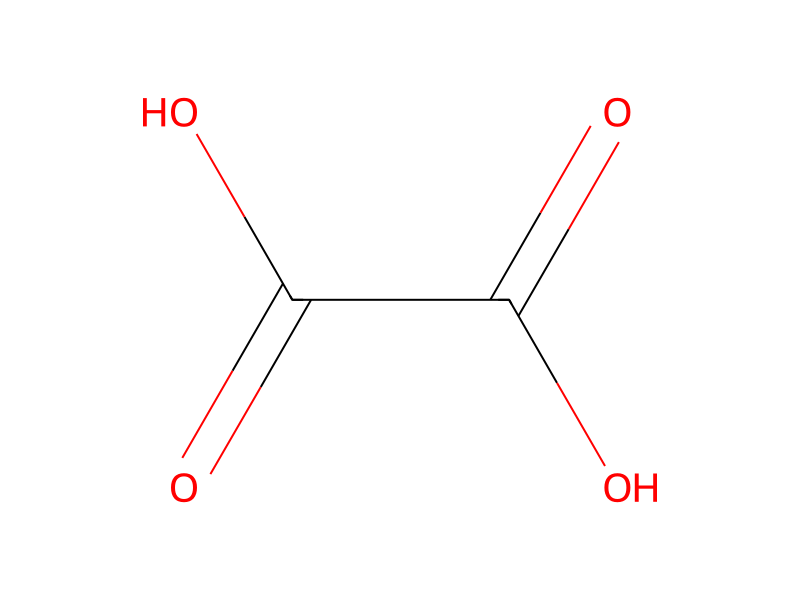




Procedure
At room temperature, 4-[5-(1H-imidazol-1-yl)-2-nitro-4-trifluoromethylanilino)butanol (5.79 g) synthesized in Reference Example 6 was subjected to reduction in ethanol at ordinary temperature using 10% palladium-carbon as the catalyst, thereby converting it into 4-[2-amino-5-(1H-imidazol-1-yl)-4-trifluoromethylanilino)butanol which was subsequently dissolved in 48% hydrobromic acid aqueous solution (50 ml). Then, oxalic acid (2.27 g) was added, followed by heating overnight under reflux. The reaction solution was concentrated under a reduced pressure, and addition of water to the resulting residue followed by concentration was repeated several times. When the residue became a water-insoluble solid, this was collected by filtration, washed with water and then dried under a reduced pressure, and the resulting crude product was recrystallized from DMF-water to give 1-(4-bromobutyl)-7-(1H-imidazol-1-yl)-6-trifluoromethyl-2,3(1H,4H)-quinoxalinedione hydrobromide (2.46 g). The resulting bromobutylquinoxalinedione (2.46 g) and tetra-n-butylammonium bromide (0.15 g) were dissolved in a two layer system solution of chloroform (50 ml), water (50 ml) and DMF (25 ml), and the solution was adjusted to pH 7 by adding 1 N sodium hydroxide. Then, sodium azide (3.12 g) was added, followed by heating overnight under reflux. The organic layer was separated from the reaction solution, washed with water, dried over anhydrous sodium sulfate and then concentrated under a reduced pressure. As the remaining solid substance, 1-(4-azidobutyl)-7-(1H-imidazol-1-yl)-6-trifluoromethyl-2,3(1H,4H)-quinoxalinedione (1.61 g) was obtained. Next, in an atmosphere of hydrogen, the resulting azidobutylquinoxalinedione (1.30 g) was subjected to reduction under normal pressure in DMF (65 ml) using palladium-carbon as the catalyst. The reaction solution was filtered to collect insoluble matter including the catalyst. This was dissolved in heated DMF, filtered during hot condition and then recrystallized to give 1-(4-aminobutyl)-7-(1H-imidazol-1-yl)-6-trifluoromethyl-2,3(1H,4H)-quinoxalinedione (0.82 g).
Workup
- temperatureby heating overnight
- temperatureunder reflux
- concentrationThe reaction solution was concentrated under a reduced pressure, and addition of water to the resulting residue
- concentrationfollowed by concentration
- filtrationthis was collected by filtration
- washwashed with water
- customdried under a reduced pressure
- customthe resulting crude product was recrystallized from DMF-water
Sources & evidence
- ORD record
- ord-6ea82d5d8fd14c049e059b7e5cccee85
- Source dataset
- uspto-grants-2000_09
- Patent number
- US06121264
Reaction notes
Loading…