epsilon-CAPROLACTONE → 6-Hydroxycaproamide
Reaction equation

[C:1]1(=[O:8])[O:7][CH2:6][CH2:5][CH2:4][CH2:3][CH2:2]1.[OH-].[NH4+:10]>>[OH:7][CH2:6][CH2:5][CH2:4][CH2:3][CH2:2][C:1]([NH2:10])=[O:8]Participants
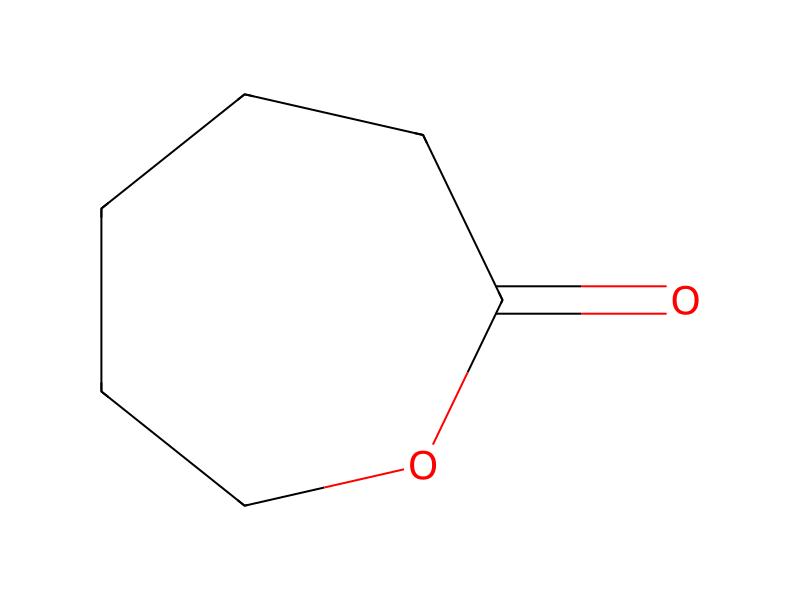


Procedure
ε-Caprolactone (3000.0 g, 26.3 moles) was charged to a flask equipped with a mechanical stirrer and thermometer and cooled in an ice bath to below 5° C. A pre-cooled 30% solution of ammonium hydroxide (3100.0 g, 54.8 moles) was added and the reaction temperature was maintained below 5° C. until all caprolactone was consumed as indicated by gas chromatography. The water and excess ammonia were vacuum stripped at 50° C., at the completion of which the acid value was measured to be 2300. The acid by-product was removed via flocculation by addition of a methanolic solution of lithium hydroxide hydrate (58 g in 750 g methanol), ethyl acetate (2750 g), followed by isopropanol (250 g) until clarified. A second portion of ethyl acetate (2750 g) was added and the flocculated acid was filtered. All solvents were vacuum stripped at 50° C. to yield the 6-hydroxycaproamide (2750 g) as a pale yellow oil which crystallized upon standing at room temperature. Gas chromatographic and NMR spectral data indicated greater than 95% purity.
Workup
- customequipped with a mechanical stirrer
- temperaturethermometer and cooled in an ice bath to below 5° C
- customwas consumed
- customstripped at 50° C., at the completion of which
- customThe acid by-product was removed via flocculation by addition of a methanolic solution of lithium hydroxide hydrate (58 g in 750 g methanol), ethyl acetate (2750 g)
- additionA second portion of ethyl acetate (2750 g) was added
- filtrationthe flocculated acid was filtered
- customstripped at 50° C.
Sources & evidence
- ORD record
- ord-c7e8a095e27b45f89c6001797ac0a3a3
- Source dataset
- uspto-grants-1998_07
- Patent number
- US05780559
Reaction notes
Loading…