Methyl morpholine oxide → benzyl (2S)-2-methyl-3-oxopyrrolidine-1-carboxylate
Reaction equation

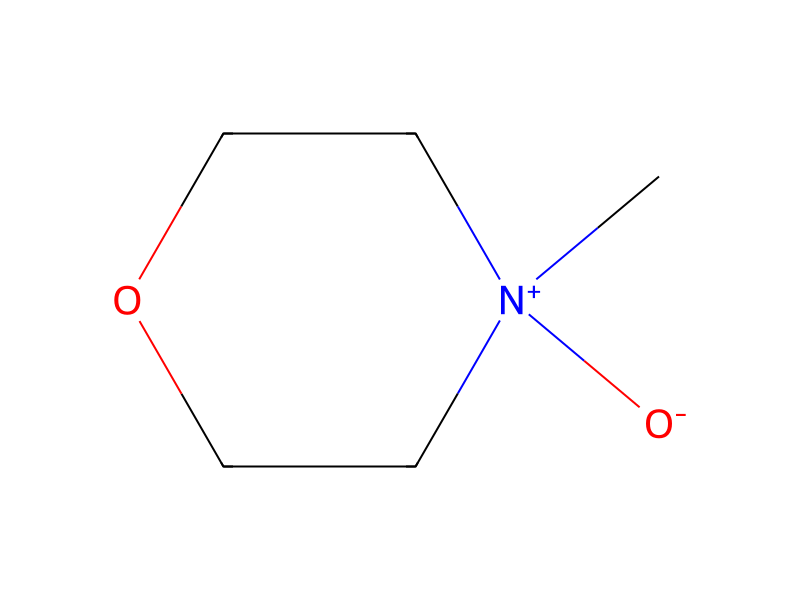
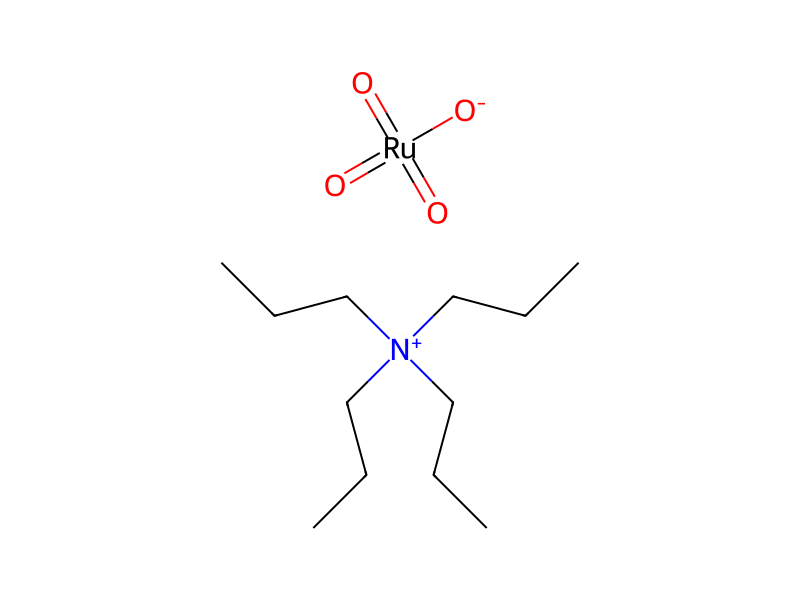
[OH:1][C@H:2]1[CH2:6][CH2:5][N:4]([C:7]([O:9][CH2:10][C:11]2[CH:16]=[CH:15][CH:14]=[CH:13][CH:12]=2)=[O:8])[C@H:3]1[CH3:17].C[N+]1([O-])CCOCC1>C(#N)C.[Ru]([O-])(=O)(=O)=O.C([N+](CCC)(CCC)CCC)CC>[CH3:17][C@H:3]1[C:2](=[O:1])[CH2:6][CH2:5][N:4]1[C:7]([O:9][CH2:10][C:11]1[CH:16]=[CH:15][CH:14]=[CH:13][CH:12]=1)=[O:8]Participants



Conditions
- Temperature
- 0 °C
Procedure
To a solution of benzyl (2S,3S)-3-hydroxy-2-methylpyrrolidine-1-carboxylate (20.5 g) in acetonitrile (150 mL) were added powdery molecular sieves 4 A (25 g) and 4-methylmorpholine-N-oxide (20.4 g). After cooling to 0° C., tetra-n-propylammonium perruthenate (3.0 g) was added, and the mixture was stirred at 0° C. for 1 hr, and at room temperature for 18 hr. The reaction mixture was concentrated under reduced pressure, and the residue was suspended in ethyl acetate. Insoluble materials were filtered through Hyflo Super-Cel. The filtrate was concentrated under reduced pressure, and the residue was purified by silica gel column chromatography (eluent: hexane/ethyl acetate=9/1→2/1) to give the title compound as a colorless oil (yield: 18.0 g, 89%).
Workup
- waitat room temperature for 18 hr
- concentrationThe reaction mixture was concentrated under reduced pressure
- filtrationInsoluble materials were filtered through Hyflo Super-Cel
- concentrationThe filtrate was concentrated under reduced pressure
- customthe residue was purified by silica gel column chromatography (eluent: hexane/ethyl acetate=9/1→2/1)
Sources & evidence
- ORD record
- ord-321400c41cac4b7da82306d469f36632
- Source dataset
- uspto-grants-2013_04
- Patent number
- US08420694B2
Reaction notes
Loading…