Ethanol → Methyl 3,5-dibromo-4-mercaptophenylacetate
Reaction equation

[Br:1][C:2]1[CH:3]=[C:4]([CH2:15][C:16]([O:18][CH2:19]C)=[O:17])[CH:5]=[C:6]([Br:14])[C:7]=1[S:8]C(=O)N(C)C.C(O)C>[OH-].[Na+]>[Br:1][C:2]1[CH:3]=[C:4]([CH2:15][C:16]([O:18][CH3:19])=[O:17])[CH:5]=[C:6]([Br:14])[C:7]=1[SH:8]Participants
Reactant 2
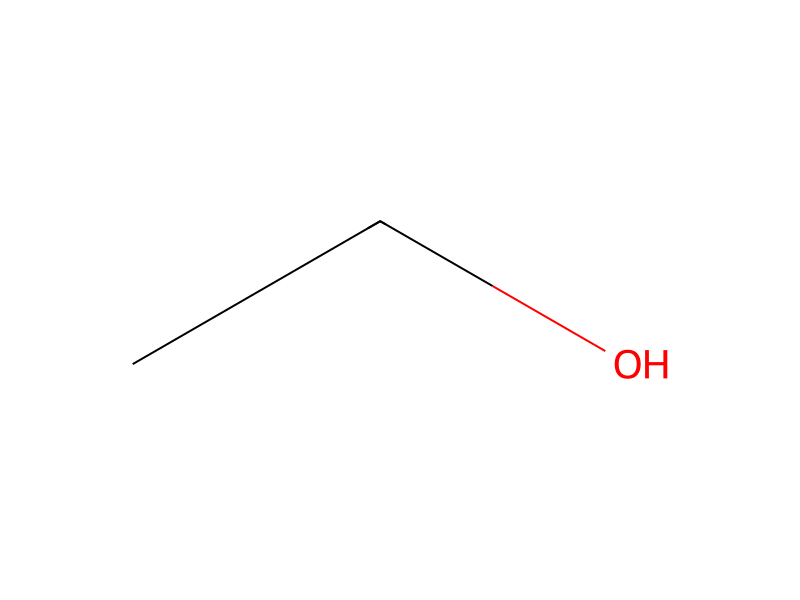

Product 1

Reagents, catalysts & solvents 1
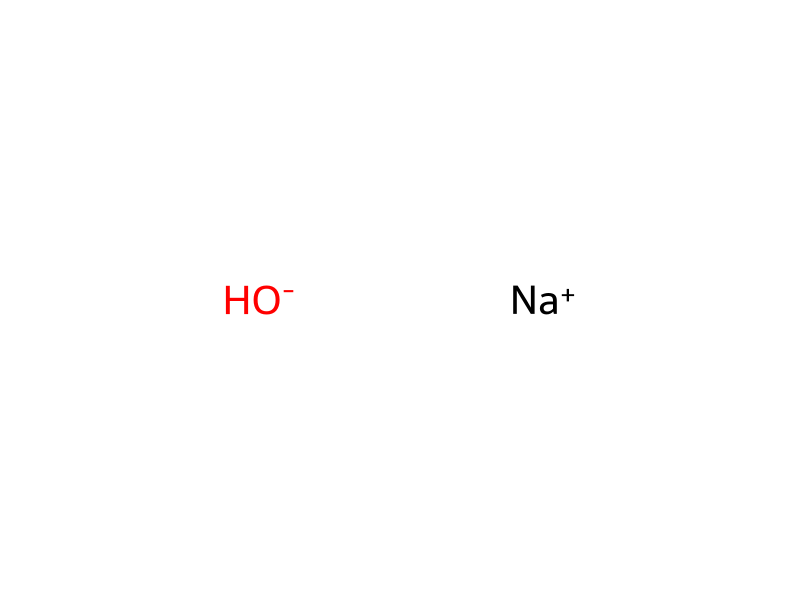
Procedure
A solution of ethyl 3,5-dibromo-4-(N,N-dimethylcarbamoylthio)phenylacetate (8 g, 0.018 mol), from Preparation D, in 100 mL of 10% aqueous sodium hydroxide and 10 mL ethanol was heated at reflux for 20 hrs under a nitrogen atmosphere. The reaction mixture was cooled and neutral impurities extracted with ethyl acetate. The aqueous phase was acidified with 6N HCl and extracted twice with ethyl acetate. The combined extracts were washed with water and saturated sodium chloride solution, dried (Na2SO4), and the solvent removed on a rotary evaporator. The residue was dissolved in methanol and treated with 3 mL of concentrated sulfuric acid and heated at reflux temperature for 3 hrs. The reaction mixture was cooled and concentrated. The residue was diluted with ethyl acetate, washed with water and brine, dried (Na2SO4), and the solvent removed on a rotary evaporator. The residue was purified by flash chromatography (silica gel, 5% acetone/hexane) to obtain methyl 3,5-dibromo-4-mercaptophenylacetate (3.5 g, 0.01 mol, 57% yield), MP: 63.5°-65° C.
Workup
- temperatureat reflux for 20 hrs under a nitrogen atmosphere
- temperatureThe reaction mixture was cooled
- extractionneutral impurities extracted with ethyl acetate
- extractionextracted twice with ethyl acetate
- washThe combined extracts were washed with water and saturated sodium chloride solution
- dry with materialdried (Na2SO4)
- customthe solvent removed on a rotary evaporator
- dissolutionThe residue was dissolved in methanol
- additiontreated with 3 mL of concentrated sulfuric acid
- temperatureheated
- temperatureat reflux temperature for 3 hrs
- temperatureThe reaction mixture was cooled
- concentrationconcentrated
- additionThe residue was diluted with ethyl acetate
- washwashed with water and brine
- dry with materialdried (Na2SO4)
- customthe solvent removed on a rotary evaporator
- customThe residue was purified by flash chromatography (silica gel, 5% acetone/hexane)
Sources & evidence
- ORD record
- ord-1896e12aff5c42adbd08cb0968ec502f
- Source dataset
- uspto-grants-1994_02
- Patent number
- US05284971
Reaction notes
Loading…