Potassium Carbonate → 4-Bromo-1-((2-(trimethylsilyl)ethoxy)methyl)-1H-pyrazole
Reaction equation

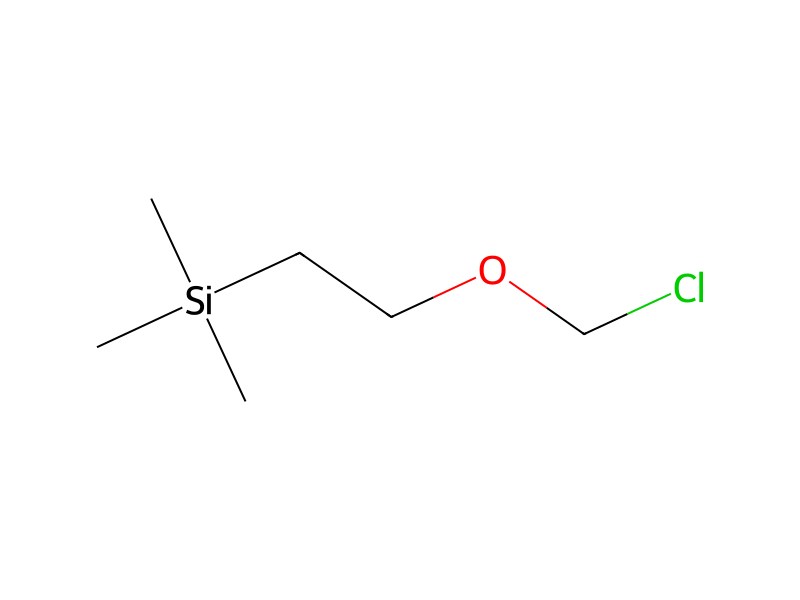
[Br:1][C:2]1[CH:3]=[N:4][NH:5][CH:6]=1.C([O-])([O-])=O.[K+].[K+].[CH3:13][Si:14]([CH3:21])([CH3:20])[CH2:15][CH2:16][O:17][CH2:18]Cl>CN(C=O)C>[Br:1][C:2]1[CH:3]=[N:4][N:5]([CH2:18][O:17][CH2:16][CH2:15][Si:14]([CH3:21])([CH3:20])[CH3:13])[CH:6]=1Participants
5




Procedure
To a 100 mL roundbottom flask was charged 4-bromopyrazole (13.6 mmol, 2.00 g), K2CO3 (20.4 mmol, 2.82 g), and DMF (20 mL). To this suspension was added 2-(trimethylsilyl)ethoxymethyl chloride (15.0 mmol, 2.64 mL). This suspension was allowed to stir at room temperature 18 hours. The reaction mixture was then concentrated in vacuo, dissolved in 20 mL DCM, and filtered through celite. The crude mixture was purified via silica gel chromatography (0% to 80% ethyl acetate in hexanes gradient) to yield 4-bromo-1-((2-(trimethylsilyl)ethoxy)methyl)-1H-pyrazole (2.53 g, 9.12 mmol, 67% yield) as clear oil.
Workup
- concentrationThe reaction mixture was then concentrated in vacuo
- dissolutiondissolved in 20 mL DCM
- filtrationfiltered through celite
- customThe crude mixture was purified via silica gel chromatography (0% to 80% ethyl acetate in hexanes gradient)
Sources & evidence
- ORD record
- ord-7a1fcaa0b7434441a22f30cb579d1d15
- Source dataset
- uspto-grants-2013_11
- Patent number
- US08591943B2
Reaction notes
Loading…