反应详情
EQUATION
反应方程式

REACTANTS
反应物


PRODUCTS
产物

AUXILIARIES
试剂、催化剂与溶剂
PROCEDURE
实验过程
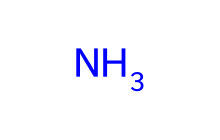
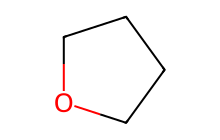
A solution of 4.5 g of 1,1-ethylenedioxy-4-(1-pentynyl)cyclohexane in 54 ml of tetrahydrofuran was treated dropwise with about 50 ml of pre-condensed ammonia in a sulphonation flask provided with a magnetic stirrer. The mixture was subsequently treated portionwise at -78° C. within 7 hours with 1.3 g of sodium. 1.5 hours after the last addition the ammonia was removed by evaporation and the mixture was neutralized with 25% hydrochloric acid and left to stand overnight. The mixture was then partitioned three times in water/diethyl ether. The aqueous phases were back-extracted with diethyl ether. The organic phases were dried over magnesium sulphate and then freed from solvent on a rotary evaporator. The resulting, pale yellow liquid (3.8 g) was treated with 200 ml of acetone and 0.1 ml of concentrated sulphuric acid. The mixture was heated to reflux for 10 minutes, then treated with water and freed from acetone on a rotary evaporator. The residue was partitioned three times in methylene chloride/water. The aqueous phases were back-extracted with methylene chloride. The organic phases were dried over magnesium sulphate and evaporated. Chromatographic separation of the resulting, yellow liquid (3.5 g) on silica gel with ethyl acetate/petroleum ether (vol. 7:93) gave 3.0 g (83.5%) of 4-(trans-1-pentenyl)cyclohexanone as a pale yellow liquid.
WORKUP
后处理
- customprovided with a magnetic stirrer
- customwas removed by evaporation
- waitleft
- customThe mixture was then partitioned three times in water/diethyl ether
- extractionThe aqueous phases were back-extracted with diethyl ether
- dry with materialThe organic phases were dried over magnesium sulphate
- customfreed from solvent on a rotary evaporator
- additionThe resulting, pale yellow liquid (3.8 g) was treated with 200 ml of acetone and 0.1 ml of concentrated sulphuric acid
- temperatureThe mixture was heated
- temperatureto reflux for 10 minutes
- additiontreated with water
- customfreed from acetone on a rotary evaporator
- customThe residue was partitioned three times in methylene chloride/water
- extractionThe aqueous phases were back-extracted with methylene chloride
- dry with materialThe organic phases were dried over magnesium sulphate
- customevaporated
- customChromatographic separation of the resulting, yellow liquid (3.5 g) on silica gel with ethyl acetate/petroleum ether (vol. 7:93)