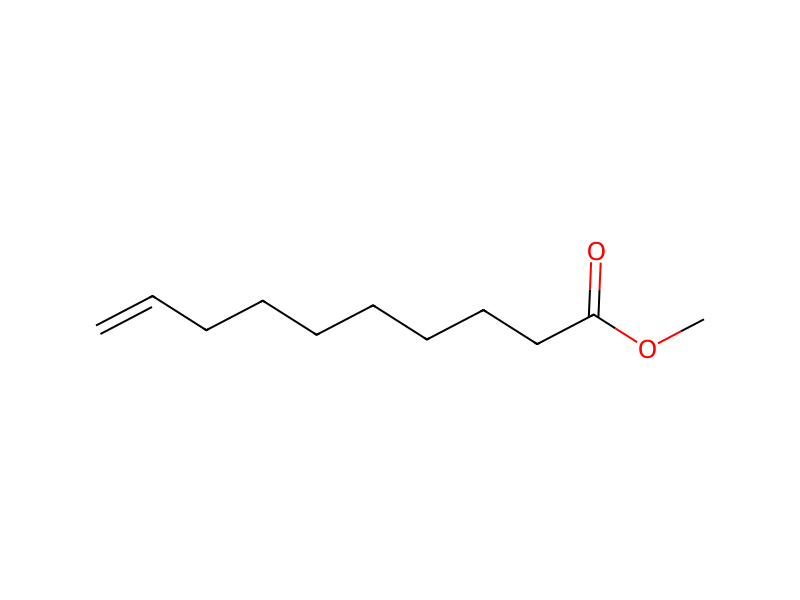
Methyl 9-decenoate → Methyl 11-hydroxyundecanoate
Reaction equation

[CH3:1][O:2][C:3](=[O:13])[CH2:4][CH2:5][CH2:6][CH2:7][CH2:8][CH2:9][CH2:10][CH:11]=[CH2:12].C(C1C=C(P(C2C=CC=CC=2)C2C=CC=CC=2)C2[O:28][C:27]3C(=CC(C(C)(C)C)=CC=3P(C3C=CC=CC=3)C3C=CC=CC=3)C(C)(C)C=2C=1)(C)(C)C>>[OH:28][CH2:27][CH2:12][CH2:11][CH2:10][CH2:9][CH2:8][CH2:7][CH2:6][CH2:5][CH2:4][C:3]([O:2][CH3:1])=[O:13]Participants


Conditions
- Temperature
- 85 °C
Procedure
A hydroformylation reaction was carried out in a Parr reactor (300 mL capacity) equipped with a mechanical stirrer, gas inlet tube, heating jacket, pressure transducer and thermocouple. The reactor was charged with methyl-9-decenoate (100 g, 0.54 mol), acetylacetonate(dicarbonyl)-rhodium (II) [Rh(CO)2 acac] (32 mg, 0.12 mmol), and 2,7-di-tert-butyl-9,9-dimethyl-4,5-bis(diphenylphosphino)xanthene (342 mg, 0.49 mmol) under nitrogen, and then the reactor was sealed. The reactor was connected to a feed line for delivering synthesis gas (CO/H2, 1:1). The system was flushed with synthesis gas twice and then pressurized to 450 psi (3,103 kPa). The reactor was heated to 85° C. for 16 h while maintaining 450 psi (3,103 kPa) of syn gas pressure. After 16 h, the temperature was raised to 100° C. and heated for an additional 4 h. The reactor was cooled to ambient temperature and the unreacted gas was vented. After flushing the reactor with nitrogen to remove the last traces of syn gas, dioxane (50 ml) and 1 g of 5% Pt/SiO2 were introduced to the reactor. The system was flushed with hydrogen twice and pressurized to 500 psi (3,448 kPa) with hydrogen. The mixture was then heated to 150° C. for 20 h maintaining 500 psi (3,448 kPa) of hydrogen pressure. After cooling, the contents were filtered to remove the solid catalyst, and the solvent was removed by rotary evaporation. The resulting liquid was subjected to distillation under reduced pressure. The fraction boiling at 140-150° C. (1.5 mm pressure) was collected and dissolved in 1200 mL of hexanes. The solution was then allowed to crystallize in a freezer for 18 h. White crystals were collected by cold filtration and washed once with cold hexanes. Drying under reduced pressure yielded methyl 11-hydroxyundecanoate as white solid (77 g; 65% overall yield). Conversion of methyl 11-hydroxyundecanoate via transesterification with a polyol, such as glycerol, to the corresponding polyester polyol, such as the triglyceride of 11-hydroxyundecanoic acid, can be effected by transesterification methods known in the art.
Workup
- customA hydroformylation reaction
- customequipped with a mechanical stirrer, gas inlet tube
- temperatureheating jacket, pressure transducer and thermocouple
- customthe reactor was sealed
- customsynthesis gas (CO/H2, 1:1)
- customThe system was flushed with synthesis gas twice
- temperaturewhile maintaining 450 psi (3,103 kPa) of syn gas pressure
- temperaturethe temperature was raised to 100° C.
- temperatureheated for an additional 4 h
- temperatureThe reactor was cooled to ambient temperature
- customAfter flushing the reactor with nitrogen
- customto remove the last traces of syn gas, dioxane (50 ml) and 1 g of 5% Pt/SiO2
- additionwere introduced to the reactor
- customThe system was flushed with hydrogen twice
- temperatureThe mixture was then heated to 150° C. for 20 h
- temperaturemaintaining 500 psi (3,448 kPa) of hydrogen pressure
- temperatureAfter cooling
- filtrationthe contents were filtered
- customto remove the solid catalyst
- customthe solvent was removed by rotary evaporation
- distillationThe resulting liquid was subjected to distillation under reduced pressure
- customThe fraction boiling at 140-150° C. (1.5 mm pressure) was collected
- dissolutiondissolved in 1200 mL of hexanes
- customto crystallize in a freezer for 18 h
- filtrationWhite crystals were collected by cold filtration
- washwashed once with cold hexanes
- customDrying under reduced pressure
- customyielded
Sources & evidence
- ORD record
- ord-ebffc9de3b4747108093ba3579fac7f5
- Source dataset
- uspto-grants-2010_06
- Patent number
- US07745652B2
Reaction notes
Loading…