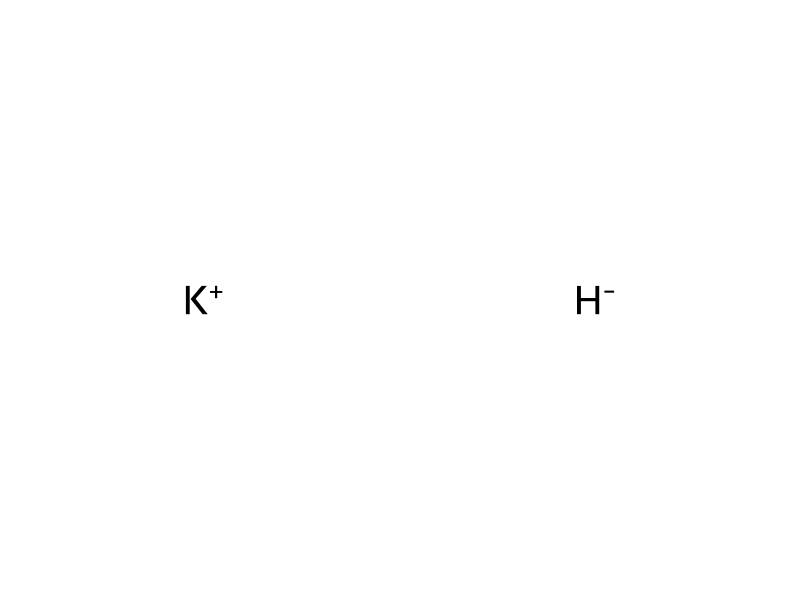
Potassium hydride → HCID 10083756, compound
Reaction equation

[H-].[K+].Br[C:4]1[CH:12]=[C:11]2[C:7]([CH:8]=[CH:9][NH:10]2)=[CH:6][CH:5]=1.[H][H].[Li]C(C)(C)C.[N:20]12[CH2:28][CH2:27][CH2:26][CH:25]1[CH2:24][C:23](=[O:29])[CH2:22][CH2:21]2>O1CCCC1>[OH:29][C:23]1([C:4]2[CH:12]=[C:11]3[C:7]([CH:8]=[CH:9][NH:10]3)=[CH:6][CH:5]=2)[CH2:24][CH:25]2[N:20]([CH2:28][CH2:27][CH2:26]2)[CH2:21][CH2:22]1Participants





Conditions
- Temperature
- -78 °C
Procedure
To a suspension of potassium hydride (KH; 0.289 g, 7.2 mmol) in tetrahydrofuran (THF; 5 ml) at −10° C. was added, dropwise, a solution of 6-bromoindole (1.2 g, 6 mmol) in THF (1 ml). The mixture was stirred at this temperature for 20 mins, until no more evolution of hydrogen was observed. The mixture was then cooled to −78° C. in an acetone/dry ice bath, 8.82 ml of a 1.7M solution of tBuLi was added slowly, and the mixture stirred for another 30 mins. Azabicyclo[4,3,0]nonan-4-one (1.67 g. 1.2 mmol) was then added, and the mixture stirred at −78° C. for a further 30 mins before being quenched with a mixture of dichloromethane (50 ml) and pH7 buffer (50 ml). After filtration, the organic layer was washed with water and brine, dried, concentrated, and the residue triturated with hexanes to give 0.52 g of the title product as a white powder (33.1%).
Workup
- additionwas added
- stirringthe mixture stirred at −78° C. for a further 30 mins
- custombefore being quenched with a mixture of dichloromethane (50 ml) and pH7 buffer (50 ml)
- filtrationAfter filtration
- washthe organic layer was washed with water and brine
- customdried
- concentrationconcentrated
- customthe residue triturated with hexanes
Sources & evidence
- ORD record
- ord-6555498af91f4639901d83821a110497
- Source dataset
- uspto-grants-2004_04
- Patent number
- US06716837B1
Reaction notes
Loading…