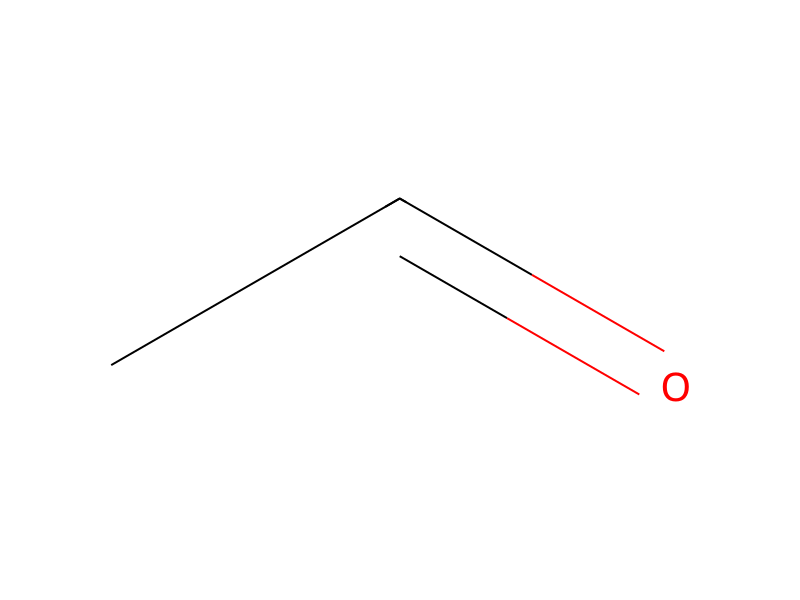
Acetaldehyde → 1-(2-Chloro-4-morpholinofuro[3,2-d]pyrimidine-6-yl)ethanol
Reaction equation

[Cl:1][C:2]1[N:3]=[C:4]([N:11]2[CH2:16][CH2:15][O:14][CH2:13][CH2:12]2)[C:5]2[O:10][CH:9]=[CH:8][C:6]=2[N:7]=1.C([Li])CCC.[CH:22](=[O:24])[CH3:23]>C1COCC1>[Cl:1][C:2]1[N:3]=[C:4]([N:11]2[CH2:16][CH2:15][O:14][CH2:13][CH2:12]2)[C:5]2[O:10][C:9]([CH:22]([OH:24])[CH3:23])=[CH:8][C:6]=2[N:7]=1Participants
5




Procedure
A solution of 2-chloro-4-morpholinofuro[3,2-d]pyrimidine 38 from Example 19 (0.3 mmol) dissolved in THF (3 mL) at −78° C. was added 1.6M solution of n-butyllithium (0.39 mmol). The reaction mixture was stirred for 30 mins at which point acetaldehyde (1.2 mmol) was added. The reaction was stirred for one hour and quenched with ice and allowed to warm to room temperature. The aqueous layer was extracted with methylene chloride and the organic layer was filtered through sodium sulfate. The organic phase was concentrated to yield 1-(2-chloro-4-morpholinofuro[3,2-d]pyrimidine-6-yl)ethanol (72 mg).
Workup
- additionwas added
- customquenched with ice
- extractionThe aqueous layer was extracted with methylene chloride
- filtrationthe organic layer was filtered through sodium sulfate
- concentrationThe organic phase was concentrated
Sources & evidence
- ORD record
- ord-58c09f4807cf4ac79fc1ba7786ed83d4
- Source dataset
- uspto-grants-2013_05
- Patent number
- US08450315B2
Reaction notes
Loading…