Hydrochloric Acid → 2-(Piperidin-1-yl)-5-(trifluoromethyl)aniline
Reaction equation

Cl.[Sn](Cl)Cl.[N+:5]([C:8]1[CH:13]=[C:12]([C:14]([F:17])([F:16])[F:15])[CH:11]=[CH:10][C:9]=1[N:18]1[CH2:23][CH2:22][CH2:21][CH2:20][CH2:19]1)([O-])=O.C(=O)(O)[O-].[Na+]>CO>[N:18]1([C:9]2[CH:10]=[CH:11][C:12]([C:14]([F:15])([F:16])[F:17])=[CH:13][C:8]=2[NH2:5])[CH2:19][CH2:20][CH2:21][CH2:22][CH2:23]1Participants





Procedure
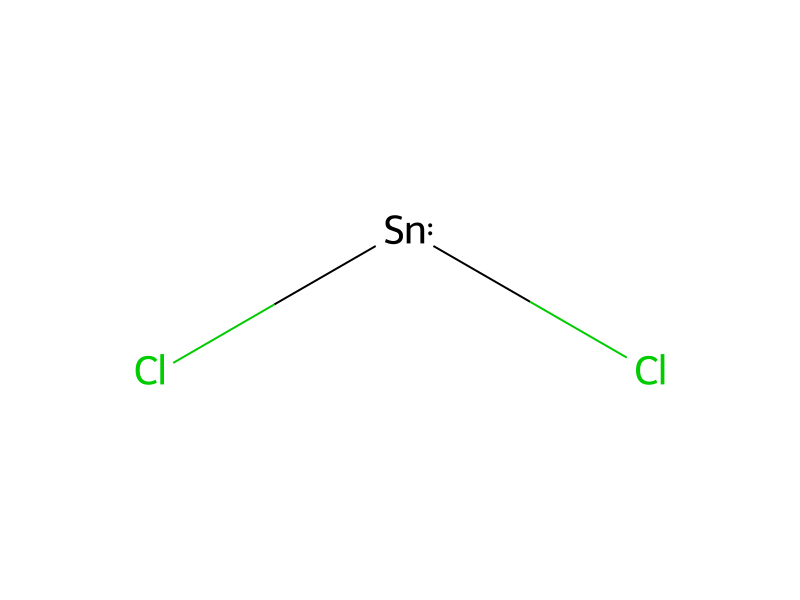
Concentrated hydrochloric acid (2.00 ml, 24.0 mmol) and anhydrous tin dichloride (2.50 g, 13.1 mmol) were sequentially added at 0° C. to a methanol (10 ml) solution containing 1-[2-nitro-4-(trifluoromethyl)phenyl]piperidine (559 mg, 2.03 mmol), obtained as described in Referential Example 1-1A. The resulting mixture was warmed to room temperature and then stirred for 17.5 hours. A saturated aqueous solution of sodium bicarbonate was added to the mixture. The resulting mixture was extracted three times with ethyl acetate. The obtained organic layer was washed with brine, dried over Na2SO4, filtered, and concentrated under reduced pressure. The residue was purified by silica gel column chromatography (50 g, hexane/ethyl acetate=14/1)). Thus, 2-(l-piperidinyl)-5-(trifluoromethyl)aniline (448 mg, 1.83 mmol, 90.4%) was yielded as a pale yellow solid.
Workup
- customobtained
- extractionThe resulting mixture was extracted three times with ethyl acetate
- washThe obtained organic layer was washed with brine
- dry with materialdried over Na2SO4
- filtrationfiltered
- concentrationconcentrated under reduced pressure
- customThe residue was purified by silica gel column chromatography (50 g, hexane/ethyl acetate=14/1))
Sources & evidence
- ORD record
- ord-6a60d54f4b684260b9ae482b06c8cfe2
- Source dataset
- uspto-grants-2009_08
- Patent number
- US07569536B2
Reaction notes
Loading…