Triphenylphosphine → 3-Bromo-6-(2-cyclopropylethoxy)phenanthrene
Reaction equation

[Br:1][C:2]1[CH:3]=[C:4]2[C:13](=[CH:14][CH:15]=1)[CH:12]=[CH:11][C:10]1[CH:9]=[CH:8][C:7]([OH:16])=[CH:6][C:5]2=1.[CH:17]1([CH2:20][CH2:21]O)[CH2:19][CH2:18]1.C1(P(C2C=CC=CC=2)C2C=CC=CC=2)C=CC=CC=1.CC(OC(/N=N/C(OC(C)(C)C)=O)=O)(C)C>C1COCC1>[Br:1][C:2]1[CH:15]=[CH:14][C:13]2[CH:12]=[CH:11][C:10]3[C:5]([C:4]=2[CH:3]=1)=[CH:6][C:7]([O:16][CH2:21][CH2:20][CH:17]1[CH2:19][CH2:18]1)=[CH:8][CH:9]=3Participants
6




Procedure
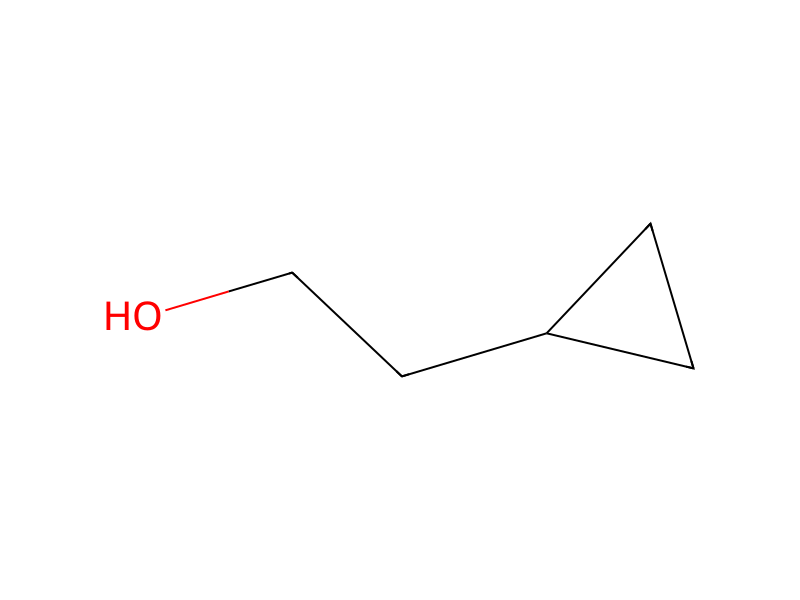
To a mixture of 6-bromophenanthren-3-ol (3 g, 11 mmol) from Step 1 of Route A of Example 168, 2-cyclopropylethanol (2.85 g, 33 mmol) and triphenylphosphine (5.78 g, 22 mmol) in THF (50 mL) was added di-tert-butylazodicarboxylate (5.08 g, 22 mmol). The reaction mixture was stirred at room temperature overnight, then quenched with water. The aqueous layer was extracted with ethyl acetate. The combined organic layer washed with brine, dried over MgSO4, filtered and concentrated. The material was purified by flash chromatography on silica (100% hexanes) to afford 3-bromo-6-(2-cyclopropylethoxy)phenanthrene.
Workup
- customquenched with water
- extractionThe aqueous layer was extracted with ethyl acetate
- washThe combined organic layer washed with brine
- dry with materialdried over MgSO4
- filtrationfiltered
- concentrationconcentrated
- customThe material was purified by flash chromatography on silica (100% hexanes)
Sources & evidence
- ORD record
- ord-5f3b759073fc4667b8260dfaef4fe9a0
- Source dataset
- uspto-grants-2008_10
- Patent number
- US07442716B2
Reaction notes
Loading…