Hydrochloric Acid → Cyclohexanecarbaldehyde chlorooxime
Reaction equation

[CH:1]1([CH:7]=[N:8][OH:9])[CH2:6][CH2:5][CH2:4][CH2:3][CH2:2]1.[ClH:10].OOS([O-])=O.[K+]>CN(C=O)C>[Cl:10][O:9][N:8]=[CH:7][CH:1]1[CH2:6][CH2:5][CH2:4][CH2:3][CH2:2]1Participants
5
Reactant 3


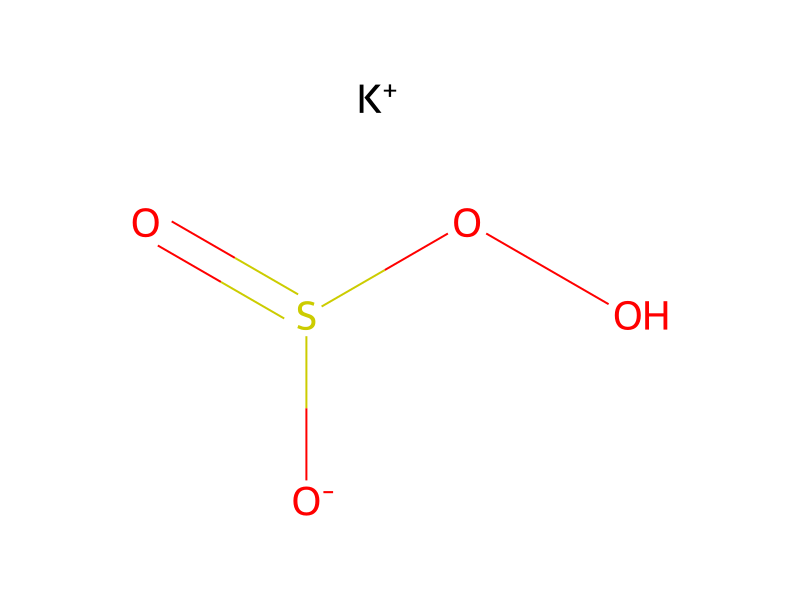
Product 1

Reagents, catalysts & solvents 1

Procedure
To a solution of the oxime formed in Example 1 (1 g, 8.25 mmol) in HCl (0.5 M in dioxane; 18.16 ml, 9.08 mmol) and DMF (40 ml) was added oxone (2.79 g, 4.54 mmol) and the resulting mixture was stirred overnight at room temperature. The reaction was partitioned between diethylether and water and the layers were separated. The organic layer was washed with saturated ammonium chloride, dried over sodium sulfate, then concentrates in vacuo using a room temperature water bath. The resulting low boiling liquid was carried on directly to the next step. 1H NMR (CDCl3) δ 1.0-2.2 (m, 10H), 2.35 (m, 1H), 7.8 (bd, 1H).
Workup
- customThe reaction was partitioned between diethylether and water
- customthe layers were separated
- washThe organic layer was washed with saturated ammonium chloride
- dry with materialdried over sodium sulfate
- customusing a room temperature
Sources & evidence
- ORD record
- ord-74607d4ea3434f80b7bf5633eb364a01
- Source dataset
- uspto-grants-2004_02
- Patent number
- US06689778B2
Reaction notes
Loading…