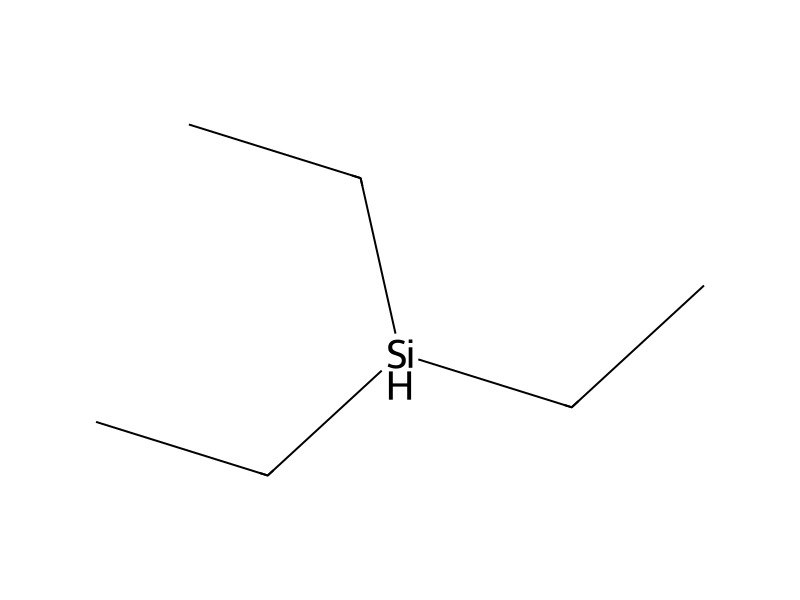
Triethylsilane → 4-Bromo-1-chloro-2-(4-ethoxy-benzyl)-benzene
Reaction equation

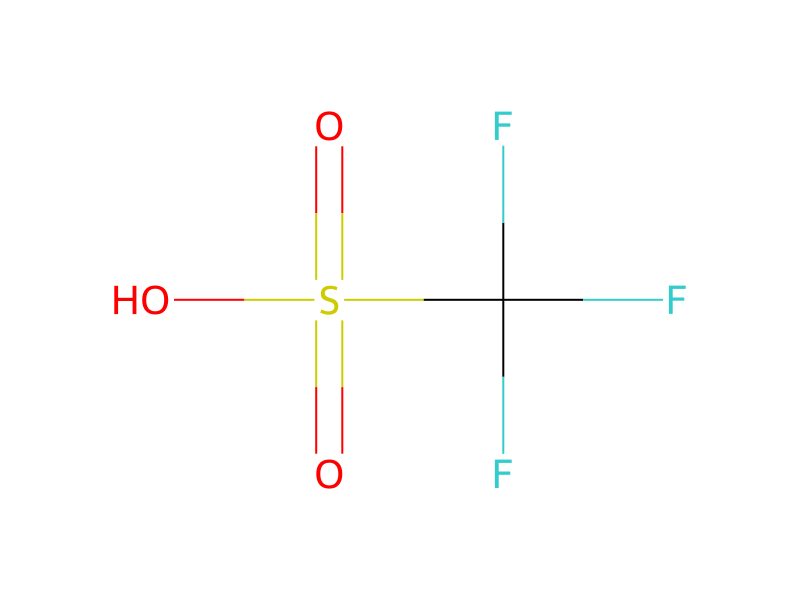
[Br:1][C:2]1[CH:3]=[CH:4][C:5]([Cl:19])=[C:6]([C:8]([C:10]2[CH:15]=[CH:14][C:13]([O:16][CH2:17][CH3:18])=[CH:12][CH:11]=2)=O)[CH:7]=1.C([SiH](CC)CC)C.FC(F)(F)S(O)(=O)=O>FC(F)(F)C(O)=O>[Br:1][C:2]1[CH:3]=[CH:4][C:5]([Cl:19])=[C:6]([CH2:8][C:10]2[CH:15]=[CH:14][C:13]([O:16][CH2:17][CH3:18])=[CH:12][CH:11]=2)[CH:7]=1Participants


Procedure
To (5-bromo-2-chlorophenyl)(4-ethoxyphenyl)methanone (1440 g, 4.26 mol) and triethylsilane (1.37 L, 8.6 mol) in trifluoroacetic acid (820 mL) was slowly added trifluoromethanesulfonic acid (1.9 mL). After refluxing for 6 hours, additional triethylsilane (400 mL, 2.47 mol) was added. After refluxing for another 8 hours, the mixture was evaporated under reduced pressure. The residue was dissolved in dichloromethane (20 L), washed with water (10 L), aqueous sodium carbonate (10 L), and brine (10 L), and concentrated to give crude product. The crude product was distilled to remove (Et3Si)2O under vacuum. The residue was recrystallized from absolute ethanol (5 L) and dried under vacuum to give compound 3 (1310 g, 94% yield, HPLC purity>99%).
Workup
- temperatureAfter refluxing for 6 hours
- temperatureAfter refluxing for another 8 hours
- customthe mixture was evaporated under reduced pressure
- dissolutionThe residue was dissolved in dichloromethane (20 L)
- washwashed with water (10 L), aqueous sodium carbonate (10 L), and brine (10 L)
- concentrationconcentrated
- customto give crude product
- distillationThe crude product was distilled
- customto remove (Et3Si)2O under vacuum
- customThe residue was recrystallized from absolute ethanol (5 L)
- customdried under vacuum
Sources & evidence
- ORD record
- ord-e231fa2d300b41a2b9f45406e73474d0
- Source dataset
- uspto-grants-2015_06
- Patent number
- US09061060B2
Reaction notes
Loading…