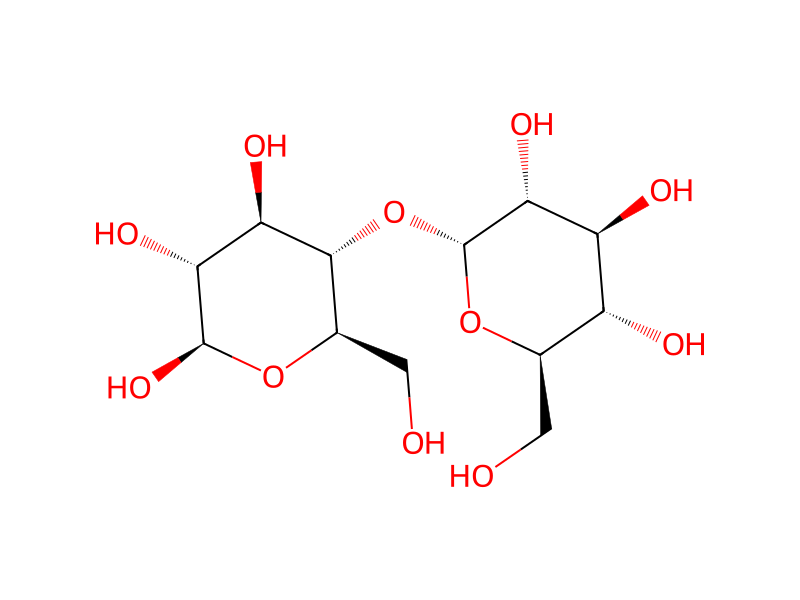
beta-Maltose → Isomaltose
Reaction equation

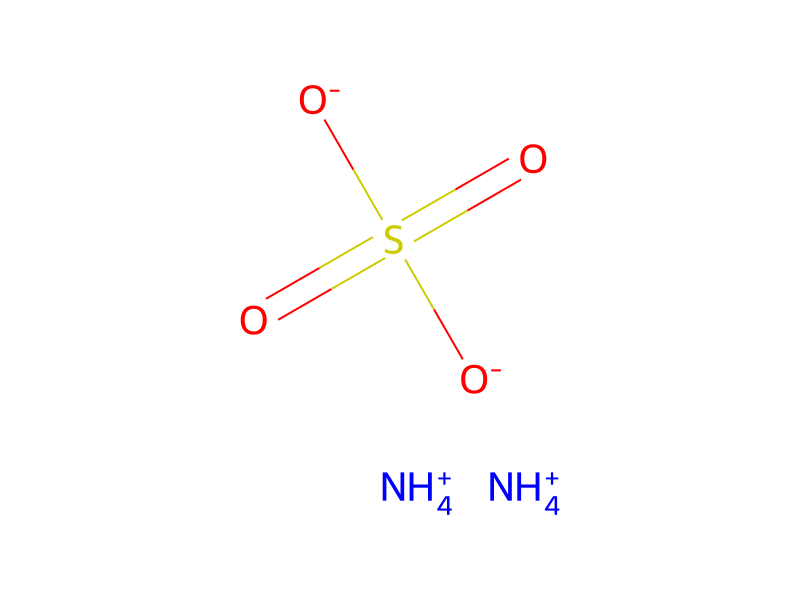
S([O-])([O-])(=O)=O.[NH4+].[NH4+].S([O-])([O-])(=O)=O.CO.[CH2:15]([OH:37])[C@H:16]1[O:21][C@H:20]([O:22][C@H:23]2[C@H:28]([OH:29])[C@@H:27]([OH:30])[C@H:26]([OH:31])[O:25][C@@H:24]2[CH2:32][OH:33])[C@H:19]([OH:34])[C@@H:18]([OH:35])[C@@H:17]1[OH:36].O=C[C@@H]([C@H]([C@@H]([C@@H](CO)O)O)O)O>C(O)CCC.N1C=CC=CC=1.O>[CH2:15]([OH:37])[C@H:16]1[O:21][C@H:20]([O:22][CH2:23][C@H:24]2[O:25][CH:26]([OH:31])[C@H:27]([OH:30])[C@@H:28]([OH:29])[C@@H:32]2[OH:33])[C@H:19]([OH:34])[C@@H:18]([OH:35])[C@@H:17]1[OH:36]Participants
Reactant 4
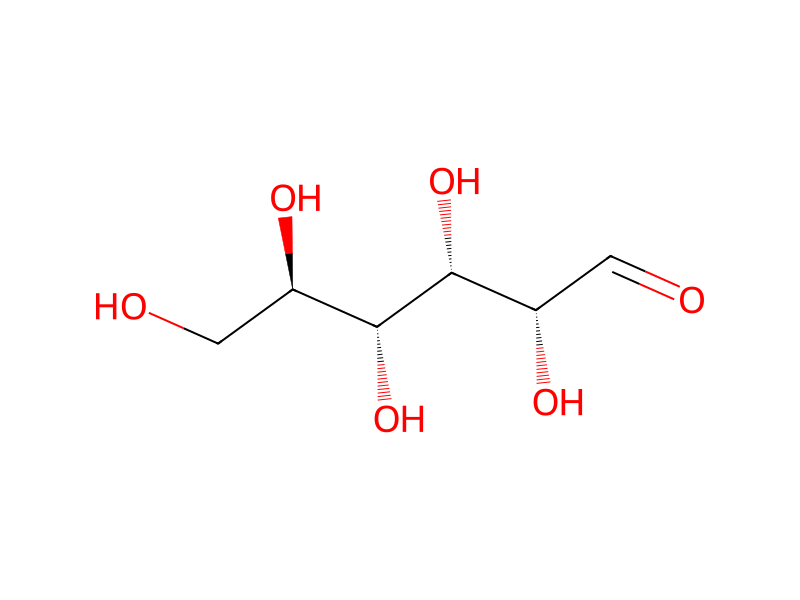

Product 1

Reagents, catalysts & solvents 1

Conditions
- Temperature
- 100 °C
Procedure
Bacillus circulans PP710, FERM BP-10771, was cultivated by the method in Experiment 1-1, and about 3 L of the resulting culture supernatant was salted out using ammonium sulfate. Then, the resulting precipitated was dissolved in water, dialyzed against 20 mM Tris-HCl buffer containing 1 mM CaCl2, and about 40 ml of the resulting dialyzate was collected as a crude enzyme solution. The crude enzyme solution was admixed with 2% (w/v) of soluble starch solution or 2=% (w/v) of pullulan solution, and followed by the enzyme reaction at pH 6.0 and 40° C. for 16 hours. After stopping the reaction by heating at 100° C. for 10 min, the reaction mixture was subjected to TLC using “SILICAGELM 60F254”, a TLC plate (10×20 cm) commercialized by Merck. TLC was carried out using a solvent (n-butanol/pyridine/water, volume ratio of 6:4:1) and two-times ascending method. The products on the plate were detected by visualizing the spots by spraying 20% sulfate-methanol solution and heating at 100° C. for 5 min. By the TLC analyses, it was revealed that maltose and α-1,4 glucan having a glucose polymerization degree of 3 or higher were formed from soluble starch, and slight amounts of isomaltose and panose were formed from pullulan. It was revealed that an amylase which hydrolyzes starch and pullulan was present in the crude enzyme from Bacillus circulans PP710, FERM BP-10771, as a concomitant enzyme.
Workup
- customThen, the resulting precipitated
- dissolutionwas dissolved in water
- customdialyzed against 20 mM Tris-HCl buffer
- additioncontaining 1 mM CaCl2, and about 40 ml of the resulting dialyzate
- customwas collected as a crude enzyme solution
- customfollowed by the enzyme reaction at pH 6.0 and 40° C. for 16 hours
- customthe reaction
- temperatureheating at 100° C. for 5 min
Sources & evidence
- ORD record
- ord-1dff7796f2b8499fbbe584e4449c63c7
- Source dataset
- uspto-grants-2012_12
- Patent number
- US08324375B2
Reaction notes
Loading…