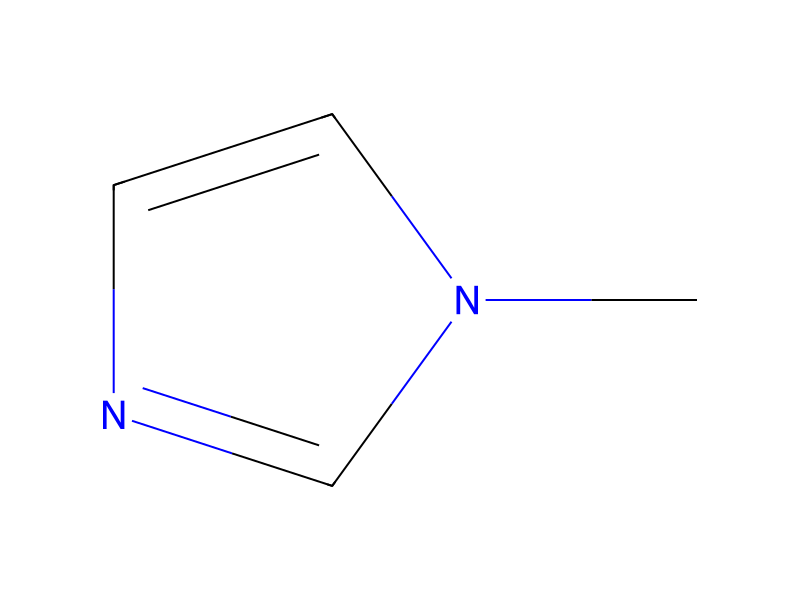
1-Methylimidazole → HCID 178443590, Verbindung
Reaktionsgleichung

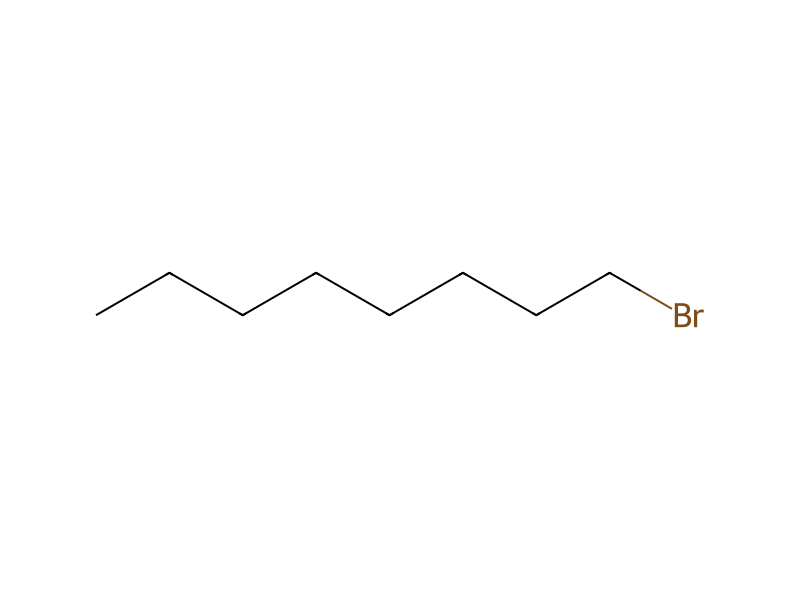
[CH3:1][N:2]1[CH:6]=[CH:5][N:4]=[CH:3]1.[Br:7][CH2:8][CH2:9][CH2:10][CH2:11][CH2:12][CH2:13][CH2:14][CH3:15]>>[Br-:7].[CH2:8]([N+:4]1[CH:5]=[CH:6][N:2]([CH3:1])[CH:3]=1)[CH2:9][CH2:10][CH2:11][CH2:12][CH2:13][CH2:14][CH3:15]Komponenten

Reaktionsbedingungen
- Temperatur
- 90 °C
Versuchsvorschrift
A 35 mL glass pressure tube (Ace Glass Cat#8648-07) containing a stir bar was charged with 4.105 g (0.050 moles) of 1-methylimdazole followed by 9.656 g (0.050 moles) of 1-bromooctane. The tube was sealed with a threaded Teflon plug and an O-ring and the tubes were placed in an oil bath on a VWR stirring hot plate. The temperature was raised to 90° C. and maintained at this temperature for 16 hours during which time the solution became viscous and the stir bar had stopped. The tube was removed from the bath and mixed vigorously on a vortexing mixer to completely mix the two layers and the tube replaced into the oil bath at 90° C. and the temperature raised to 90° C. The tube was heated for another hour and then mixed vigorously a second time followed by another hour of heating at 90° C. The cycle was repeated once more until the viscous liquid was homogeneous. The liquid was extracted with equal volumes of ethyl acetate three times followed by rotary evaporation to remove the residual ethyl acetate to give 13.239 g of the 1-hexyl-3-methylimidazolium bromide as a viscous lightly yellow colored oil. Compound is also available from loLiTec (Heilbronn, Germany).
Aufarbeitung
- additionA 35 mL glass pressure tube (Ace Glass Cat#8648-07) containing a stir bar
- customan O-ring and the tubes were placed in an oil bath on a VWR
- temperaturemaintained at this temperature for 16 hours during which time the solution
- customThe tube was removed from the bath
- additionmixed vigorously on a vortexing mixer
- additionto completely mix the two layers
- customreplaced into the oil bath at 90° C.
- temperaturethe temperature raised to 90° C
- temperatureThe tube was heated for another hour
- additionmixed vigorously a second time
- waitfollowed by another hour
- temperatureof heating at 90° C
- extractionThe liquid was extracted with equal volumes of ethyl acetate three times
- customfollowed by rotary evaporation
- customto remove the residual ethyl acetate
Quellen und Nachweise
- ORD-Eintrag
- ord-6e42c95aa74143d6b97dd7a294839594
- Quelldatensatz
- uspto-grants-2016_06
- Patentnummer
- US09376709B2
Notizen zur Reaktion
Wird geladen…