Potassium Carbonate → 2-(Phenylselanyl)aniline
Reaction equation

[C:1]1([SeH:7])[CH:6]=[CH:5][CH:4]=[CH:3][CH:2]=1.I[C:9]1[CH:15]=[CH:14][CH:13]=[CH:12][C:10]=1[NH2:11].[O-]P([O-])([O-])=O.[K+].[K+].[K+].C([O-])([O-])=O.[K+].[K+]>>[NH2:11][C:10]1[CH:12]=[CH:13][CH:14]=[CH:15][C:9]=1[Se:7][C:1]1[CH:6]=[CH:5][CH:4]=[CH:3][CH:2]=1Participants


Procedure
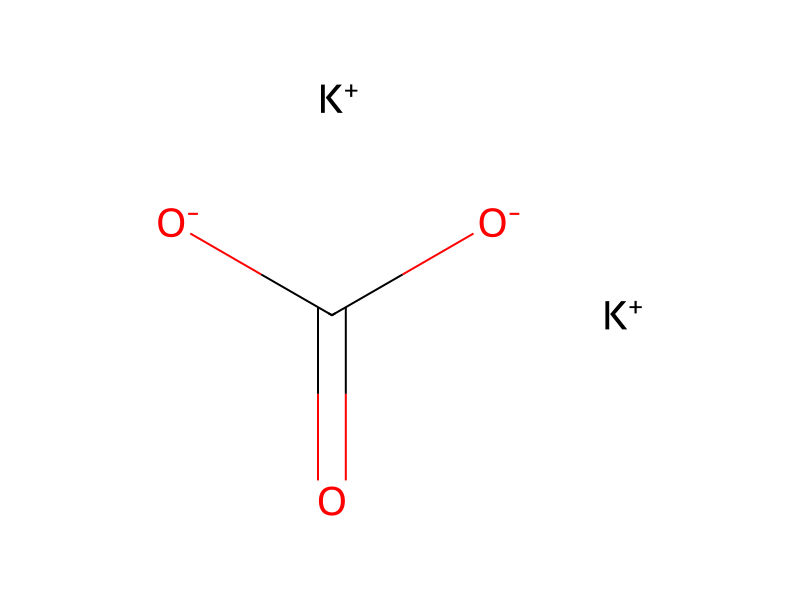
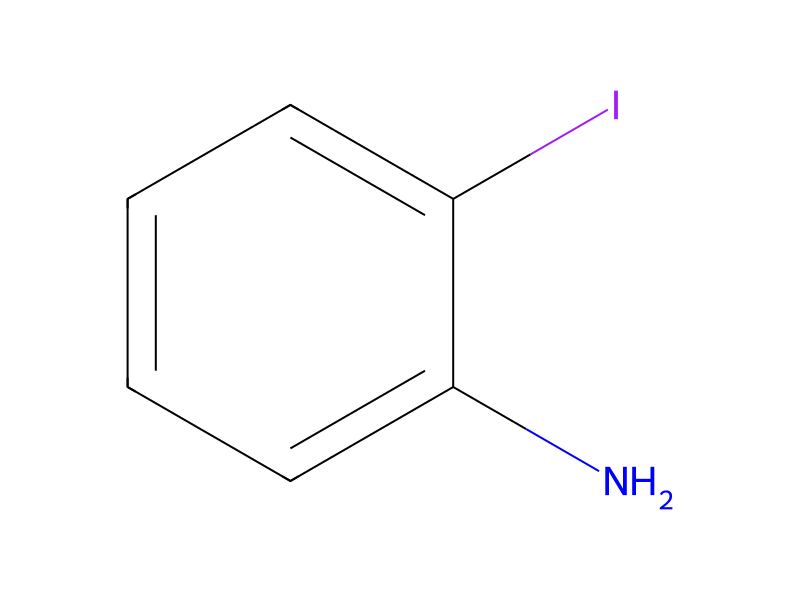
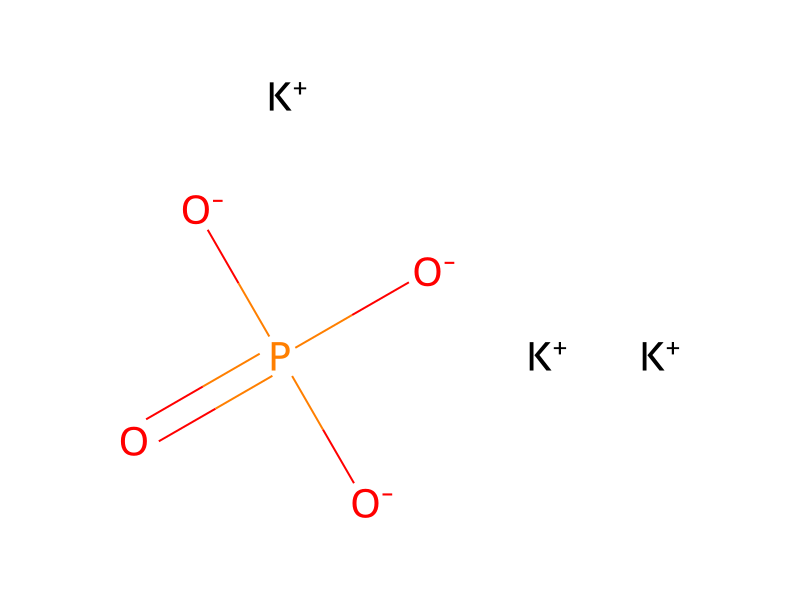
Using this protocol (see example 4 below), phenyl selenol was coupled with electron-rich aryl iodides in very good yields (Table 5). Sterically hindered iodides such as those with ortho-functionalities (entries 3, 5, 7 and 11), were coupled, as well as aryl iodides containing heteroatoms (entry 8 and 10). When o-iodoaniline was used as the aryl halide, in addition to the desired selenide, products were observed arising from the self-coupling of o-iodoaniline. This problem also persisted with K3PO4. However, when K2CO3 was used as the base, 1-amino-2-phenylselanyl-benzene was isolated in 60% yield (entry 12). With electron-poor aryl iodides, in addition to the desired diaryl selenides, diaryl diselenides were observed if NaOt-Bu or K3PO4 was used. In addition, with NaOt-Bu, transesterifcation products were observed when aryl halides with ester groups were used. Such complications can be avoided if K2CO3 is used instead of NaOt-Bu or K3PO4. Using this modified protocol a variety of diaryl selenides were obtained from electron-poor aryl halides (Table 6). The protocol tolerates even base sensitive groups such as esters and ketones (entries 3, 4, and 6).
Workup
- customin very good yields (Table 5)
Sources & evidence
- ORD record
- ord-1995b9f1df3e49c382063fa62af1ffb5
- Source dataset
- uspto-grants-2006_09
- Patent number
- US07112697B1
Reaction notes
Loading…