Tributyltin Chloride → 4-(Tri-n-butylstannyl)thiazole
Reaction equation

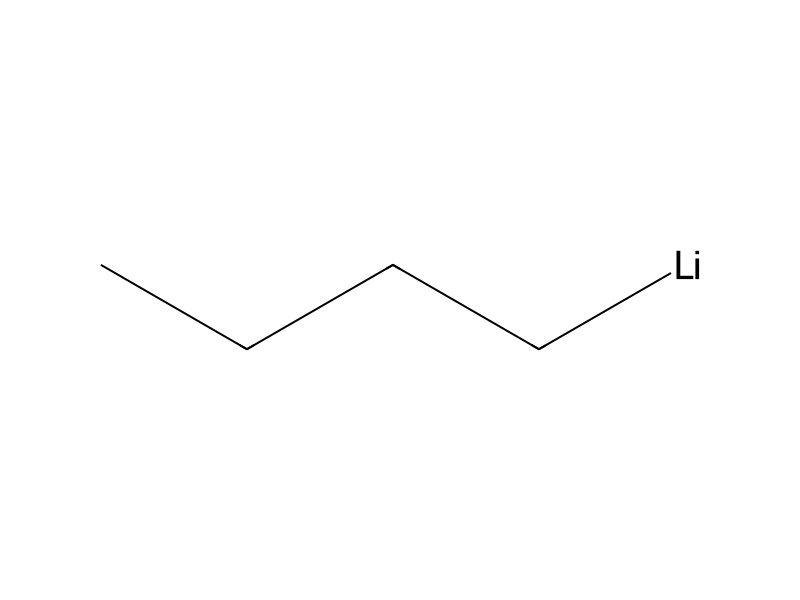
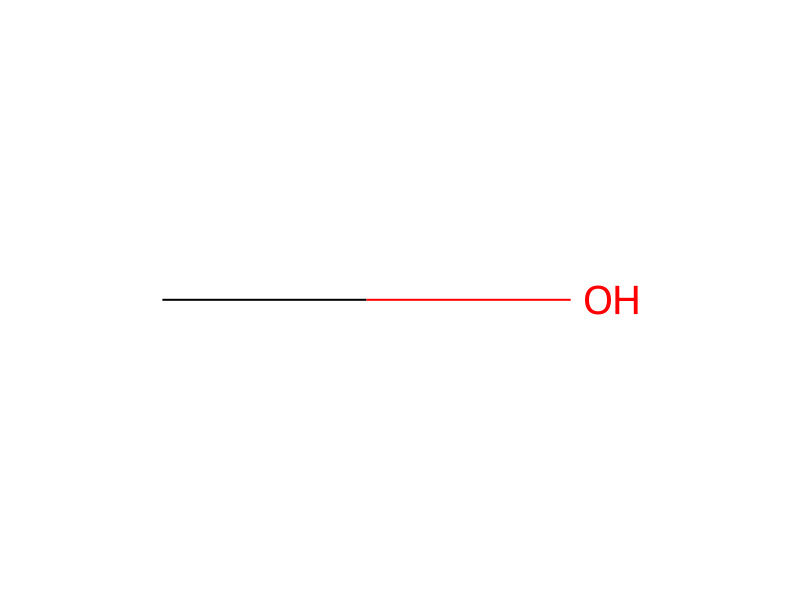
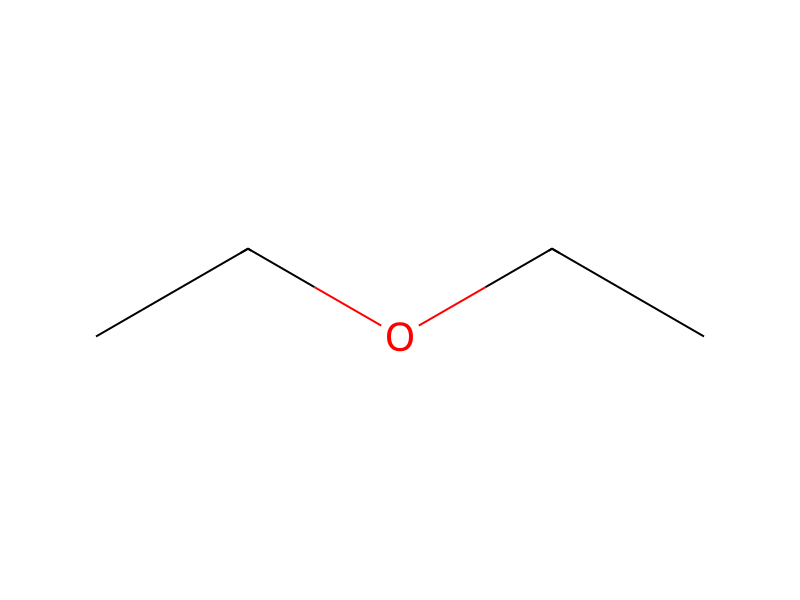
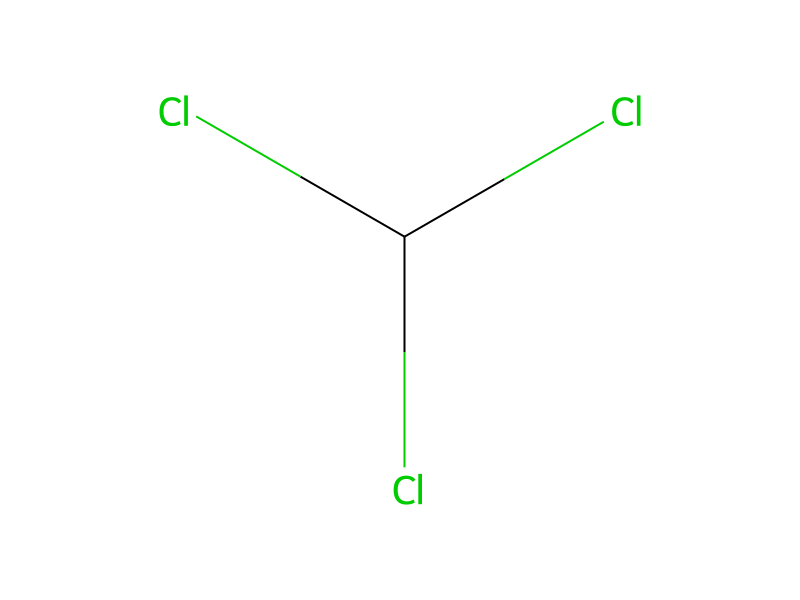
BrC1N=C([Si](C)(C)C)SC=1.C([Li])CCC.C([Sn](Cl)(CCCC)CCCC)CCC.C[Si](C)(C)[C:32]1[S:33][CH:34]=[C:35]([Sn:37]([CH2:46][CH2:47][CH2:48][CH3:49])([CH2:42][CH2:43][CH2:44][CH3:45])[CH2:38][CH2:39][CH2:40][CH3:41])[N:36]=1>CCOCC.C(Cl)(Cl)Cl.CO>[CH2:46]([Sn:37]([CH2:38][CH2:39][CH2:40][CH3:41])([CH2:42][CH2:43][CH2:44][CH3:45])[C:35]1[N:36]=[CH:32][S:33][CH:34]=1)[CH2:47][CH2:48][CH3:49]Participants
Reactant 4


Product 1

Reagents, catalysts & solvents 3
Conditions
- Temperature
- -78 °C
Procedure
n-Butyllithium (1.6M, 3.1 mL, 4.94 mmol) was added to a solution of 2,4-dibromothiazole (1 g, 4.12 mmol) in anhydrous ether (25 mL) stirred at −78° C. under nitrogen. After 15 min, chlorotrimethylsilane (493 mg, 4.53 mmol) was added, then the solution was allowed to warm to room temperature, and stirred for another 1 h. The mixture was quenched, and washed with 1N sodium hydroxide, dried through MgSO4, and then the solvent was evaporated to give a brown oily residue (905 mg). The residue was purified by the distillation to give 4-bromo-2-trimethylsilylthiazole (650 mg) as a light-brown oil. Under nitrogen, the 4-bromo-2-trimethylsilylthiazole (340 mg, 1.44 mmol) was then dissolved in anhydrous ether (15 mL), and the resulting solution was stirred at −78° C. n-Butyllithium (1.5M, 1.4 mL, 2.16 mmol) was added, and the resulting solution was stirred at −78° C. for 30 minutes. Tri-n-butylstannyl chloride (703 mg, 2.16 mmol) was added, then the solution was allowed to warm to room temperature, and stirred for another 1 h. The mixture was quenched and washed with 1N sodium hydroxide, dried through MgSO4, and then the solvent was evaporated to give a brown oily residue. The residue of 2-trimethylsilyl-4-tri-n-butylstannylthiazole was passed through a column of neutral alumina eluting with a gradient of ammoniated methanol in chloroform to give the sub-title compound, 4-tri-n-butylstannylthiazole as a yellow oil (330 mg).
Workup
- additionwas added
- temperatureto warm to room temperature
- stirringstirred for another 1 h
- customThe mixture was quenched
- washwashed with 1N sodium hydroxide
- dry with materialdried through MgSO4
- customthe solvent was evaporated
- customto give a brown oily residue
Sources & evidence
- ORD record
- ord-dd199c047c7046c88a3d2dd85aa66602
- Source dataset
- uspto-grants-2008_08
- Patent number
- US07417050B2
Reaction notes
Loading…