Citrate → Prostaglandin E2
Reaction equation

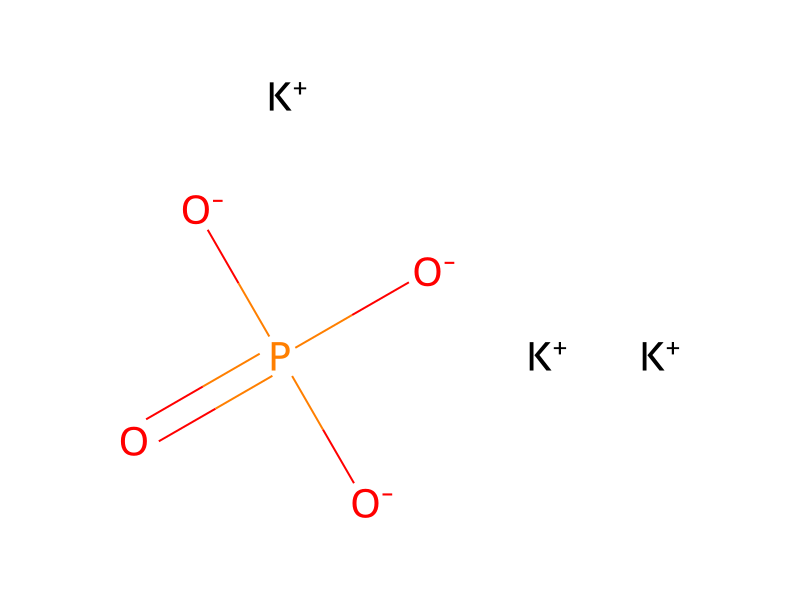
P([O-])([O-])([O-])=O.[K+].[K+].[K+].C([C@H](N)C(O)=O)CC(N[C@H](C(NCC(O)=O)=O)CS)=O.[CH3:29][CH2:30][CH2:31][CH2:32][CH2:33][C@H:34]([OH:53])/[CH:35]=[CH:36]/[C@@H:37]1[C@@H:41]([CH2:42]/[CH:43]=[CH:44]\[CH2:45][CH2:46][CH2:47][C:48]([OH:50])=[O:49])[C@H:40]2[O:51][O:52][C@@H:38]1[CH2:39]2.C([O-])(=O)CC(CC([O-])=O)(C([O-])=O)O>CS(C)=O.C(#N)C>[CH3:29][CH2:30][CH2:31][CH2:32][CH2:33][C@H:34]([OH:53])/[CH:35]=[CH:36]/[C@@H:37]1[C@@H:41]([CH2:42]/[CH:43]=[CH:44]\[CH2:45][CH2:46][CH2:47][C:48]([OH:50])=[O:49])[C:40](=[O:51])[CH2:39][C@H:38]1[OH:52]Participants
Reactant 4



Product 1

Reagents, catalysts & solvents 2
Procedure
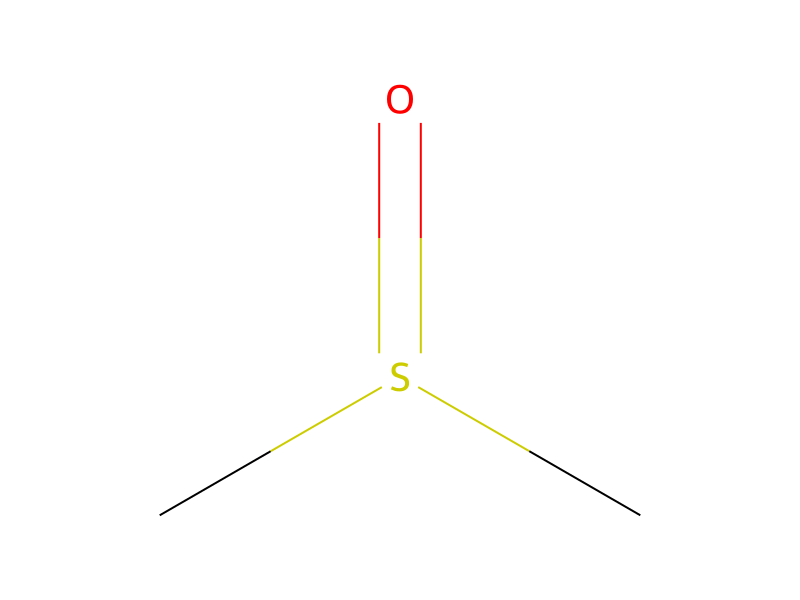
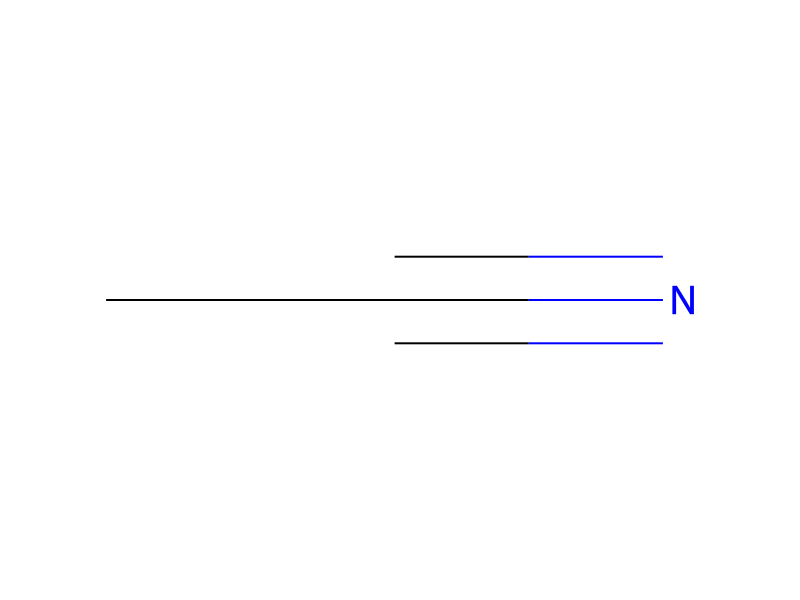
The typical reaction conditions of the enzymatic reaction were thus: Test compound: ranging from 60 μM to 0.002 μM, or zero in positive and negative controls; potassium phosphate buffer pH 6.8: 50 mM; GSH: 2.5 mM; mPGES-1-containing microsomes: 2 μg/mL (sample and positive controls) or 0 μg/mL (negative control); PGH2: 10.8 μM; Acetonitrile: 7.7% (v/v); DMSO: 0.6% (v/v). The reaction was stopped after one minute by adding an acidic solution (pH 1.9) of ferric chloride and citrate (final concentrations 7 mM and 47 mM respectively), by which the PGH2 was sequestered (the PGH2 is reduced to mainly 12-hydroxy heptadecatrineoic acid (12-HHT) which is not detected by the subsequent PGE2 detection step). The resulting solution was then pH neutralized by addition of potassium phosphate buffer, prior to diluting an aliquot of the resulting solution in a weak potassium phosphate buffer (50 mM, pH 6.8) containing 0.2% BSA (w/v). [Adapted from Jacobsson et al., Proc. Natl. Acad. Sci. USA, 1999, vol. 96, pp. 7220-7225] The PGE2 formed was quantified by use of a commercial HTRF based kit (catalogue #62PG2PEC or #62P2APEC from Cisbio International). 100% activity was defined as the PGE2 production in positive controls subtracted by the PGE2 production in the negative controls. IC50 values were then determined using standard procedures.
Workup
- customThe typical reaction conditions of the enzymatic reaction
- concentrationconcentrations 7 mM and 47 mM respectively), by which the PGH2
- additionThe resulting solution was then pH neutralized by addition of potassium phosphate buffer
- additionto diluting an aliquot of the resulting solution in a weak potassium phosphate buffer (50 mM, pH 6.8)
- additioncontaining 0.2% BSA (w/v)
Sources & evidence
- ORD record
- ord-e0887fac4d6240b695ce1e0d50783a5b
- Source dataset
- uspto-grants-2015_09
- Patent number
- US09145380B2
Reaction notes
Loading…