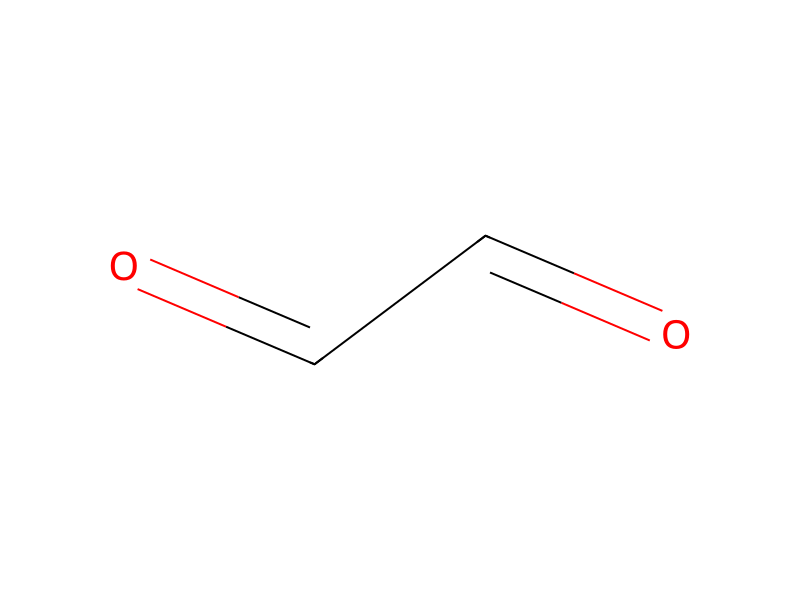
Glyoxal → HCID 12918841, compound
Reaction equation

[CH3:1][C:2]([C:5]1[O:9][N:8]=[C:7]([NH:10][C:11]([NH:13][CH3:14])=[O:12])[CH:6]=1)([CH3:4])[CH3:3].[CH:15]([CH:17]=[O:18])=[O:16].[OH-].[Na+]>C(O)C>[CH3:4][C:2]([C:5]1[O:9][N:8]=[C:7]([N:10]2[CH:15]([OH:16])[CH:17]([OH:18])[N:13]([CH3:14])[C:11]2=[O:12])[CH:6]=1)([CH3:1])[CH3:3]Participants
Reactant 3


Product 1

Reagents, catalysts & solvents 1

Procedure
To a solution of 2.0 grams (0.010 mole) of 1-[5-(1,1-dimethylethyl)-3-isoxazolyl]-3-methylurea in 50 milliliters of 95 percent ethanol was added 7.3 grams of a 40 percent aqueous glyoxal solution which had been previously adjusted to pH 7 with dilute sodium hydroxide solution. After standing at room temperature overnight, the solution was topped on a rotary evaporator to give an oily residue which was extracted with two 20 milliliter portions of chloroform. The extract was washed with saturated sodium chloride solution, filtered through silicone-treated paper, and concentrated on a rotary evaporator to give 2.0 grams of oily residue. Crystallization from ether gave 0.4 gram of white crystals of 3-[5-(1,1-dimethylethyl)-3-isoxazolyl]-4,5-dihydroxy-1-methyl-2-imidazolidinone, M.P. 153°-157° C., which had consistent mass, infrared and NMR spectra.
Workup
- customthe solution was topped on a rotary evaporator
- customto give an oily residue which
- extractionwas extracted with two 20 milliliter portions of chloroform
- washThe extract was washed with saturated sodium chloride solution
- filtrationfiltered through silicone-
- additiontreated paper
- concentrationconcentrated on a rotary evaporator
Sources & evidence
- ORD record
- ord-1db3b60a452140dea4232adc336b81b3
- Source dataset
- uspto-grants-1981_05
- Patent number
- US04268679
Reaction notes
Loading…