Imidazole → 1-((1R)-1,5-Dimethylhexyl)octahydro-7a-methyl-4H-inden-4-one, (1R,3aR,7aR)-
Reaction equation

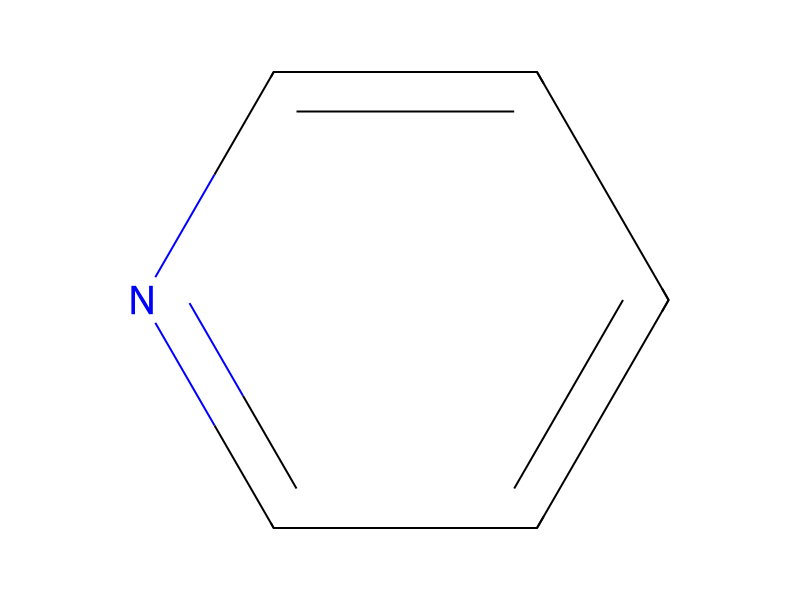
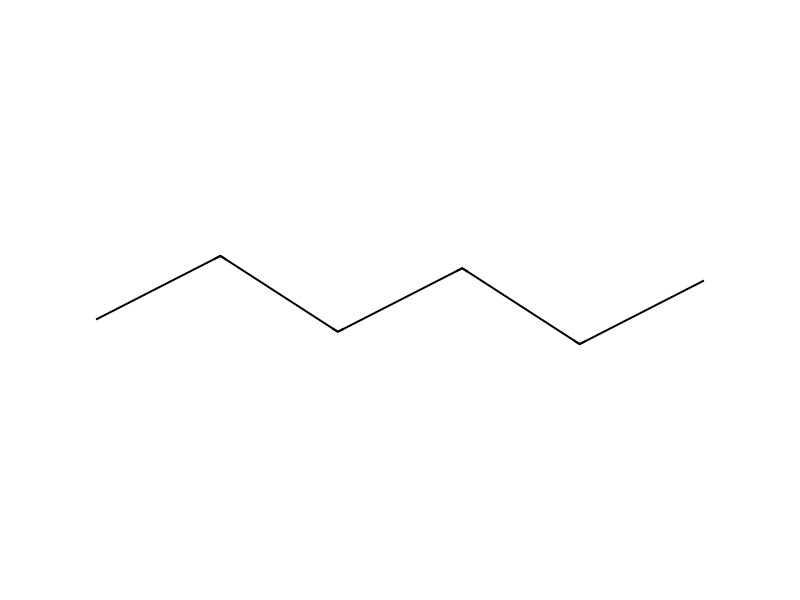
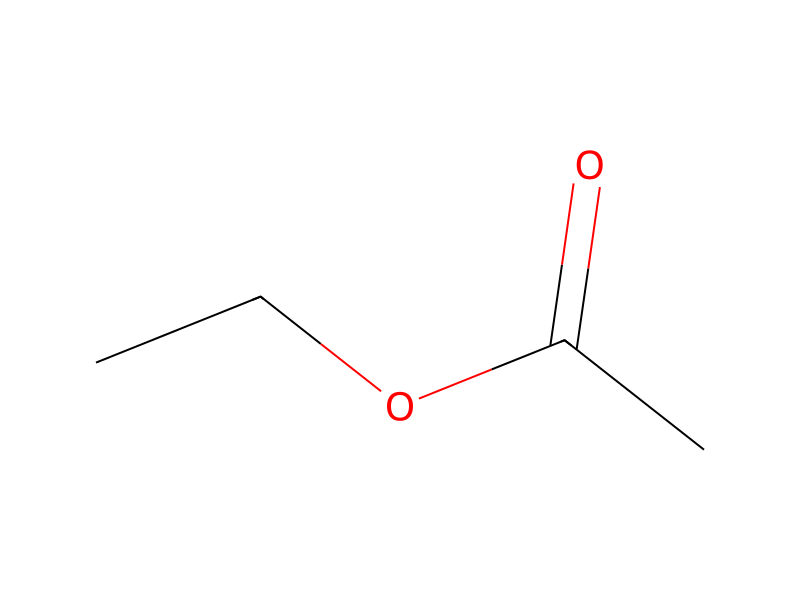
[Li][CH2:2][CH2:3][CH2:4][CH3:5].C(OC(=O)C)(=[O:8])C.[C:13]1([CH3:23])[CH:18]=CC(S([O-])(=O)=O)=C[CH:14]=1.[NH+]1[CH:29]=[CH:28][CH:27]=[CH:26][CH:25]=1.[Cr](Cl)([O-])(=O)=O.[NH+]1[CH:40]=[CH:39][CH:38]=[CH:37][CH:36]=1.N1C=CN=C1>CCCCCC.[Na].[Hg].C(OCC)(=O)C.N1C=CC=CC=1>[CH3:5][C@@H:4]([C@@H:25]1[C@@:39]2([CH3:40])[CH2:38][CH2:37][CH2:36][C:29](=[O:8])[C@@H:28]2[CH2:27][CH2:26]1)[CH2:3][CH2:2][CH2:14][CH:13]([CH3:23])[CH3:18]Participants
Reactant 5

Product 1

Reagents, catalysts & solvents 4

Procedure
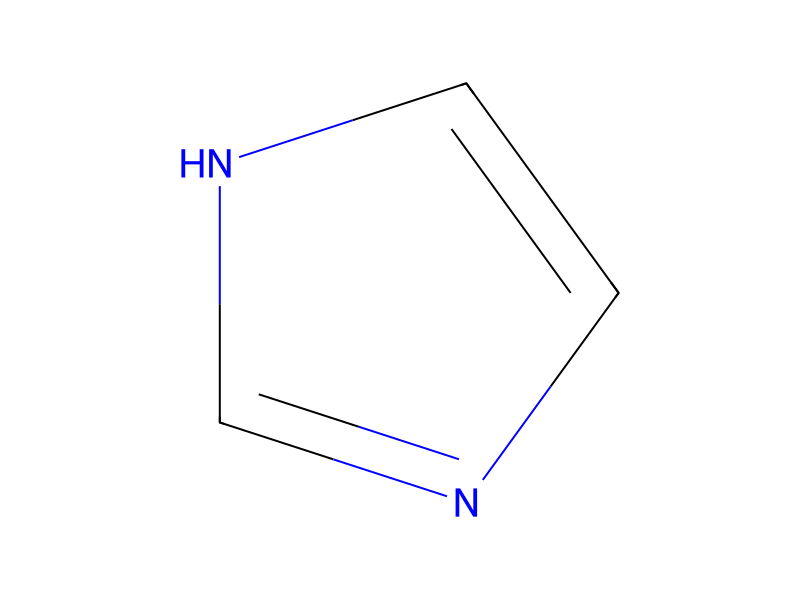
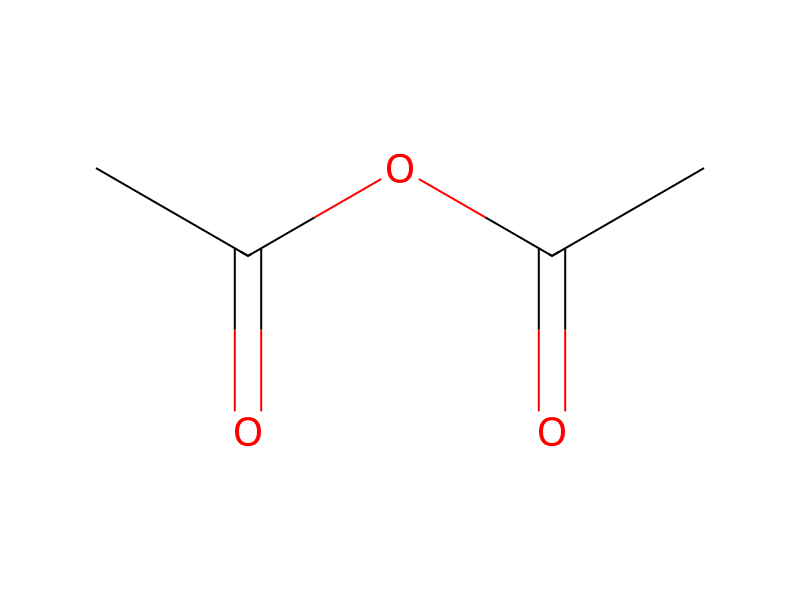
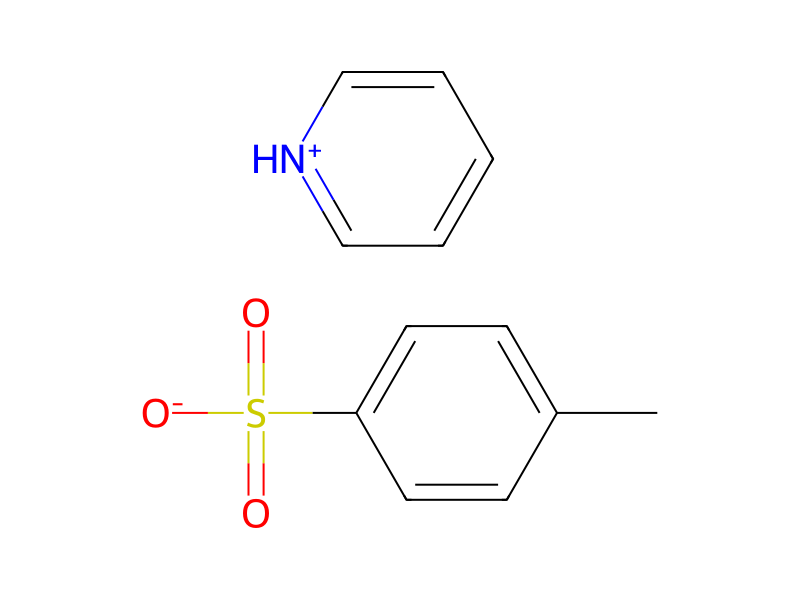
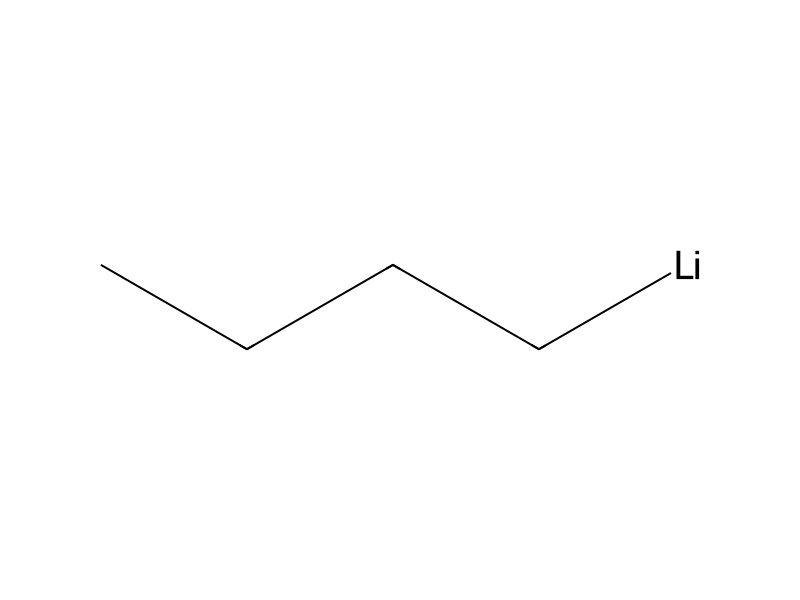
Compounds of formula I, formula IA, and formula IB were prepared using the methods shown in Schemes I, IIA, and IIB. Compound 1 is obtained by ozonolysis of ergocalciferol or vitamin D2 as described by Sicinski et al. (J. Med. Chem. 41, 4662-4672, 1998). Compound 1 is reduced with borohydride to produce the dihydroxy compound 2. These reactions can be followed by thin layer chromatography (TLC) using a solvent system of 10% ethyl acetate in hexane. Treatment of 2 with acetic anhydride in pyridine provides the acetate compound 3. Compound 3 is then treated with triethylsilyl trifluoromethane sulfonate followed by base hydrolysis (heating with KOH in methanol) to yield compound 4. Again, these reactions are followed by the same TLC system as above. Compound 4 is oxidized with sulfur trioxide in pyridine, dimethylsulfoxide and triethylamine to provide 5. The reaction is followed by TLC using 10% in acetic acid. Treatment of 5 with sodium bicarbonate to epimerize the compound followed by reduction with sodium borohydride in methanol provides alcohol 6 and is detected by TLC with 20% ethyl acetate in hexane. Compound 6 is then oxidized using the reagents shown in Scheme IIA to produce compound 7 which is in turn was reacted with the stereospecific sulfone (compound 8) in the presence of n-BuLi (Scheme IIB). Sulfone 8 was prepared using starting materials obtained from the Aldrich Chemical Company (Milwaukee, Wis.) using the procedures disclosed in U.S. Pat. No. 5,750,746, which issued to DeLuca et al. on May 12, 1998. Acetylation of this compound was performed using acetic anhydride and pyridine resulting in compound 9, which was confirmed by TLC (10% ethyl acetate in hexane). Compound 9 was then converted to compound 10, by reaction with a sodium amalgam. The presence of compound 10, was confirmed by TLC (10% ethyl acetate in hexane). Deprotection of compound 10 was accomplished using pyridinium p-toluene sulfonate, and the reaction followed by TLC with 35% ethyl acetate in hexane. Oxidation of compound 11 was accomplished by reaction with pyridinium chlorochromate. A trimethylsilyl group was then added in the presence of imidazole to provide compound 13. Products 12 and 13 were detected by TLC with 35% ethyl acetate in hexane. A Wittig-Horner condensation of the protected Grundmann's Ketone (Compound 13) with the phosphine oxide (Compound 14) in the presence of n-BuLi was performed. The resulting product (Compound 15) was confirmed by TLC (20% ethyl acetate in hexane). Finally, the target compound (Compound 16) was generated by deprotection in the presence of tetrabutyl ammonium fluoride. The reaction was followed by TLC with 10% methanol in chloroform. Additional confirmation of the end product is described below:
Workup
- customobtained from the Aldrich Chemical Company (Milwaukee, Wis.)
Sources & evidence
- ORD record
- ord-e4ca628b8abe4c9095a6563e49c7ff02
- Source dataset
- uspto-grants-2009_07
- Patent number
- US07563783B2
Reaction notes
Loading…