2-Mercaptobenzoic Acid → 2-(3,5-Dimethoxyphenylthio)benzyl alcohol
Reaction equation

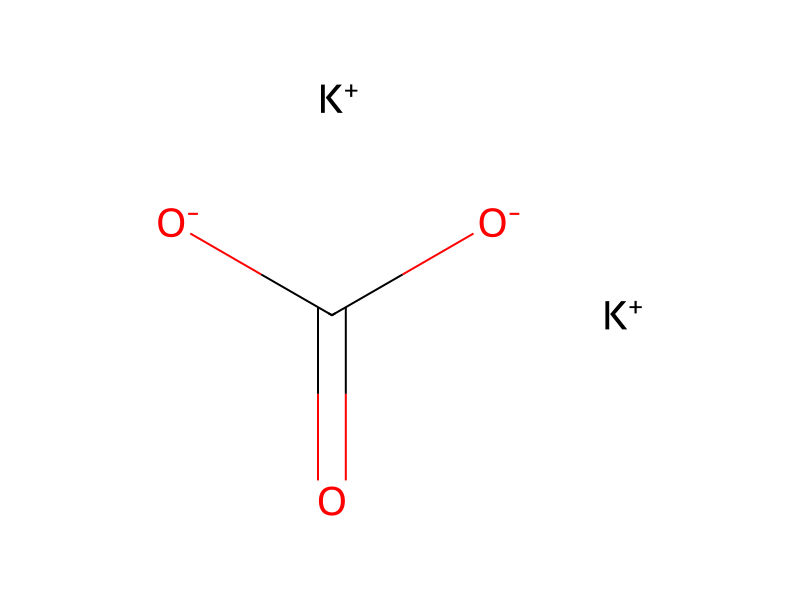
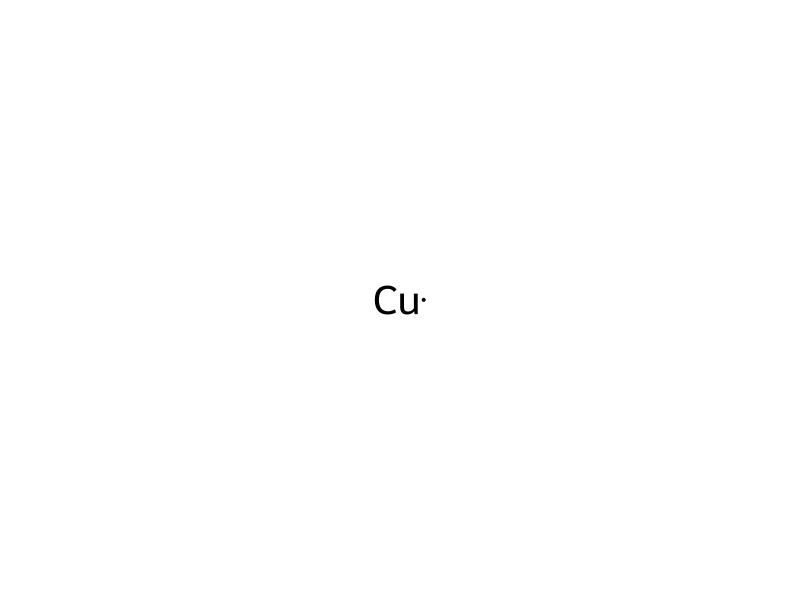
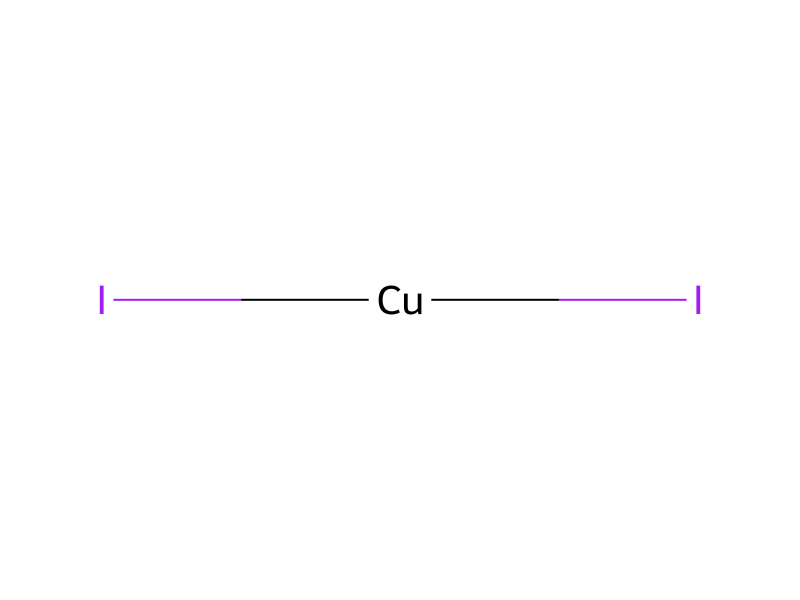
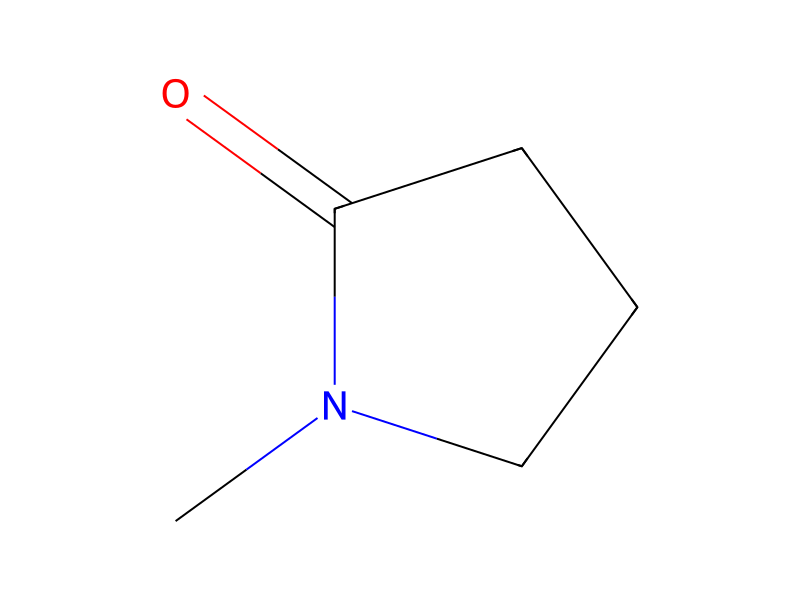
[C:1]([OH:10])(=O)[C:2]1[C:3](=[CH:5][CH:6]=[CH:7][CH:8]=1)[SH:4].Cl[C:12]1[CH:13]=[C:14]([O:20][CH3:21])[CH:15]=[C:16]([O:18][CH3:19])[CH:17]=1.C(=O)([O-])[O-].[K+].[K+]>CN1CCCC1=O.[Cu].[Cu](I)I>[CH3:19][O:18][C:16]1[CH:17]=[C:12]([S:4][C:3]2[CH:5]=[CH:6][CH:7]=[CH:8][C:2]=2[CH2:1][OH:10])[CH:13]=[C:14]([O:20][CH3:21])[CH:15]=1Participants
Reactant 3


Product 1

Reagents, catalysts & solvents 3
Conditions
- Temperature
- 190 °C
Procedure
Thiosalicylic acid (44 g), 5-chloro-1,3-dimethoxybenzene (49.2 g), potassium carbonate (78 g), copper (4.3 g) and copper iodide (4.3 g) were dissolved in N-methyl-2-pyrrolidone (390 ml) and the solution was stirred at 190° C. for ten hours. The reaction solution was partitioned between ethyl acetate and diluted hydrochloride and filtered, the organic layer was washed with diluted hydrochloride, water and saturated sodium chloride solution and dried over anhydrous magnesium sulfate and the solvent was evaporated in vacuo. To the residue was added anhydrous tetrahydrofuran (200 ml) and the mixture was dropped into a suspension of lithium aluminum hydride (16.24 g) in anhydrous tetrahydrofuran (100 ml) at 0° C. The reaction solution was stirred overnight at room temperature, saturated sodium chloride solution was added to the reaction solution until no more hydrogen was generated, after decantation the organic layer was evaporated in vacuo. The residue was purified by a silica gel column chromatography (developing solvent; hexane:ethyl acetate=3:1) to give 2-(3,5-dimethoxyphenylthio)benzyl alcohol (7.9 g; yield of 10%).
Workup
- customThe reaction solution was partitioned between ethyl acetate and diluted hydrochloride
- filtrationfiltered
- washthe organic layer was washed with diluted hydrochloride, water and saturated sodium chloride solution
- dry with materialdried over anhydrous magnesium sulfate
- customthe solvent was evaporated in vacuo
- additionTo the residue was added anhydrous tetrahydrofuran (200 ml)
- additionthe mixture was dropped into a suspension of lithium aluminum hydride (16.24 g) in anhydrous tetrahydrofuran (100 ml) at 0° C
- stirringThe reaction solution was stirred overnight at room temperature
- additionsaturated sodium chloride solution was added to the reaction solution until no more hydrogen
- customafter decantation the organic layer was evaporated in vacuo
- customThe residue was purified by a silica gel column chromatography (developing solvent; hexane:ethyl acetate=3:1)
Sources & evidence
- ORD record
- ord-4e859752c7d447de89c341f7902021d8
- Source dataset
- uspto-grants-2002_12
- Patent number
- US06495592B1
Reaction notes
Loading…