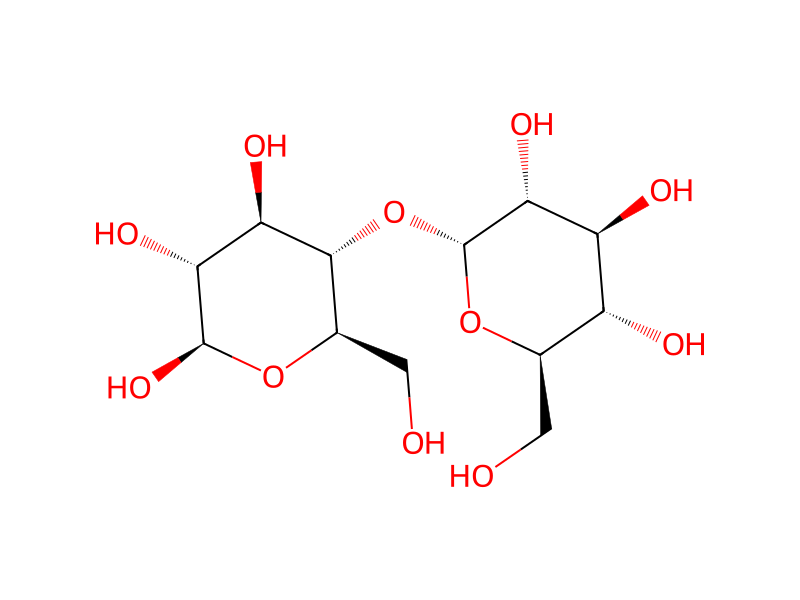
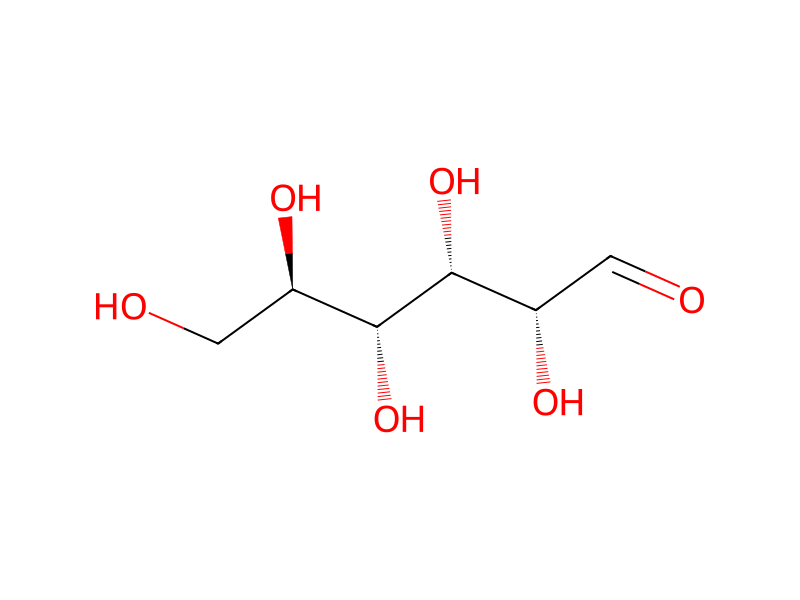
beta-Maltose → (2R,3S,4R,5R)-2,3,4,5,6-pentahydroxyhexanal
Reaction equation

[CH2:1]([OH:23])[C@H:2]1[O:7][C@H:6]([O:8][C@H]2[C@H](O)[C@@H](O)[C@H](O)O[C@@H]2CO)[C@H:5]([OH:20])[C@@H:4]([OH:21])[C@@H:3]1[OH:22]>Cl>[O:8]=[CH:6][C@@H:5]([C@H:4]([C@@H:3]([C@@H:2]([CH2:1][OH:23])[OH:7])[OH:22])[OH:21])[OH:20]Participants
Reactant 1
Product 1
Reagents, catalysts & solvents 1
Procedure
Enzyme Activity and Reactor Stability. Three batches of starch-g-PAN copolymer (Table I, #91, 34, 50) were prepared, hydrolyzed, treated with glucoamylase and then reacted with maltose fed at a 0.1 h-1 dilution rate. Two additional runs were made in which faster dilution rates were used. It was found that acid hydrolysis (90 min reflux in 0.5N HCl) removed all but about 2% of the polysaccharide and yielded copolymer-enzyme granules having a size of about 5 to 26 microns. The activity of glucoamylase (mass of glucose produced per liter reactor volume per hour) immobilized on five similarly prepared batches of 28% add-on starch-g-PAN was measured over time in the continuous reactor. The data indicated that the enzyme was immobilized on the copolymer and that the decline in activity of the enzyme over time was independent of dilution rate. Further, free glucoamylase was not detected in the effluent stream. This indicates that the decline in enzyme activity was due to inactivation of the enzyme and not to loss of the enzyme from the copolymer. The gradual loss of glucose productivity was consistent with first-order enzyme deactivation kinetics. It should be noted that Lee et al., 1976, supra, found that silica-immobilized glucoamylase exhibited a first order decay rate. Based on chromatography data, there was no evidence of reversion products in any of the runs, and mass balances on the reactor indicated that glucose yields were essentially 100% of theoretical based on maltose consumed.
Workup
- additionhydrolyzed, treated with glucoamylase
- customremoved all but about 2% of the polysaccharide
- customyielded copolymer-enzyme granules
Sources & evidence
- ORD record
- ord-e6e6fe6fd5b04bd8908d0c781bc5a46a
- Source dataset
- uspto-grants-1989_07
- Patent number
- US04845035
Reaction notes
Loading…