Sodium Carbonate → Methyl 2-fluoro-1-methoxyethylcarbamate
Reaction equation

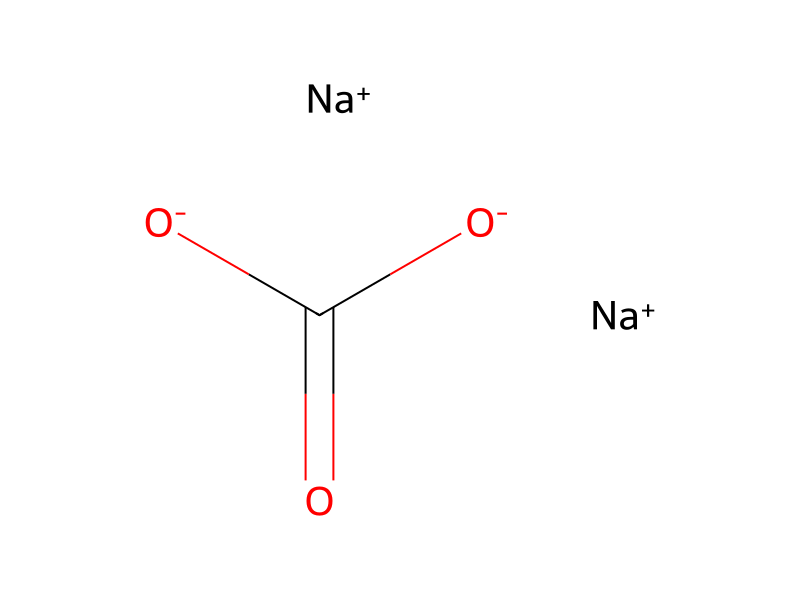
[C:1](=O)([O-])[O-:2].[Na+].[Na+].[F:7][CH2:8][CH2:9][NH:10][C:11](=[O:14])[O:12][CH3:13]>C1(C)C=CC(S([O-])(=O)=O)=CC=1.C([N+](CC)(CC)CC)C.CO>[F:7][CH2:8][CH:9]([NH:10][C:11](=[O:14])[O:12][CH3:13])[O:2][CH3:1]Participants


Procedure
An undivided electrochemical flow cell was constructed from two 150 cm2 graphite block electrodes separated with a 6 mm Viton® gasket and plumbed to a 500 ml jar reservoir, a Teflon® lined pump and a refrigerated cooling system so that the contents of the reservoir could be continuously recirculated through the cell and cooling system. The electrodes were connected to a power source and a voltage meter. The system was flushed with chromatography grade methanol to remove any contaminants. The reservoir was charged with 10-20 g of molecular sieves to keep the system dry, 290 g of chromatography grade methanol, 12 g (0.039 mol) of tetraethylammonium p-toluenesulfonate, 2 g (0.02 mol) of sodium carbonate, and 27.5 g of 91 percent purity (0.227 mol) of methyl 2-fluoroethylcarbamate and the resulting solution was circulated through the electrochemical cell while maintaining the current at 10 amperes and the temperature at 12°-16° C. After 1 hour gas chromatographic analysis indicated about 2 percent conversion. The current was increased to 12 amperes and the conversion went up to about 8 percent during the next hour and 39 percent after 6 hours. The process was continued overnight to increase the conversion to about 95 percent based on starting material and 81 percent based on product. The volatiles were removed under reduced pressure and the residue was dissolved in 200 ml of methylene chloride. The resulting solution was extracted with 100 ml of water, 100 ml of saturated aqueous sodium bicarbonate, and 100 ml of saturated aqueous sodium chloride and dried over magnesium sulfate. Evaporation of the volatiles under reduced pressure left 22.0 g of an oily residue which was found to be the title compound of about 81 percent purity by gas chromatography. The aqueous extracts were combined and extracted with methylene chloride to obtain another 7.6 g of the title compound of about 85 percent purity. The total yield recovered was about 85 percent of theory.
Workup
- customseparated with a 6 mm Viton® gasket
- temperaturecooling system
- customThe system was flushed with chromatography grade methanol
- customto remove any contaminants
- additionThe reservoir was charged with 10-20 g of molecular sieves
- customdry
- temperaturewhile maintaining the current at 10 amperes
- customat 12°-16° C
- temperatureThe current was increased to 12 amperes
- waitthe conversion went up to about 8 percent during the next hour and 39 percent after 6 hours
- waitThe process was continued overnight
- temperatureto increase the conversion to about 95 percent
- customThe volatiles were removed under reduced pressure
- dissolutionthe residue was dissolved in 200 ml of methylene chloride
- extractionThe resulting solution was extracted with 100 ml of water, 100 ml of saturated aqueous sodium bicarbonate, and 100 ml of saturated aqueous sodium chloride
- dry with materialdried over magnesium sulfate
- customEvaporation of the volatiles under reduced pressure
- waitleft 22.0 g of an oily residue which
- extractionextracted with methylene chloride
Sources & evidence
- ORD record
- ord-78f610ecbf9f4c35a8cbcb2dfcc02f6d
- Source dataset
- uspto-grants-1989_07
- Patent number
- US04845267
Reaction notes
Loading…