Iodoethane → tert-Butyl (3-ethylpyridin-2-yl)carbamate
Reaction equation

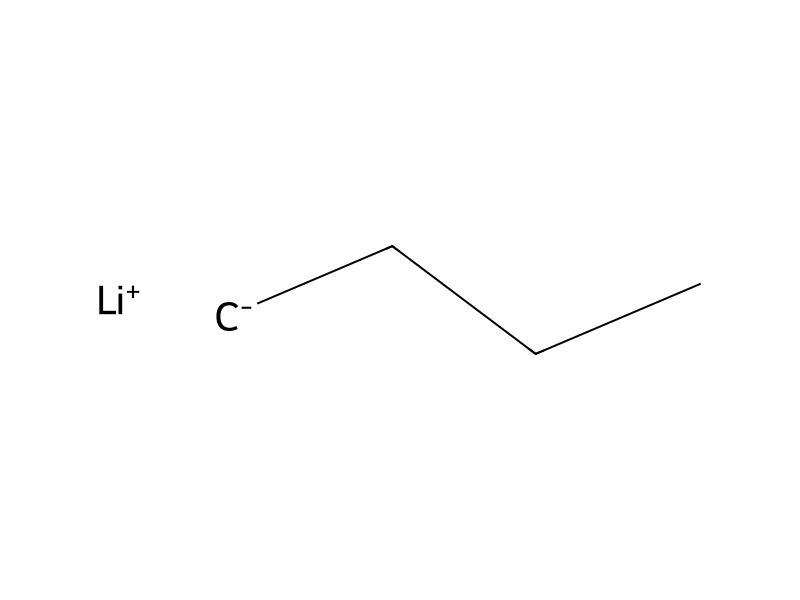
[C:1]([O:5][C:6]([NH:8][C:9]1[CH:14]=[CH:13][CH:12]=[CH:11][N:10]=1)=[O:7])([CH3:4])([CH3:3])[CH3:2].[Li+].[CH3:16][CH2:17]C[CH2-].ICC>O1CCCC1>[C:1]([O:5][C:6]([NH:8][C:9]1[C:14]([CH2:16][CH3:17])=[CH:13][CH:12]=[CH:11][N:10]=1)=[O:7])([CH3:4])([CH3:2])[CH3:3]Participants
Reactant 3


Product 1

Reagents, catalysts & solvents 1

Conditions
- Temperature
- -78 °C
Procedure
2-t-Butoxycarbonylaminopyridine (10 g, 51.5 mmol) was dissolved in tetrahydrofuran (80 mL), and cooled to -78° C. N-butyllithium (80 mL of 1.49M in hexanes, 120 mmol) was added dropwise over a period of 1 h. After stirring for an additional 15 min at -78° C. and then for 2.5 hours at -10° C., the solution was then recooled back down to -78° C. and iodoethane (77.2 mmol, 6.18 mL) was added dropwise over a period of 15 min via syringe. The solution was allowed to warm to room temperature. The reaction was quenched with 100 mL of a saturated ammonium chloride and extracted with ethyl acetate (3×). The organic layers were collected, dried over magnesium sulfate, and concentrated. The resulting solid was purified by flash chromatography on silica gel (25% ethyl acetate/hexanes) to provide the 4.9 g (43%) of the titled product as a light brown solid:
Workup
- waitfor 2.5 hours at -10° C.
- customwas then recooled back down to -78° C.
- temperatureto warm to room temperature
- customThe reaction was quenched with 100 mL of a saturated ammonium chloride
- extractionextracted with ethyl acetate (3×)
- customThe organic layers were collected
- dry with materialdried over magnesium sulfate
- concentrationconcentrated
- customThe resulting solid was purified by flash chromatography on silica gel (25% ethyl acetate/hexanes)
Sources & evidence
- ORD record
- ord-efaf9e6afdeb4ef2bc478ffd3a61304d
- Source dataset
- uspto-grants-1997_01
- Patent number
- US05593993
Reaction notes
Loading…