1,2-Dibromoethane → tert-Butyl (3-bromopyridin-2-yl)carbamate
Reaction equation

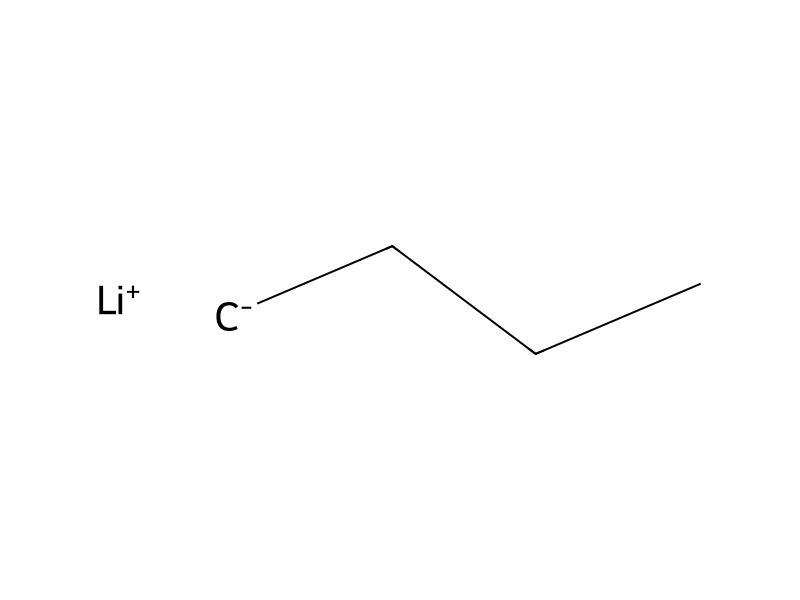
[C:1]([O:5][C:6]([NH:8][C:9]1[CH:14]=[CH:13][CH:12]=[CH:11][N:10]=1)=[O:7])([CH3:4])([CH3:3])[CH3:2].[Li+].CCC[CH2-].[Br:20]CCBr>O1CCCC1>[C:1]([O:5][C:6]([NH:8][C:9]1[C:14]([Br:20])=[CH:13][CH:12]=[CH:11][N:10]=1)=[O:7])([CH3:4])([CH3:2])[CH3:3]Participants
Reactant 3


Product 1

Reagents, catalysts & solvents 1

Conditions
- Temperature
- -78 °C
Procedure
2-t-Butoxycarbonylaminopyridine (10 g, 51.5 mmol) was dissolved in tetrahydrofuran (80 mL), and cooled to -78° C. N-butyllithium (120 mmol, 80 mL of 1.49M in hexanes) was added dropwise over a period of 1 h. After stirring for an additional 15 min at -78° C. and then for 2.5 h at -10° C., the solution was recooled back down to -78° C. and 1,2-dibromoethane (77.2 mmol, 6.65 mL) was added dropwise over a period of 15 min via syringe. The solution was allowed to warm to room temperature. The reaction was quenched with 100 mL of saturated ammonium chloride and was extracted with ethyl acetate (3×). The organic layers were collected, dried over magnesium sulfate, filtered, and concentrated. The resulting solid was purified by flash chromatography on silica gel (25% ethyl acetate/hexanes) giving 4.5 g (32%) of the titled product as a light brown solid:
Workup
- waitfor 2.5 h at -10° C.
- customwas recooled back down to -78° C.
- temperatureto warm to room temperature
- customThe reaction was quenched with 100 mL of saturated ammonium chloride
- extractionwas extracted with ethyl acetate (3×)
- customThe organic layers were collected
- dry with materialdried over magnesium sulfate
- filtrationfiltered
- concentrationconcentrated
- customThe resulting solid was purified by flash chromatography on silica gel (25% ethyl acetate/hexanes)
Sources & evidence
- ORD record
- ord-0f38720529574ed6abfcc15316db0588
- Source dataset
- uspto-grants-1997_01
- Patent number
- US05593993
Reaction notes
Loading…