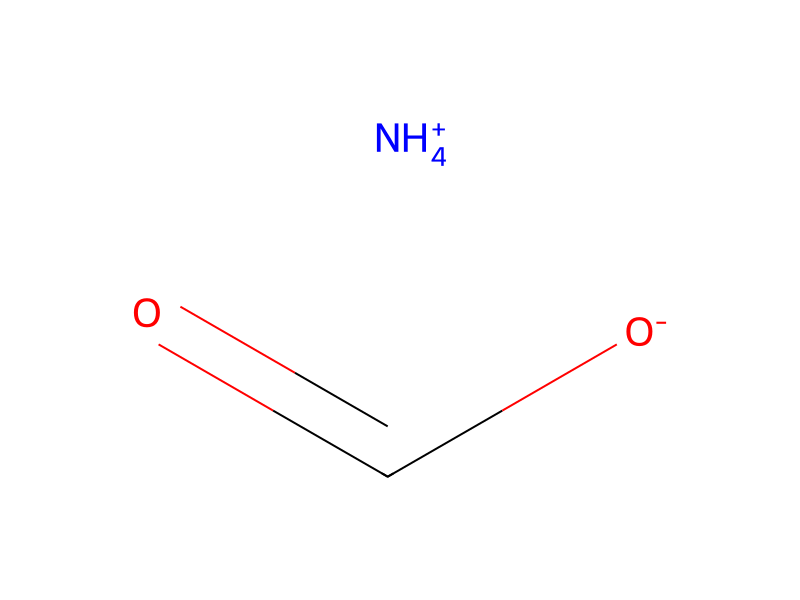
Ammonium formate → 3-cyclopentyl-2-(4-hydroxy-6-oxo-6H-pyridazin-1-yl)-propionic acid
Reaction equation

Cl[C:2]1[C:7](=[O:8])[N:6]([CH:9]([CH2:13][CH:14]2[CH2:18][CH2:17][CH2:16][CH2:15]2)[C:10]([OH:12])=[O:11])[N:5]=[CH:4][C:3]=1[OH:19].C([O-])=O.[NH4+]>C(O)C.[Pd]>[CH:14]1([CH2:13][CH:9]([N:6]2[C:7](=[O:8])[CH:2]=[C:3]([OH:19])[CH:4]=[N:5]2)[C:10]([OH:12])=[O:11])[CH2:18][CH2:17][CH2:16][CH2:15]1Participants
Reactant 2

Product 1

Reagents, catalysts & solvents 2


Conditions
- Temperature
- 25 °C
Procedure
A solution of 2-(5-chloro-4-hydroxy-6-oxo-6H-pyridazin-1-yl)-3-cyclopentyl-propionic acid (14.5 g, 50.6 mmol) in ethanol (150 mL) was treated with 20% palladium on carbon (50% in water, 1.5 g) and ammonium formate (16 g, 75.9 mmol). The mixture was stirred at reflux for 2 h. At this time, the reaction was cooled to 25° C., filtered, and concentrated in vacuo. Water (50 mL) was added to the residue and the resulting solution was acidified with a 6N aqueous hydrochloric acid solution to pH=2˜3. The solution was extracted with ethyl acetate (2×100 mL). The combined organics were dried over sodium sulfate and concentrated in vacuo to afford 3-cyclopentyl-2-(4-hydroxy-6-oxo-6H-pyridazin-1-yl)-propionic acid as a white solid (12.5 g, 98%).
Workup
- temperatureat reflux for 2 h
- filtrationfiltered
- concentrationconcentrated in vacuo
- additionWater (50 mL) was added to the residue
- extractionThe solution was extracted with ethyl acetate (2×100 mL)
- dry with materialThe combined organics were dried over sodium sulfate
- concentrationconcentrated in vacuo
Sources & evidence
- ORD record
- ord-056166213d554d6687c51cdfbd4ff51c
- Source dataset
- uspto-grants-2012_09
- Patent number
- US08258134B2
Reaction notes
Loading…