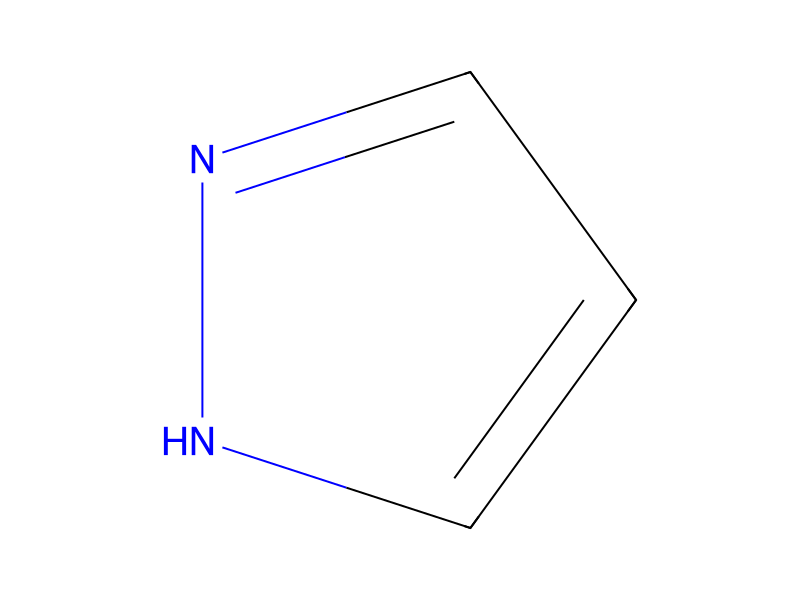
Pyrazole → 1-(3-Methoxy-5-methylphenyl)-2-(2-(methylthio)pyrimidin-4-yl)ethanone
Reaction equation

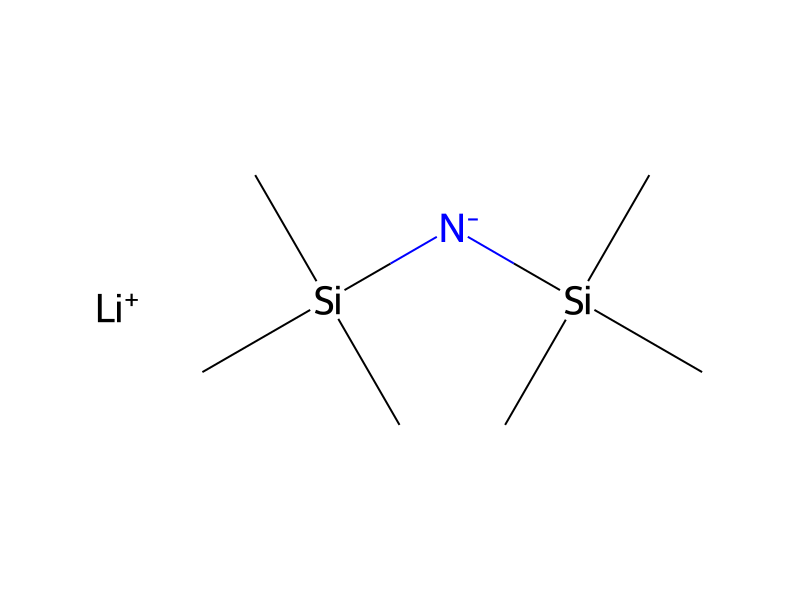
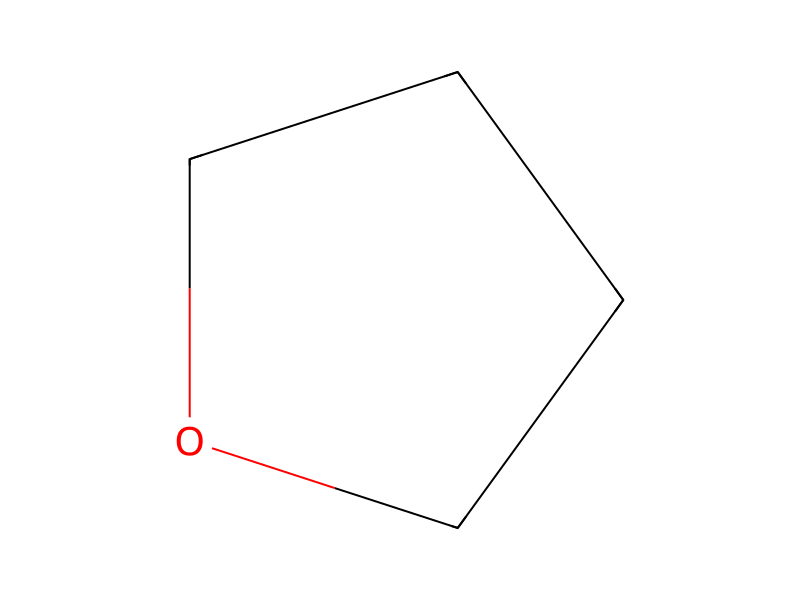
N1C=CC=N1.[CH3:6][O:7][C:8]1[CH:9]=[C:10]([CH:15]=[C:16]([CH3:18])[CH:17]=1)[C:11]([O:13]C)=O.[CH3:19][C:20]1[CH:25]=[CH:24][N:23]=[C:22]([S:26][CH3:27])[N:21]=1.C[Si](C)(C)[N-][Si](C)(C)C.[Li+]>O1CCCC1>[CH3:6][O:7][C:8]1[CH:9]=[C:10]([C:11](=[O:13])[CH2:19][C:20]2[CH:25]=[CH:24][N:23]=[C:22]([S:26][CH3:27])[N:21]=2)[CH:15]=[C:16]([CH3:18])[CH:17]=1Participants
Reactant 4


Product 1

Reagents, catalysts & solvents 1
Procedure
For the synthesis of the pyrazole derivative, first, as illustrated in Reaction Scheme 7, methyl 3-methoxy-5-methylbenzoate of Formula 2a is allowed to undergo a nucleophilic attack at its carboxylic carbon by the activated methylene group of 4-methyl-2-(methylthio)-pyrimidine, represented by Formula 10, at room temperature (e.g., 20° C.-30° C.) in the presence of lithium hexamethyldisilazide (LHMDS) in tetrahydrofuran to afford 1-(3-methoxy-5-methylphenyl)-2-(2-methylsulfanylpyrimidin-4-yl)ethanone. The compound of Formula 11 is converted into a pyrazole derivative through a two step successive process. In this regard, the compound of Formula 11 is heated with N,N-dimethylformamide dimethylacetal, successively followed by cyclization with hydrazine hydrate into 3-(3-methoxy-5-methylphenyl)-4-(2-methylthiopyrimidine-4-yl]-1H-pyrazol, represented by Formula 12. Thereafter, the compound of Formula 12 is converted into a cyano compound of Formula 13 by heating with iodoacetonitrile in DMF, subsequently by the oxidation of the sulfide with meta-chloroperbenzoic acid to a sulfone, [4-(2-methanesulfonylpyrimidin-4-yl)-3-(3-methoxy-5-methylphenyl)pyrazol-1-yl]acetonitrile, represented by Formula 14. The sulfone compound of Formula 14 is then subjected to nucleophilic substitution with 3-hydroxyazetidine hydrochloride, and then to demethylation with boron tribromide into [4-[2-(3-hydroxyazetindin-1-yl)-pyrimidin-4-yl]-3-(3-hydroxy-4-methylphenyl)-pyrazol-1-yl]acetonitrile, represented by Formula 16.
Workup
- custom(e.g., 20° C.-30° C.)
Sources & evidence
- ORD record
- ord-ff93ca428a3444be9ff5029b1cc58681
- Source dataset
- uspto-grants-2012_09
- Patent number
- US08273880B2
Reaction notes
Loading…