Hydrochloric Acid → (S)-2-[4-(2-aminoethyl)phenylamino]-1-phenylethanol
Reaction equation

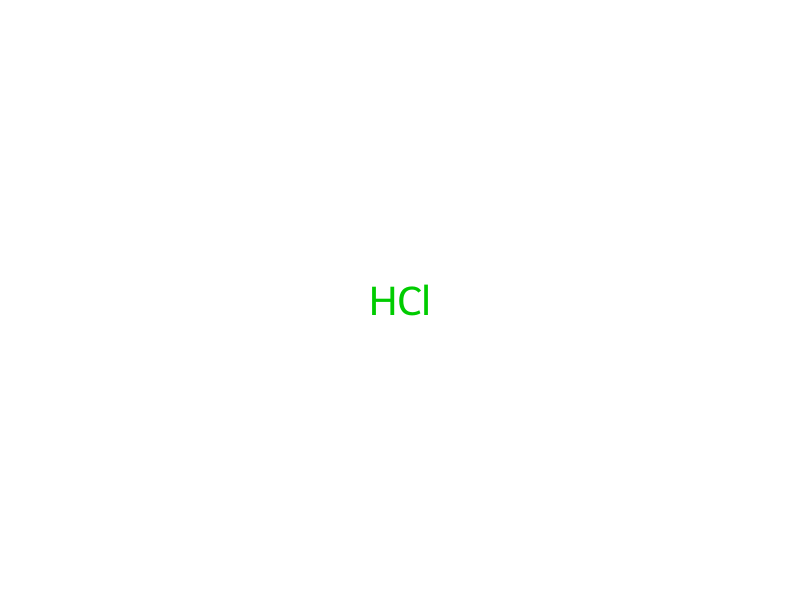
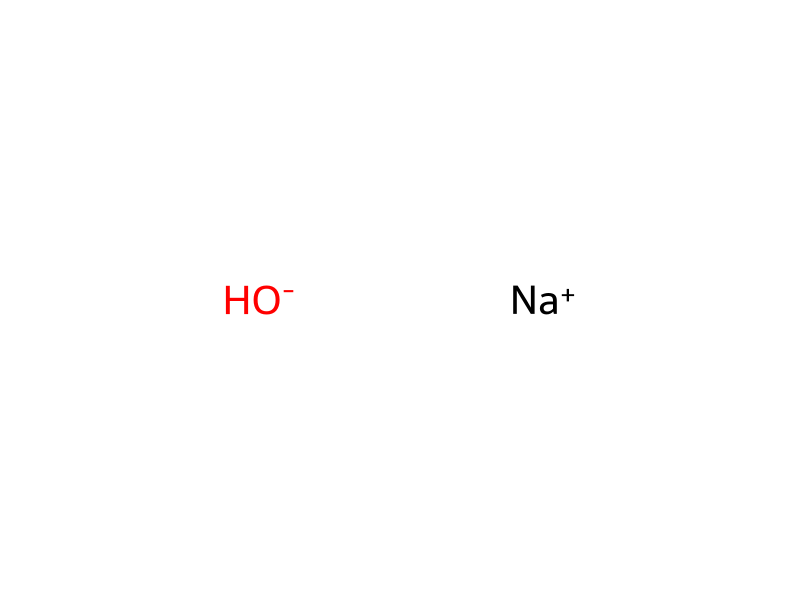
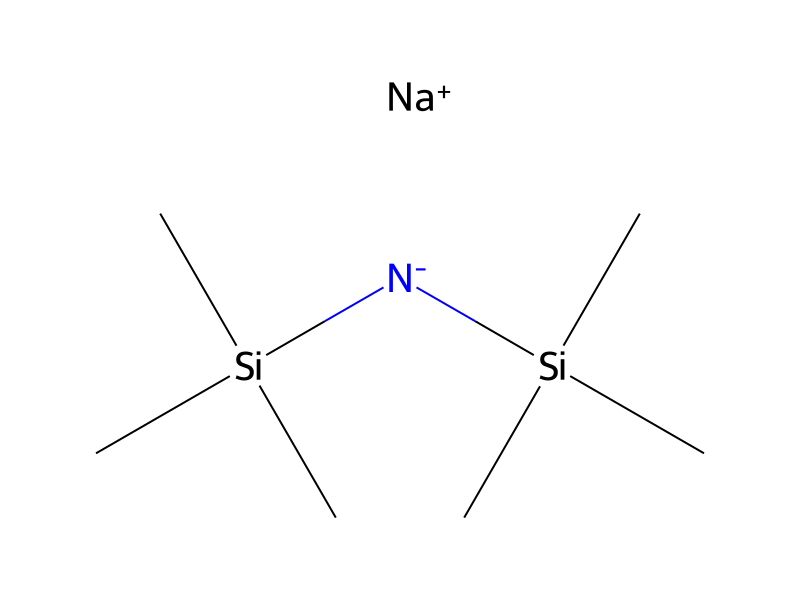
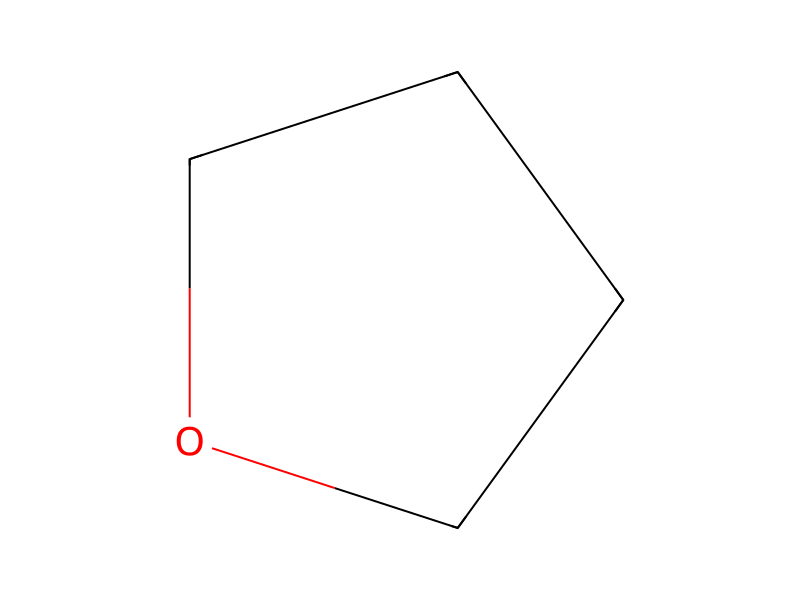
[NH2:1][C:2]1[CH:7]=[CH:6][C:5]([CH2:8][CH2:9][NH2:10])=[CH:4][CH:3]=1.C[Si]([N-][Si](C)(C)C)(C)C.[Na+].[CH2:21]1[O:29][C@H:22]1[C:23]1[CH:28]=[CH:27][CH:26]=[CH:25][CH:24]=1.Cl.C(OC(C)C)(=O)C.[OH-].[Na+]>O1CCCC1.CN1CCCN(C)C1=O>[NH2:10][CH2:9][CH2:8][C:5]1[CH:6]=[CH:7][C:2]([NH:1][CH2:21][C@H:22]([C:23]2[CH:28]=[CH:27][CH:26]=[CH:25][CH:24]=2)[OH:29])=[CH:3][CH:4]=1Participants
Reactant 6



Product 1

Reagents, catalysts & solvents 2
Conditions
- Temperature
- -10 °C
Procedure
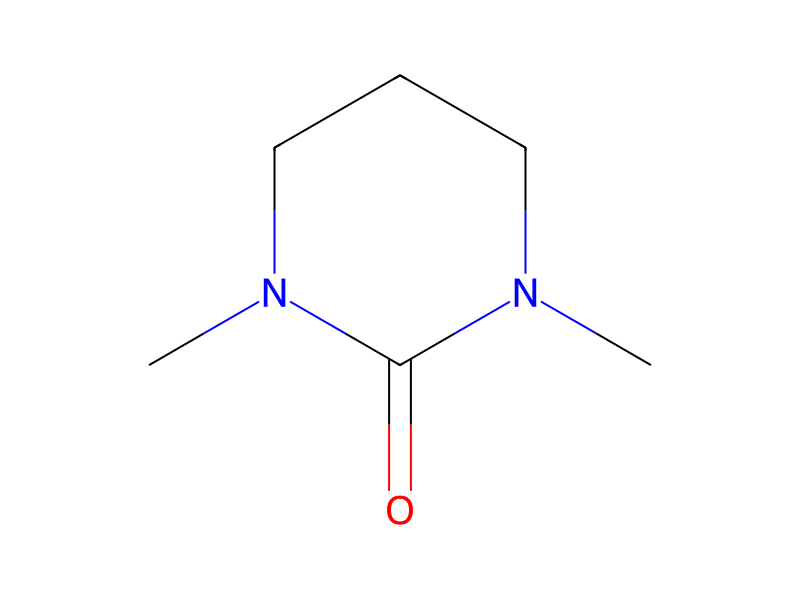
To a 1000 mL 3-neck flask was added 20 g (147 mmol) of 2-(4-aminophenyl)ethylamine and 30 mL of 1,3-dimethyl-3,4,5,6-tetrahydro-2(1H)pyrimidinone (DMPU). The reaction flask was fitted with an overhead stirrer and a thermometer. The reaction flask was purged with nitrogen and placed in a cold water bath. The reaction mixture was charged with 165 mL (165 mmol) of 1.0 M sodium bis(trimethylsilyl)amide in tetrahydrofuran (the temperature remained below 30° C.). The sodium bis(trimethylsilyl)amide solution was added in one portion with vigorous stirring. The reaction mixture was cooled to −10° C. and (S)-styrene oxide (17 mL, 150 mmol) was added. The rate of addition was controlled to maintain a temperature below −10° C. The reaction was allowed to warm to 20° C. within 15 minutes after the addition of (S)-styrene oxide, reaching 28° C. within 30 minutes. The reaction was cooled to 25° C., and was quenched by dropwise addition of 90 mL water. The reaction mixture was transferred to a separatory funnel, diluted with 100 mL isopropyl acetate and washed with 90 mL saturated aqueous sodium chloride. The organic layer was washed three times with a mixture of 90 mL water and 90 nm t saturated aqueous sodium chloride and finally with 180 mL saturated aqueous sodium chloride. The organic layer was concentrated under vacuum. The residue was twice reconcentrated from isopropanol (100 mL portions) and then redissolved in isopropanol (500 mL) and heated to 70° C. with stirring. Concentrated hydrochloric acid (27 mL, 327 mmol) was added over two minutes. The mixture was allowed to cool to room temperature and stirred for 14 h. The precipitated product was isolated by filtration and washed with isopropanol and isopropyl acetate. The product was dried under vacuum over a 50° C. water bath for 1 h and then dissolved in 80 mL water and transferred to a separatory funnel. Isopropyl acetate (80 mL) and 10 N aqueous sodium hydroxide (40 mL, 400 mmol) were added. The separatory funnel was shaken and the phases separated. The organic layer was washed once with 40 mL saturated NaCl and dried over magnesium sulfate. The solids were collected and the filtrate was concentrated. The residue was twice reconcentrated from toluene to afford the title intermediate as an oil (14.7 g, 59 mmol, 40%).
Workup
- customThe reaction flask was fitted with an overhead stirrer
- customThe reaction flask was purged with nitrogen
- customplaced in a cold water bath
- customremained below 30° C.
- additionThe rate of addition
- temperatureto maintain a temperature below −10° C
- temperatureto warm to 20° C. within 15 minutes
- temperatureThe reaction was cooled to 25° C.
- customwas quenched by dropwise addition of 90 mL water
- customThe reaction mixture was transferred to a separatory funnel
- additiondiluted with 100 mL isopropyl acetate
- washwashed with 90 mL saturated aqueous sodium chloride
- washThe organic layer was washed three times
- additionwith a mixture of 90 mL water and 90 nm t saturated aqueous sodium chloride
- concentrationThe organic layer was concentrated under vacuum
- dissolutionredissolved in isopropanol (500 mL)
- temperatureheated to 70° C.
- temperatureto cool to room temperature
- stirringstirred for 14 h
- customThe precipitated product was isolated by filtration
- washwashed with isopropanol and isopropyl acetate
- customThe product was dried under vacuum over a 50° C. water bath for 1 h
- dissolutiondissolved in 80 mL water
- customtransferred to a separatory funnel
- stirringThe separatory funnel was shaken
- customthe phases separated
- washThe organic layer was washed once with 40 mL saturated NaCl
- dry with materialdried over magnesium sulfate
- customThe solids were collected
- concentrationthe filtrate was concentrated
Sources & evidence
- ORD record
- ord-3774243ab29544858acd3a1cfa330b4d
- Source dataset
- uspto-grants-2011_06
- Patent number
- US07964730B2
Reaction notes
Loading…