Ammonia → 1H-Pyrazolo(3,4-d)pyrimidine
Reaction equation

CC(OP(COCCCl)(=O)OC(C)C)C.CS[C:18]1[N:23]=[C:22](SC)[N:21]=[C:20]2[NH:26][N:27]=[CH:28][C:19]=12.C1CCN2C(=NCCC2)CC1.[OH-].[Na+].ClC1C=CC=C(C(OO)=O)C=1.CS(C)(=O)=O.N.Br[Si](C)(C)C>[Pd]>[NH:26]1[C:20]2=[N:21][CH:22]=[N:23][CH:18]=[C:19]2[CH:28]=[N:27]1Participants
Reactant 8


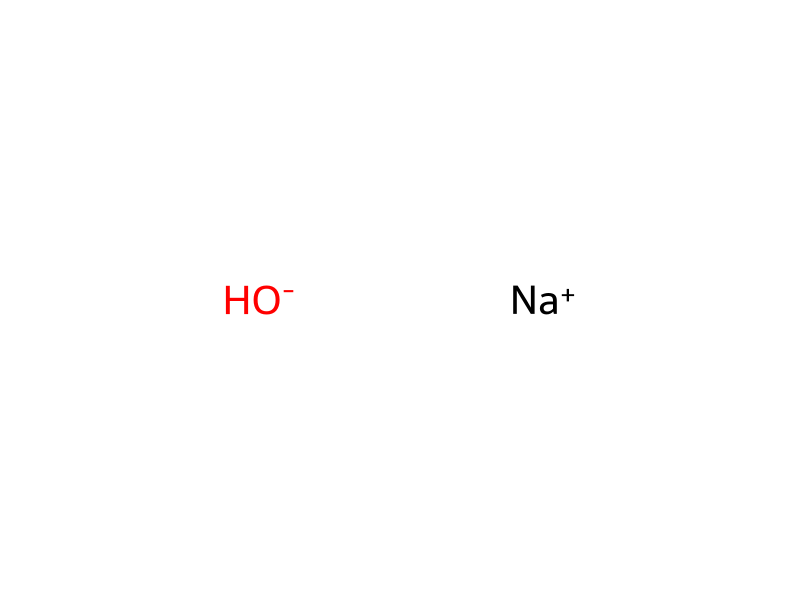
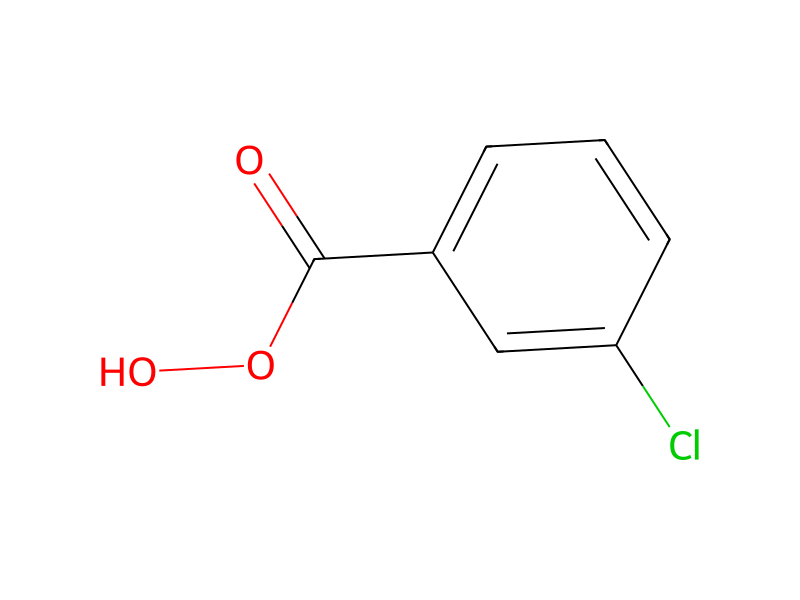

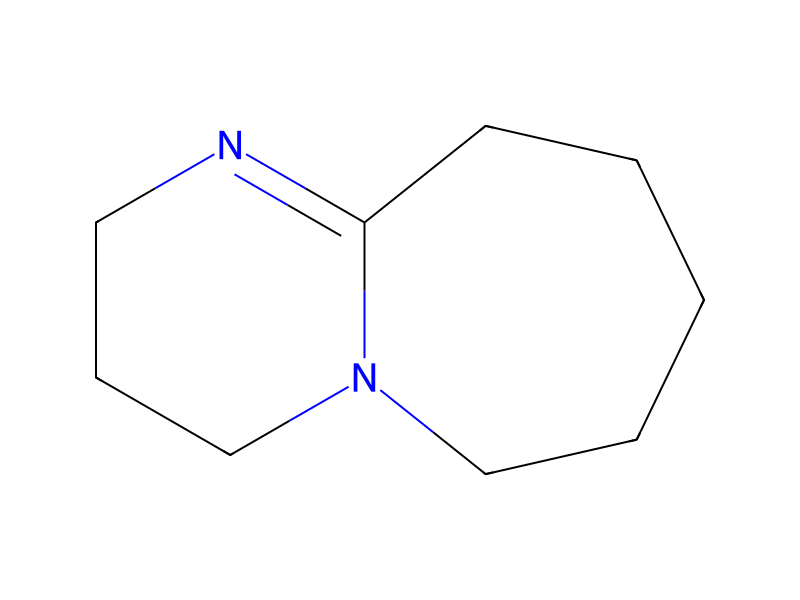


Product 1

Reagents, catalysts & solvents 1

Procedure
Di-(2-propyl)-2-chloroethoxymethylphosphonate is reacted with 4,6-bismethylmercapto-pyrazolo[3,4-d]pyrimidine (Tetrahedron, 1967, 23: 891) in the presence of DBU to effect attachment at the pyrazole ring nitrogen(s). Displacement of the 4-methymercapto functionality and concommitant monoester hydrolysis is then effected using aqueous sodium hydroxide. Displacement of the remaining 6-methymercapto group is accomplished (after initial oxidation with m-chloroperbenzoic acid to the intermediate methy sulfone) using methanolic ammonia. Bromination at the 3-position is performed according to the procedure described in J. Med. Chem. 1984, 27: 1026-30. Displacement of the 3-bromo group with Fmoc-protected propargylamine is effected using the palladium(0) catalyst described above. The remaining phosphate ester is then deprotected using bromotrimethylsilane. Pyrophosphorylation, deprotection and dye coupling are then performed as described above to yield the fluorescently labeled PME-G-pp analog (pyrazolo[3,4-d]pyrimidine analog).
Sources & evidence
- ORD record
- ord-f651969384424f18a67bd67ddd5a9807
- Source dataset
- uspto-grants-2005_02
- Patent number
- US06858393B1
Reaction notes
Loading…