2-Chloro-5-phenyl-1,3,4-thiadiazole → 4-(2-(4-(5-Phenyl-1,3,4-thiadiazol-2-ylamino)phenoxy)pyridin-3-yl)pyrimidin-2-amine
Reaction equation

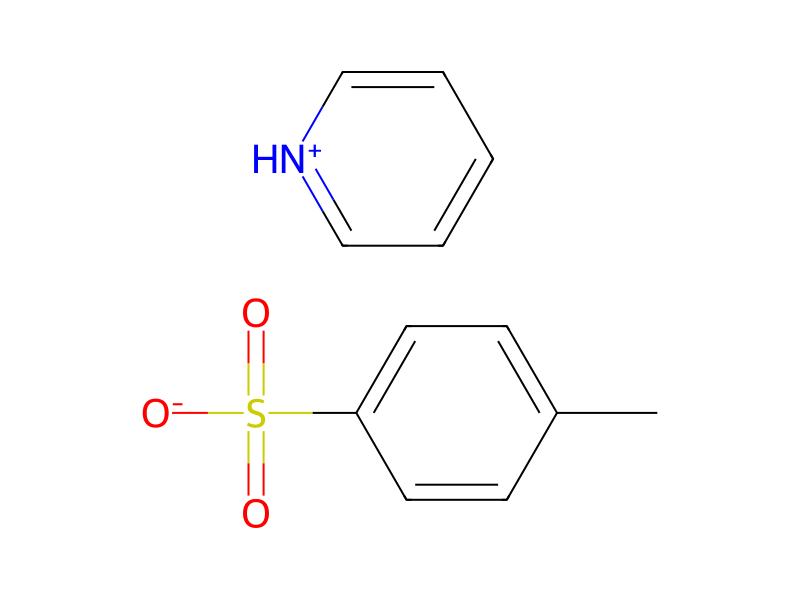
C1(C)C=CC(S([O-])(=O)=O)=CC=1.[NH+]1C=CC=CC=1.[NH2:18][C:19]1[CH:38]=[CH:37][C:22]([O:23][C:24]2[C:29]([C:30]3[CH:35]=[CH:34][N:33]=[C:32]([NH2:36])[N:31]=3)=[CH:28][CH:27]=[CH:26][N:25]=2)=[CH:21][CH:20]=1.Cl[C:40]1[S:41][C:42]([C:45]2[CH:50]=[CH:49][CH:48]=[CH:47][CH:46]=2)=[N:43][N:44]=1>>[C:45]1([C:42]2[S:41][C:40]([NH:18][C:19]3[CH:38]=[CH:37][C:22]([O:23][C:24]4[C:29]([C:30]5[CH:35]=[CH:34][N:33]=[C:32]([NH2:36])[N:31]=5)=[CH:28][CH:27]=[CH:26][N:25]=4)=[CH:21][CH:20]=3)=[N:44][N:43]=2)[CH:46]=[CH:47][CH:48]=[CH:49][CH:50]=1Participants



Procedure
A slurry of pyridinium p-toluenesulfonate (0.18 g, 0.72 mmol), 4-(2-(4-aminophenoxy)pyridin-3-yl)pyrimidin-2-amine (0.100 g, 0.36 mmol), and 2-chloro-5-phenyl-1,3,4-thiadiazole (0.077 g, 0.39 mmol; prepared by method described in J. Med. Chem., 31:902 (1988)) was heated in 2 mL 2-BuOH in a sealed tube to 110° C. The reaction became dark brown and homogeneous. After 2 h the reaction was quenched with 1N NaOH and DCM. The aqueous layer was extracted 2×DCM, and the emulsified aqueous layer was filtered and rinsed with dichloromethane. The resulting solid was adsorbed onto silica gel from MeOH/DCM, dried, and purified by silica gel chromatography, 0-100% 90/10 DCM/MeOH in DCM to give 4-(2-(4-(5-phenyl-1,3,4-thiadiazol-2-ylamino)phenoxy)pyridin-3-yl)pyrimidin-2-amine as a white solid. MS m/z=440 [M+H]+. Calc'd for C23H17N7OS: 439.5.
Workup
- customAfter 2 h the reaction was quenched with 1N NaOH and DCM
- extractionThe aqueous layer was extracted 2×DCM
- filtrationthe emulsified aqueous layer was filtered
- washrinsed with dichloromethane
- customdried
- custompurified by silica gel chromatography, 0-100% 90/10 DCM/MeOH in DCM
Sources & evidence
- ORD record
- ord-161c52cfc31b484cae9e2c5d58a084fe
- Source dataset
- uspto-grants-2011_01
- Patent number
- US07868177B2
Reaction notes
Loading…