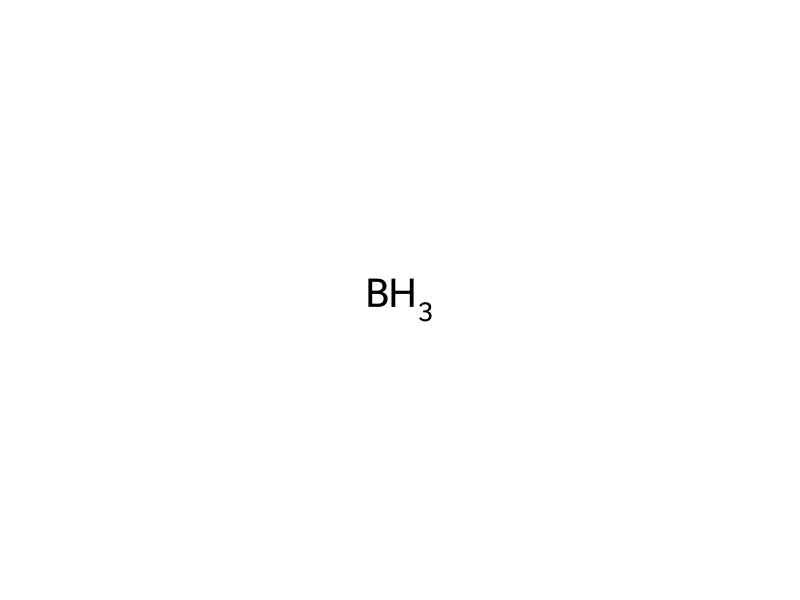
Borane → 2-(o-Hydroxyphenylthio)-4-nitrobenzyl alcohol
Reaction equation

[OH:1][C:2]1[CH:7]=[CH:6][CH:5]=[CH:4][C:3]=1[S:8][C:9]1[CH:17]=[C:16]([N+:18]([O-:20])=[O:19])[CH:15]=[CH:14][C:10]=1[C:11](O)=[O:12].B>S(=O)(=O)(O)O.O1CCCC1>[OH:1][C:2]1[CH:7]=[CH:6][CH:5]=[CH:4][C:3]=1[S:8][C:9]1[CH:17]=[C:16]([N+:18]([O-:20])=[O:19])[CH:15]=[CH:14][C:10]=1[CH2:11][OH:12]Participants
Reactant 2

Product 1

Reagents, catalysts & solvents 2


Procedure
9-Cyano-6H-dibenz[b,e][1,4]oxathiepin (IIa) may be prepared according to the following general reaction scheme: ##STR6## wherein R2 and R3 are as previously defined, by treating an appropriately substituted (R2 and/or R3) o-aminothiophenol with 2-chloro-4-nitrobenzoic acid in the presence of cuprous oxide to form the corresponding 2-(o-aminophenylthio)-4-nitrobenzoic acid which then is suspended in water, acidified with sulfuric acid, treated with sodium nitrite followed by sodium fluoroborate to obtain the diazonium fluoroborate which is heated in 50% sulfuric acid to obtain the corresponding 2-(o-hydroxyphenylthio)-4nitrobenzoic acid. The acid product is treated with borane in tetrahydrofuran to form the corresponding 2-(o-hydroxyphenylthio)-4-nitrobenzyl alcohol which is cyclized in the presence of dicyclohexylcarbodiimide (DCC) to form the corresponding 9-nitro6H-dibenz[b,e][1,4]oxathiepin. The nitro group then is reduced to the 9-amino compound with stannous chloride and the amine is treated with sodium nitrite followed by a mixture of cuprous cyanide and potassium cyanide to obtain the desired 9-cyano-6H-dibenz[b,e][1,4]oxathiepin of formula IIa.
Sources & evidence
- ORD record
- ord-2ecdeebe4ec144e281d411efd92a498d
- Source dataset
- uspto-grants-1987_10
- Patent number
- US04699917
Reaction notes
Loading…