Phosphorus oxychloride → 2-Chloro-9-formylanthracene
Reaction equation

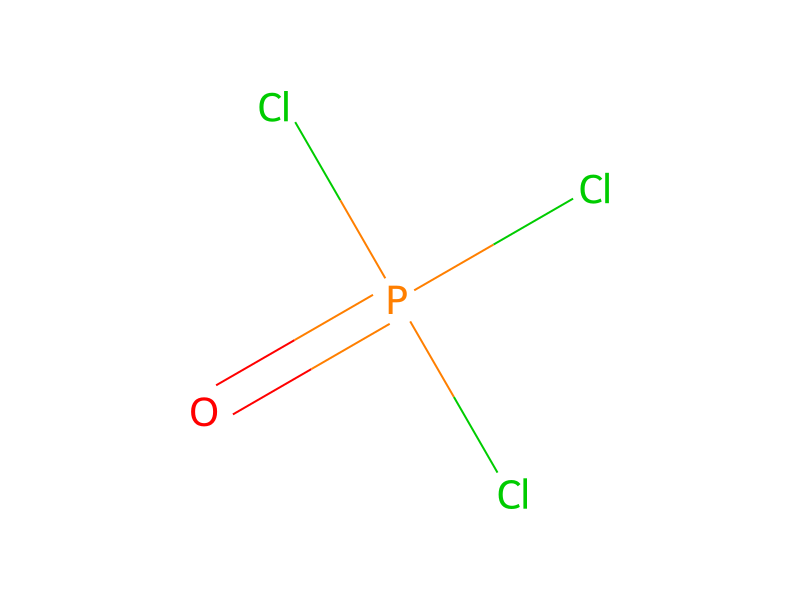
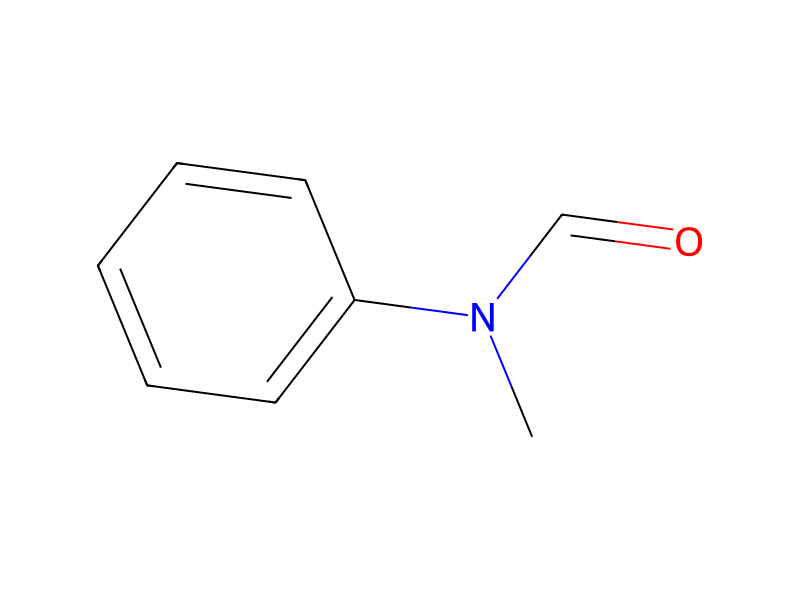
CN([CH:9]=[O:10])C1C=CC=CC=1.P(Cl)(Cl)(Cl)=O.[Cl:16][C:17]1[CH:30]=[CH:29][C:28]2[C:19](=[CH:20][C:21]3[C:26]([CH:27]=2)=[CH:25][CH:24]=[CH:23][CH:22]=3)[CH:18]=1>ClC1C=CC=CC=1Cl>[Cl:16][C:17]1[CH:30]=[CH:29][C:28]2[C:19](=[C:20]([CH:9]=[O:10])[C:21]3[C:26]([CH:27]=2)=[CH:25][CH:24]=[CH:23][CH:22]=3)[CH:18]=1Participants
Reactant 3

Product 1

Reagents, catalysts & solvents 1

Procedure
N-methylformanilide (2.45 kg, 18.12 mol) was treated with phosphorus oxychloride (2.66 kg, 17.35 mol) over a 40 min period at ambient temperature. The intermediate Vilsmeier complex was stirred for 2 h at room temperature, then treated with 2-chloroanthracene (described in Example 1a) (963 g, 4.53 mol), and o-dichlorobenzene (1.0 L). The resulting bright yellow mixture was heated gradually over 1.5 h to 9° C. at which point an exotherm ensued raising the reaction temperature to 115° C. The heat was removed until the exotherm subsided (45 min), after which time the mixture was heated for 9 h at 90° C., then cooled. TLC analysis (silica gel; ethyl acetate: hexane 1:4) showed a small amount of unreacted anthracene (Rf 0.90), a small amount of the 3-chloro isomer (Rf 0.65), and the 2-chloro isomer (Rf 0.58) as the major component. The cooled reaction mixture was poured into ice/water (27 L) precipitating a dark brown tar. The aqueous layer was decanted away from the tar and extracted with methylene chloride (5×2 L). The combined extracts were used to redissolve the tar. The methylene chloride solution was washed with 3N hydrochloric acid (4×1.5 L), followed by water (2 L), then dried over magnesium sulfate. The extracts were filtered, then pressure-filtered through a bed of silica gel, eluting with methylene chloride until all of the desired compound had been recovered. The eluent was concentrated on the rotary evaporator to give a slurry of bright yellow crystals (in o-dichlorobenzene). The crystals were collected by filtration, washed with diethyl ether (2×500 ml), then vacuum dried to afford 619.7 g (56.9%) of the desired 2-chloro-9-formylanthracene (mp 148°-150° C.). NMR (CDCl3) 11.35 (s, 1H), 9.02 (d, J=0.9 Hz, 1H), 8.81 (d, J=8.9 Hz, 1H), 8.56 (s, 1H), 7.98 (m, 1H), 7.90 (d, J=8.9 Hz, 1H), 7.66 (m, 1H), 7.53 (m, 1H), 7.42 (m, 1 H).
Workup
- temperatureThe resulting bright yellow mixture was heated gradually over 1.5 h to 9° C. at which point an exotherm
- temperatureensued raising the reaction temperature to 115° C
- customThe heat was removed until the exotherm
- custom(45 min)
- temperatureafter which time the mixture was heated for 9 h at 90° C.
- temperaturecooled
- customThe cooled reaction mixture
- customprecipitating a dark brown tar
- customThe aqueous layer was decanted away from the tar
- extractionextracted with methylene chloride (5×2 L)
- dissolutionto redissolve the tar
- washThe methylene chloride solution was washed with 3N hydrochloric acid (4×1.5 L)
- dry with materialdried over magnesium sulfate
- filtrationThe extracts were filtered
- filtrationpressure-filtered through a bed of silica gel
- washeluting with methylene chloride until all of the desired compound
- customhad been recovered
- concentrationThe eluent was concentrated on the rotary evaporator
- customto give a slurry of bright yellow crystals (in o-dichlorobenzene)
- filtrationThe crystals were collected by filtration
- washwashed with diethyl ether (2×500 ml)
- customvacuum dried
Sources & evidence
- ORD record
- ord-04a36e88c2e3400daa4c0d2b1a4253f0
- Source dataset
- uspto-grants-1993_11
- Patent number
- US05266570
Reaction notes
Loading…