4-Methylmorpholine → t-Butoxycarbonylphenylalanylleucine ethyl ester
Reaktionsgleichung

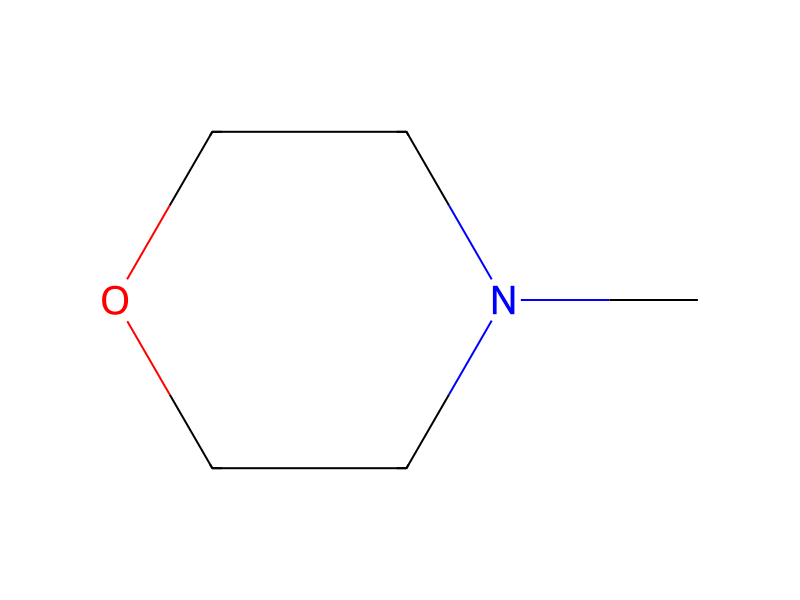
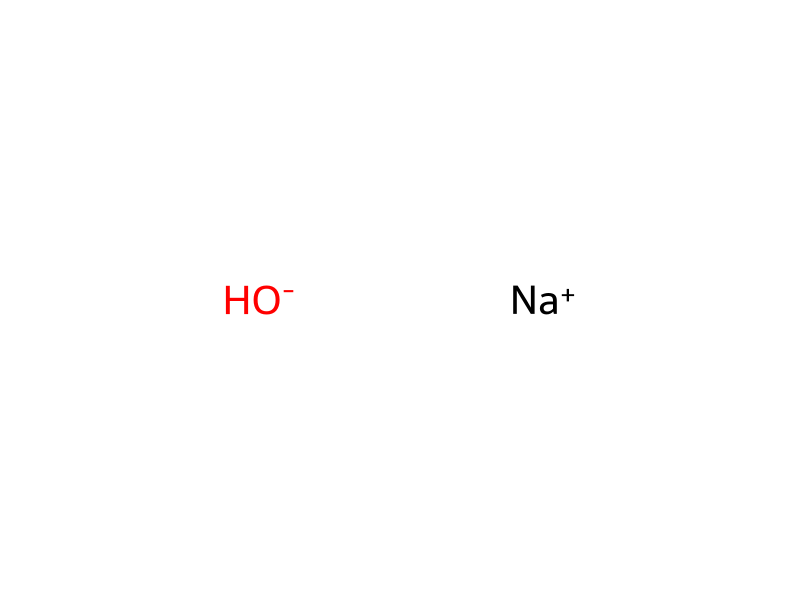
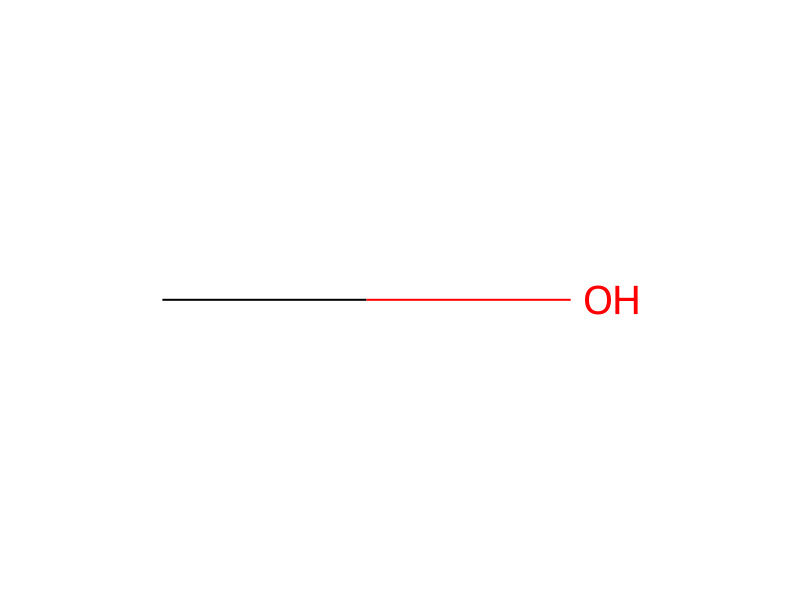
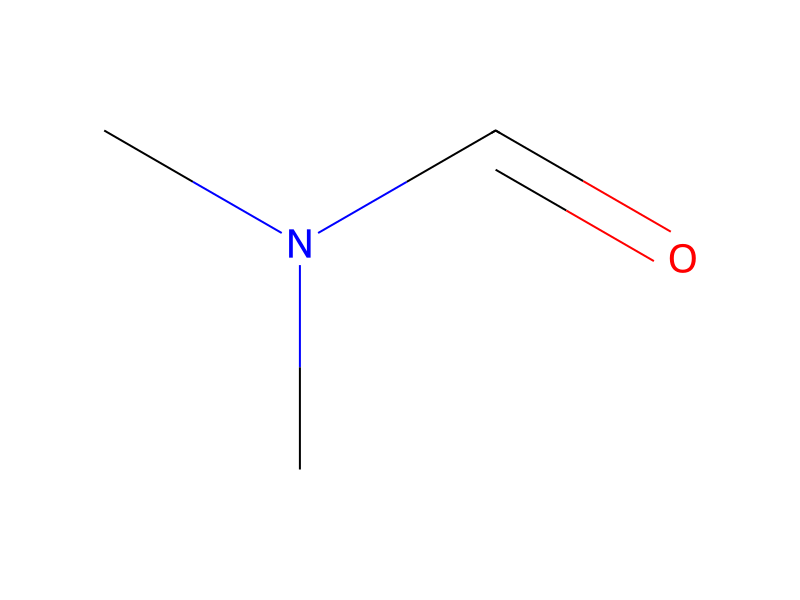
CN1CCOCC1.ClC(OCC(C)C)=O.Cl.CN1CCOCC1.Cl.[CH2:25]([O:27][C:28](=[O:35])[C@H:29]([CH2:31][CH:32]([CH3:34])[CH3:33])[NH2:30])[CH3:26].[OH-].[Na+].[C:38]([O:42][C:43]([NH:45][C@H:46]([C:54](O)=[O:55])[CH2:47][C:48]1[CH:53]=[CH:52][CH:51]=[CH:50][CH:49]=1)=[O:44])([CH3:41])([CH3:40])[CH3:39]>O1CCCC1.CN(C)C=O.C(OCC)(=O)C.O.CO>[CH2:25]([O:27][C:28](=[O:35])[C@H:29]([CH2:31][CH:32]([CH3:34])[CH3:33])[NH:30][C:54](=[O:55])[C@H:46]([CH2:47][C:48]1[CH:53]=[CH:52][CH:51]=[CH:50][CH:49]=1)[NH:45][C:43]([O:42][C:38]([CH3:41])([CH3:39])[CH3:40])=[O:44])[CH3:26]Komponenten
Edukt 6


Produkt 1

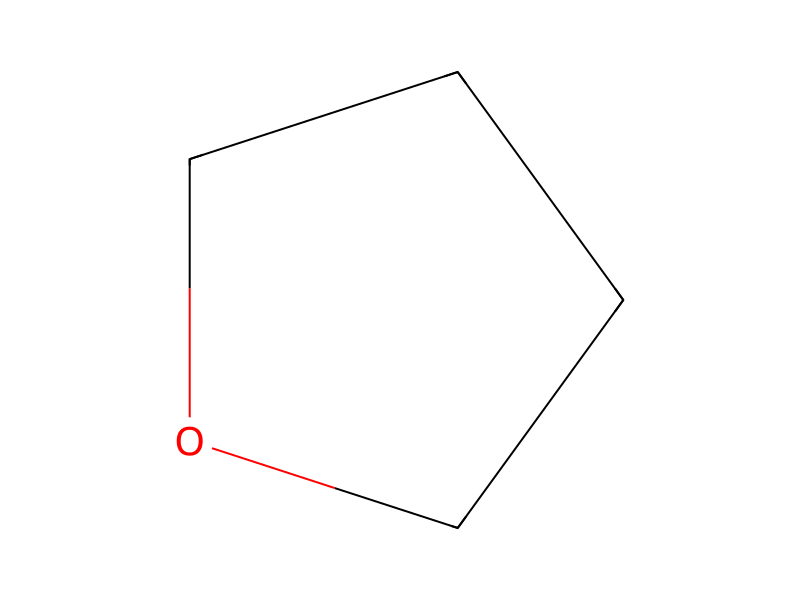
Reagenzien, Katalysatoren, Lösungsmittel 4

Reaktionsbedingungen
- Temperatur
- -10 °C
Versuchsvorschrift
N-α-t-Butoxycarbonyl-O-benzyl-L-tyrosine (7 g, 0.019 mol) was dissolved in tetrahydrofuran in a three-neck round bottom flask which was cooled to approximately -10° C. in an ice/acetone bath under a nitrogen atmosphere. N-methylmorpholine (6.3 ml, 0.06 mol) was added to the stirred solution, followed by 2.5 ml (0.019 mol) of isobutyl chloroformate. Immediately after the addition of isobutyl chloroformate, N-methyl morpholine hydrochloride precipitated. After 5 min, 3.7 g (0.019 mol) of L-leucine ethyl ester hydrochloride, dissolved in dimethylformamide, were added. The reaction mixture was stirred at this temperature for an hour, after which the solvent was evaporated. The residue obtained was dissolved in ethyl acetate/water and the organic layer was extracted with sodium bicarbonate solution, water, 0.01N HCl and water. The organic layer was dried over Na2SO4 and after evaporation of the solvent an oil was obtained. Crystallization from CHCl3 /petroleum ether yielded 7.4 g (0.014 mol, 76%) m.p. 104°-107° C., of N-α-t-butoxycarbonyl-O-benzyl-L-tyrosylglycylglycine ethyl ester. 1H NMR (CDCl3) δ 7.2 (5H, s), 6.9 (4H, doublet of doublets), 5.0 (2H, s), 1.1 (12H, m). The ethyl ester was cleaved by treating 6.2 g (0.012 mol) of it with an equivalent amount of 2N NaOH in methanol. The solution was stirred at room temperature for half an hour after which the solvent was evaporated. An equivalent amount of 2N HCl was added to the cooled residue and the solid obtained was filtered and dried to yield 3.5 g (96%), m.p. 118°-122° C., of the free (t-butoxycarbonyl-O-benzyl)tyrosylglycylglycine. t-Butoxycarbonylphenylalanylleucine ethyl ester was prepared starting with 6 g (0.019 mol) of t-butoxycarbonyl-L-phenylalanine, and 3.7 g (0.019 mol) of leucine ethyl ester hydrochloride. Work up and crystallization from CHCl3 /petroleum ether yielded 6.5 g (84%), m.p. 109°-112° C., of the desired compound. 1H NMR (CDCl3) δ 7.2 (5H, s), 6.4 (1H, bm), 5.1 (1H, bm), 4.3 (4H, bm), 3.1 (2H, bm), 1.3 (20H, m).
Aufarbeitung
- customprecipitated
- additionwere added
- customafter which the solvent was evaporated
- customThe residue obtained
- extractionthe organic layer was extracted with sodium bicarbonate solution, water, 0.01N HCl and water
- dry with materialThe organic layer was dried over Na2SO4
- customafter evaporation of the solvent an oil
- customwas obtained
- customCrystallization from CHCl3 /petroleum ether
- customyielded 7.4 g (0.014 mol, 76%) m.p. 104°-107° C.
- stirringThe solution was stirred at room temperature for half an hour after which the solvent
- customwas evaporated
- additionAn equivalent amount of 2N HCl was added to the cooled residue
- customthe solid obtained
- filtrationwas filtered
- customdried
- customto yield 3.5 g (96%), m.p. 118°-122° C.
- customcrystallization from CHCl3 /petroleum ether
- customyielded 6.5 g (84%), m.p. 109°-112° C.
Quellen und Nachweise
- ORD-Eintrag
- ord-794d7350de074ac082f5da84961c6203
- Quelldatensatz
- uspto-grants-1996_06
- Patentnummer
- US05525727
Notizen zur Reaktion
Wird geladen…