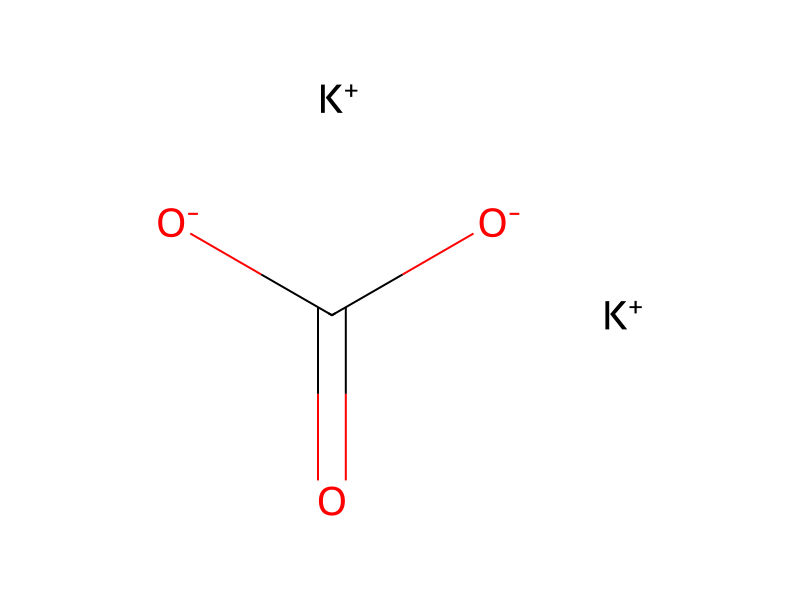
Potassium Carbonate → HCID 19033219, compound
Reaction equation

[C:1]([C:5]1[CH:10]=[CH:9][C:8]([C:11]([CH3:14])([CH3:13])[CH3:12])=[CH:7][C:6]=1[N:15]1[C:37](=[O:38])[C:34]2[C:35]3[C:36]4[C:31](=[CH:32][CH:33]=2)[C:30]2[C:39]5[C:26]([CH:27]=[CH:28][CH:29]=2)=[CH:25][CH:24]=[CH:23][C:22]=5[C:21]=4[CH:20]=[CH:19][C:18]=3[C:16]1=[O:17])([CH3:4])([CH3:3])[CH3:2].C(=O)([O-])[O-].[K+].[K+].[Br:46]Br>ClC1C=CC=CC=1>[Br:46][C:27]1[C:26]2[C:39]3[C:30]([C:31]4[C:36]5[C:35]6=[C:18]([C:16]([N:15]([C:6]7[CH:7]=[C:8]([C:11]([CH3:14])([CH3:13])[CH3:12])[CH:9]=[CH:10][C:5]=7[C:1]([CH3:2])([CH3:3])[CH3:4])[C:37](=[O:38])[C:34]6=[CH:33][CH:32]=4)=[O:17])[CH:19]=[CH:20][C:21]=5[C:22]=3[CH:23]=[CH:24][CH:25]=2)=[CH:29][CH:28]=1Participants
Reactant 3

Product 1

Reagents, catalysts & solvents 1

Procedure
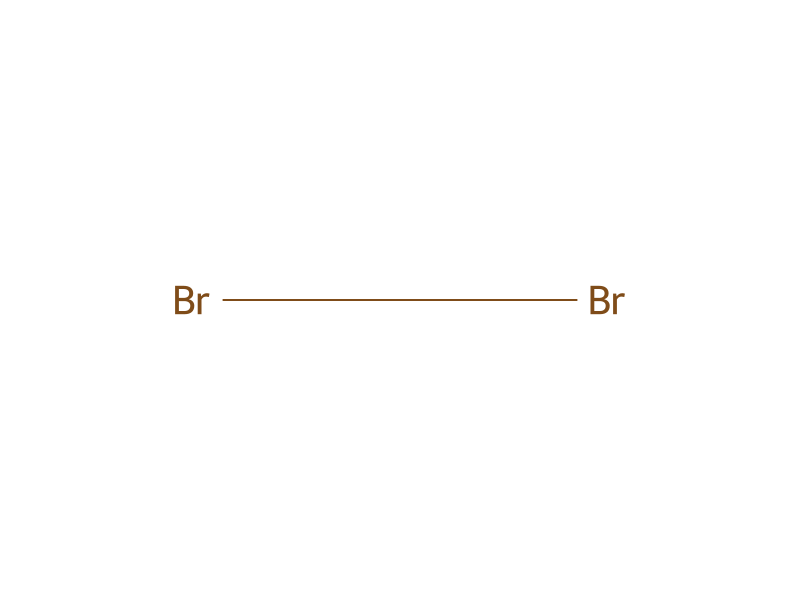
650 mg (1.28 mmol) of N-(2,5-di-tert-butylphenyl)perylene-3,4-dicarboximide (2b) are dissolved in 100 ml of chlorobenzene, the red solution is mixed with 650 mg of anhydrous potassium carbonate, and 0.30 ml of bromine in 10 ml of chlorobenzene is then added dropwise to the mixture. The reaction mixture is stirred at 40°-50° C. for 2 h, the temperature is then increased to 50°-60° C. and maintained there for another 5 h, and the chlorobenzene is then evaporated off on a rotary evaporator, during which substantial amounts of bromine are also removed. A thin-layer chromatogram (toluene/silica gel) shows that no more starting material is present in the residue obtained, which could only be removed with difficulty. Several separations by column chromatography on silica gel using chloroform afford 610 mg of an orange powder which is recrystallized by extraction with ethyl acetate. Yield 570 mg (77%) of orange-coloured small needles having a slight solid fluorescence, m.p. >320° C. Rf (CHCl3 /silica gel)=0.43. UV (CHCl3): λmax (ε)=511 nm (36058), 486 (35564), 357 (3430). Fluorescence (CHCl3): λmax (Irel)=542 nm (1), 572. The position of the bromine substituent could be determined by comparison with the spectrum of 9-bromo-N-(1-hexylheptyl)perylene-3,4-dicarboximide and 1H spectra. The substitution pattern of the comparison substance was determined by a combination of COSY and NOESY spectra.
Workup
- additionis then added dropwise to the mixture
- temperaturethe temperature is then increased to 50°-60° C.
- temperaturemaintained there for another 5 h
- customthe chlorobenzene is then evaporated off on a rotary evaporator, during which substantial amounts of bromine
- customare also removed
- customobtained
- customwhich could only be removed with difficulty
Sources & evidence
- ORD record
- ord-68185f17e08c429b90aa290ac0e571b4
- Source dataset
- uspto-grants-1997_07
- Patent number
- US05650513
Reaction notes
Loading…