Potassium Carbonate → Pyrrolidine, 1-(2-(m-bromophenoxy)ethyl)-
Reaction equation

[Br:1][C:2]1[CH:3]=[C:4]([OH:8])[CH:5]=[CH:6][CH:7]=1.Cl[CH2:10][CH2:11][N:12]1[CH2:16][CH2:15][CH2:14][CH2:13]1.C(=O)([O-])[O-].[K+].[K+]>CN(C=O)C>[Br:1][C:2]1[CH:3]=[C:4]([CH:5]=[CH:6][CH:7]=1)[O:8][CH2:10][CH2:11][N:12]1[CH2:16][CH2:15][CH2:14][CH2:13]1Participants
Reactant 3

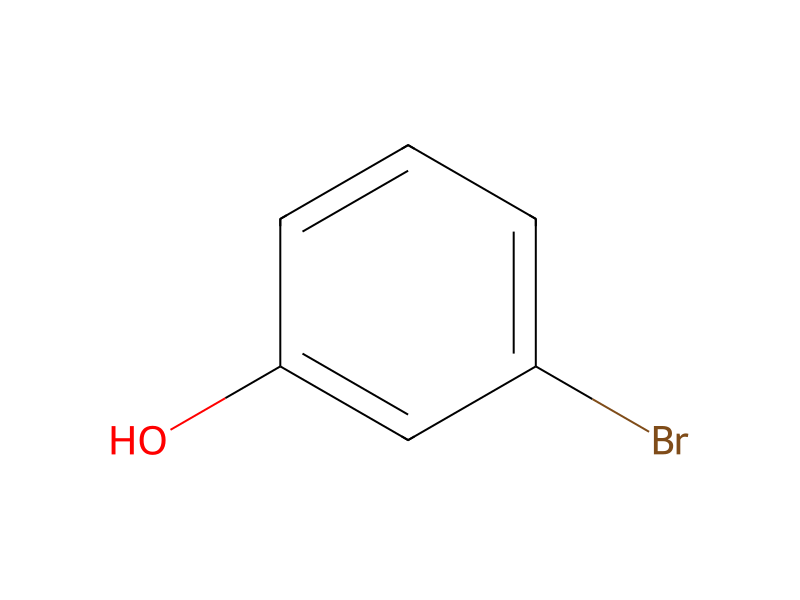

Product 1

Reagents, catalysts & solvents 1

Procedure
3-bromo-phenol (5.34 g, 30.9 mmol, 1 equiv), 1-(2-chloro-ethyl)-pyrrolidine (5.24 g, 30.9 mmol, 1 equiv) and potassium carbonate (K2CO3) (34 g, 24.7 mmol, 8 equiv) were weighed out into a 500 mL round bottom flask, were diluted with 150 mL DMF and stirred for 2 days. The contents were poured onto ethyl acetate water mixture and extracted once. The organic layer was separated, washed with brine and dried over sodium sulfate (Na2SO4). Filtration followed by concentration provided crude product as a pale yellow oil. Column chromatography (1:9 ethyl acetate/hexanes) provided desired product as a yellow oil (3.6 g, 43% yield). 1H NMR (DMSO-d6): δ 1.65-1.69 (m, 4H), 2.72 (s, 1H), 2.75 (t, J=5.8 Hz, 2H), 2.88 (s, 1H), 4.06 (t, J=5.8 Hz, 2H), 6.95 (dd, J=8.35 Hz, 1H), 7.11 (d, J=7.7, 1H), 7.13-7.14 (m, 1H), 7.22 (t, J=8.1 Hz, 1H).
Workup
- additionThe contents were poured onto ethyl acetate water mixture
- extractionextracted once
- customThe organic layer was separated
- washwashed with brine
- dry with materialdried over sodium sulfate (Na2SO4)
- filtrationFiltration
- concentrationfollowed by concentration
- customprovided crude product as a pale yellow oil
Sources & evidence
- ORD record
- ord-7d54b8fa887d4b1289471392838182bc
- Source dataset
- uspto-grants-2008_11
- Patent number
- US07456176B2
Reaction notes
Loading…