Methyl vinyl ketone → Sodium Hydroxide
Reaction equation

C(C(C)=[O:4])=C.Cl[CH2:7][CH2:8][CH2:9][C:10]#[C:11][CH2:12][CH2:13][C:14](=[O:16])[CH3:15].[C-:17]#[N:18].[Na+:19]>C(O)C>[C:17]([CH2:7][CH2:8][CH2:9][C:10]#[C:11][CH2:12][CH2:13][C:14](=[O:16])[CH3:15])#[N:18].[OH-:4].[Na+:19]Participants
Reactant 3
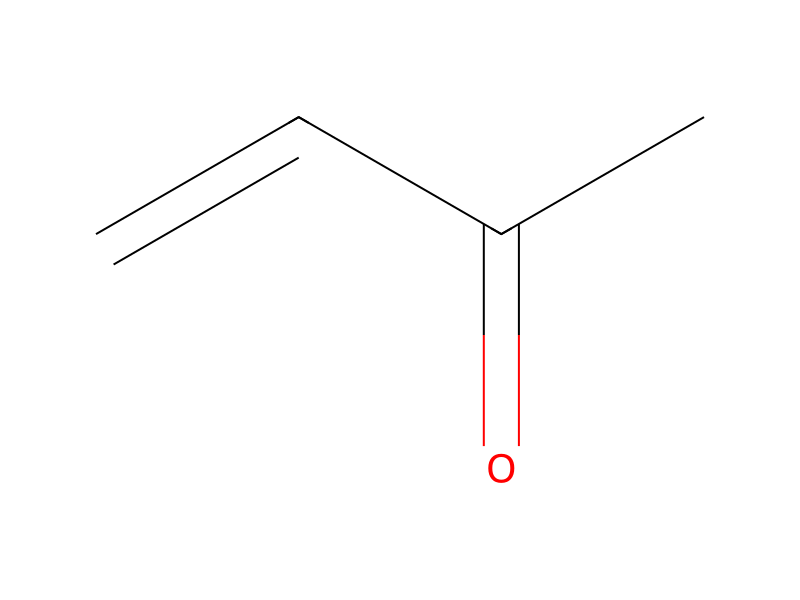


Product 2


Reagents, catalysts & solvents 1

Procedure
The manufacture of the latter novel intermediates is exemplified by the consecutive synthetic steps involving first, reaction of 5-chloropent-1-yne with butyl lithium to form the corresponding lithium acetylide, reaction of that organometallic compound with boron trifluoride or boron trichloride to afford the tri-(5-chloropent-1-ynyl) boron derivative, which is reacted with methyl vinyl ketone to afford 9-chloro-5-nonyn-2-one, reaction of the latter substance with sodium cyanide in aqueous ethanol to yield 9-cyano-5-nonyn-2-one, saponification of that nitrile with aqueous sodium hydroxide in ethanol to produce 9-oxo-5-decynoic acid, followed by reduction of the olefinic double bond, thus affording the 9-oxo-5-decenoic acids. The cis-acid is conveniently produced by catalytic hydrogenation, e.g. with a palladium-on-barium sulfate catalyst in the presence of a catalyst poison such as quinoline, while the trans-acid is obtained by chemical reduction, e.g. with sodium and liquid ammonia.
Workup
- customto afford
Sources & evidence
- ORD record
- ord-d9ebb1b2bd71409ba1f31f0cb7da887e
- Source dataset
- uspto-grants-1980_09
- Patent number
- US04223158
Reaction notes
Loading…