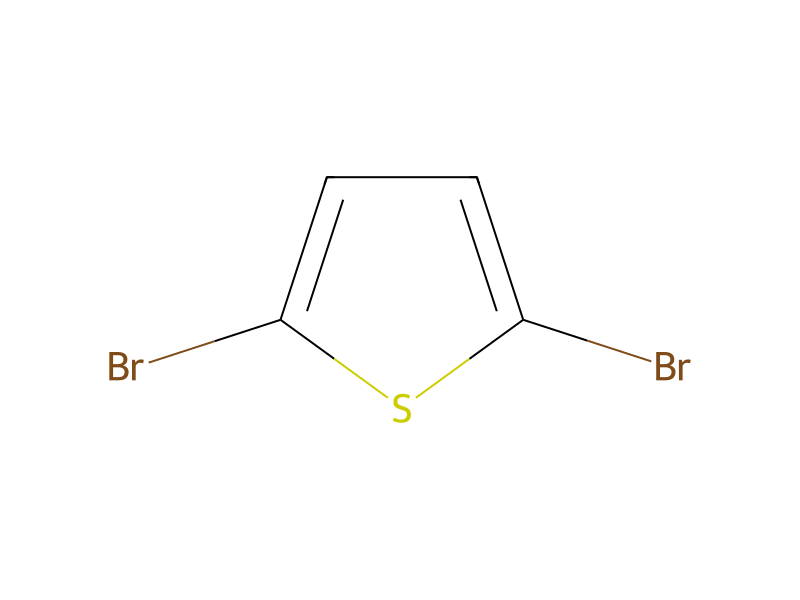
2,5-Dibromothiophene → 4,7-Dibromo-2,1,3-benzothiadiazole
Reaction equation

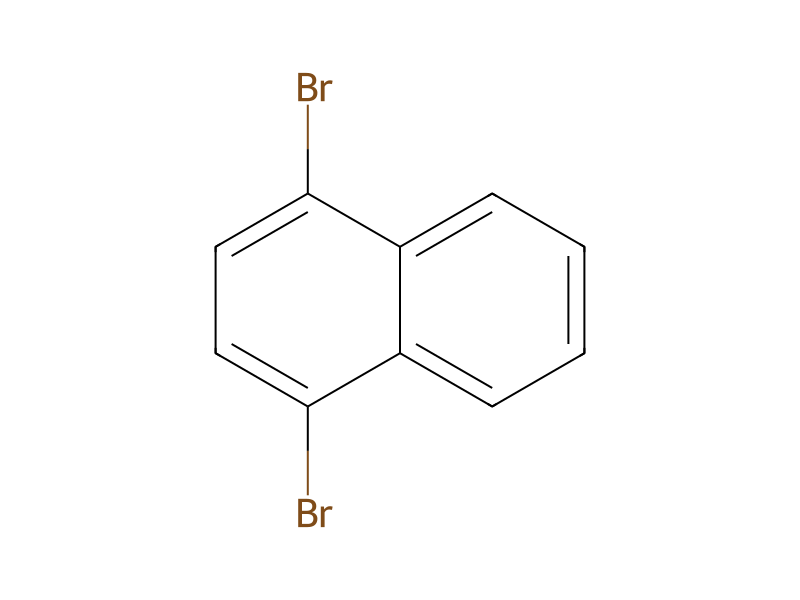
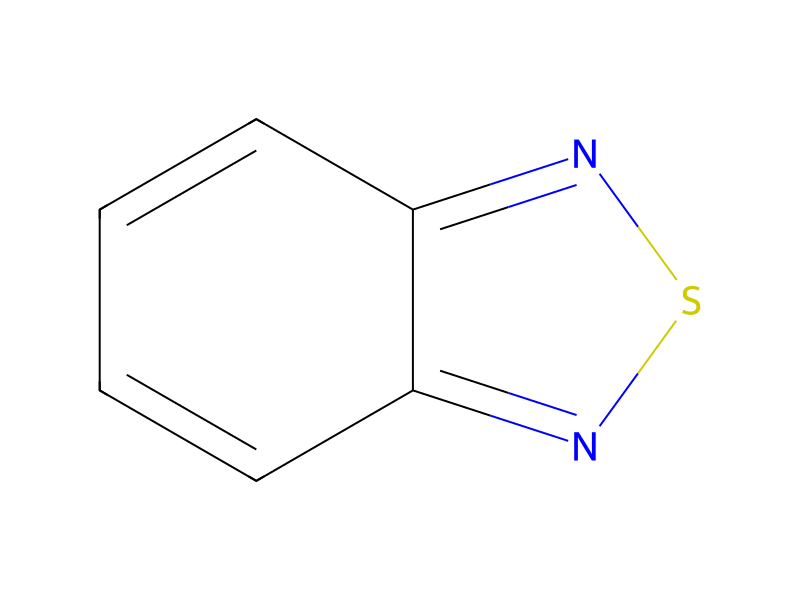
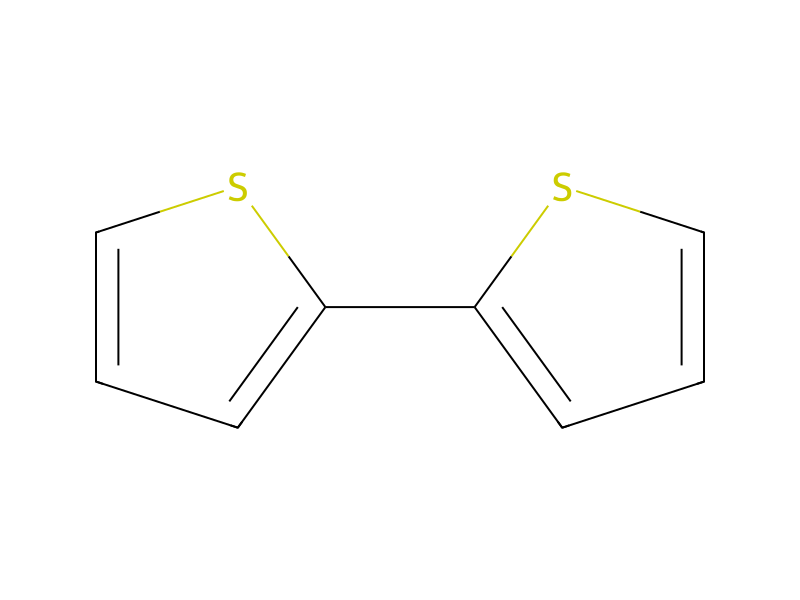
[Br:1][C:2]1C2C(=CC=CC=2)[C:5](Br)=[CH:4][CH:3]=1.Br[C:14]1[S:15][C:16]([Br:19])=[CH:17][CH:18]=1.BrC1C2C(C(Br)=C3C=1C=CC=C3)=CC=CC=2.[S:36]1C=CC=C1C1SC=CC=1.N1SN=C2C=CC=CC=12.[Br:55][C:56]1[C:64]2[C:60](=[N:61][S:62][N:63]=2)[C:59]([Br:65])=[CH:58][CH:57]=1.[Se].[Br:67][C:68]1[CH:77]=[CH:76][C:75]([Br:78])=[C:74]2[C:69]=1[N:70]=C(C1C=CC=CC=1)C(C1C=CC=CC=1)=[N:73]2>>[Br:19][C:16]1[S:15][C:14]([C:5]2[S:36][C:2]([Br:1])=[CH:3][CH:4]=2)=[CH:18][CH:17]=1.[Br:65][C:59]1[C:60]2[C:64](=[N:63][S:62][N:61]=2)[C:56]([Br:55])=[CH:57][CH:58]=1.[Br:67][C:68]1[C:69]([NH2:70])=[C:74]([NH2:73])[C:75]([Br:78])=[CH:76][CH:77]=1Participants
Reactant 8


Product 3

Procedure
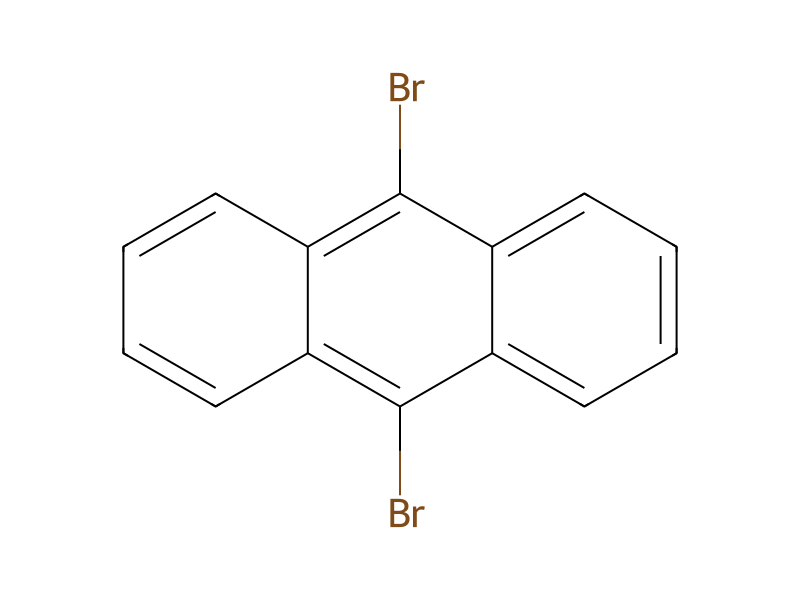
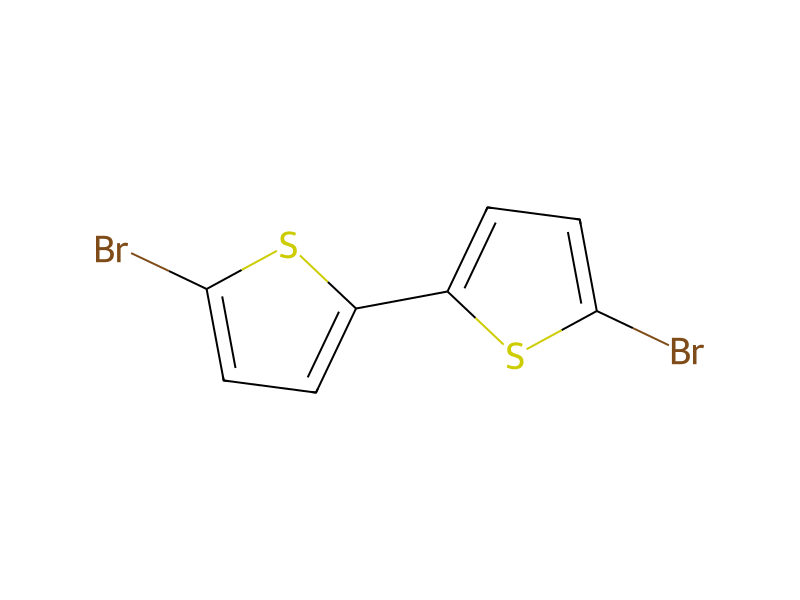
1,4-Dibromonaphthalene (M-16), 2,5-dibromothiophene (M-11), and 9,10-dibromoanthracene (M-18) are available commercially from Acros Organics, a division of Fisher Scientific Co. or Aldrich Chemicals. 5,5′-dibromo-2,2′-bithiophene (M-12) is prepared by bromination of 2,2′-bithiophene, as reported by R. M. Kellogg, A. P. Schaap, and H. Wynberg in Journal of Organic Chemistry, Vol. 34, pp. 343-346 (1969). 4,7-dibromo-2,1,3-benzothiadiazole (M-15) is prepared by bromination of 2,1,3-benzothiadiazole as reported by K. Pilgram, M. Zupan, and R. Skiles in Journal of Heterocyclic Chemistry, Vol. 7, pp. 629-633 (1970). 3,6-Dibromo-1,2-phenylenediamine is synthesized from 4,7-dibromo-2,1,3-benzothiadiazole as reported for the selenium analog reported by C. W. Bird, G. W. H. Cheeseman, and A. A. Sarsfield in Journal of Chemical Society, pp. 4767-4670 (1963) and was converted to 5,8-dibromo-2,3-diphenylquinoxaline (M-17) as reported in the same reference.
Sources & evidence
- ORD record
- ord-ed35214d8ca44dd78954aff50d1c54c5
- Source dataset
- uspto-grants-2002_03
- Patent number
- US06362310B1
Reaction notes
Loading…