Triphenylphosphine → (S)-3-[5-(1-t-butoxycarbonylamino-2-biphenyl-4-yl-ethyl)tetrazol-1-yl]-propionitrile
Reaction equation

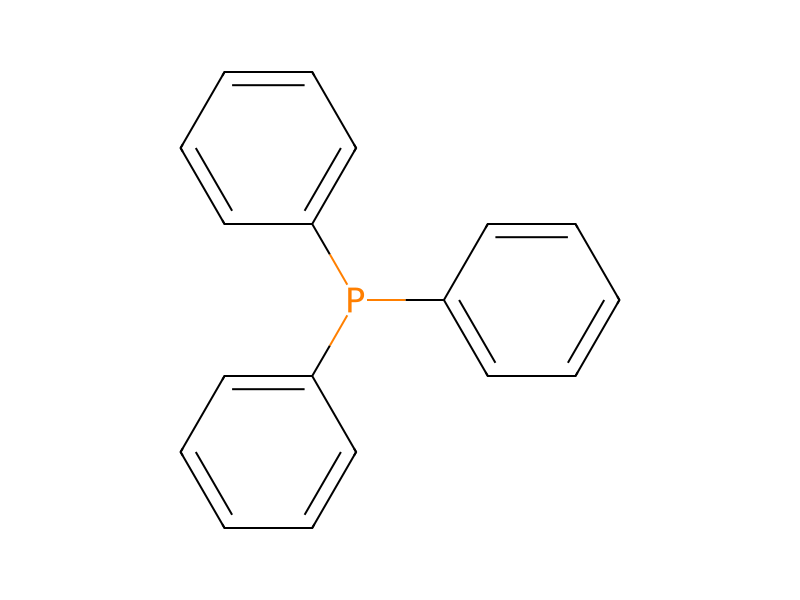
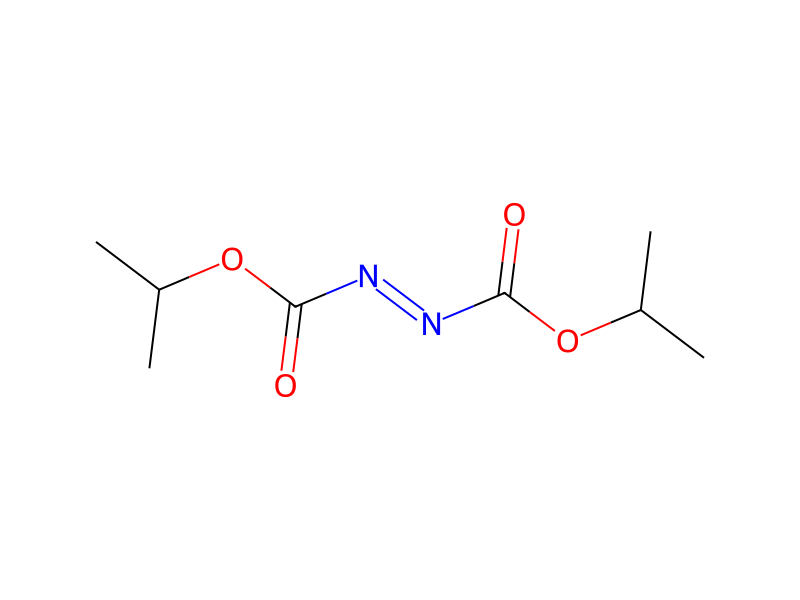
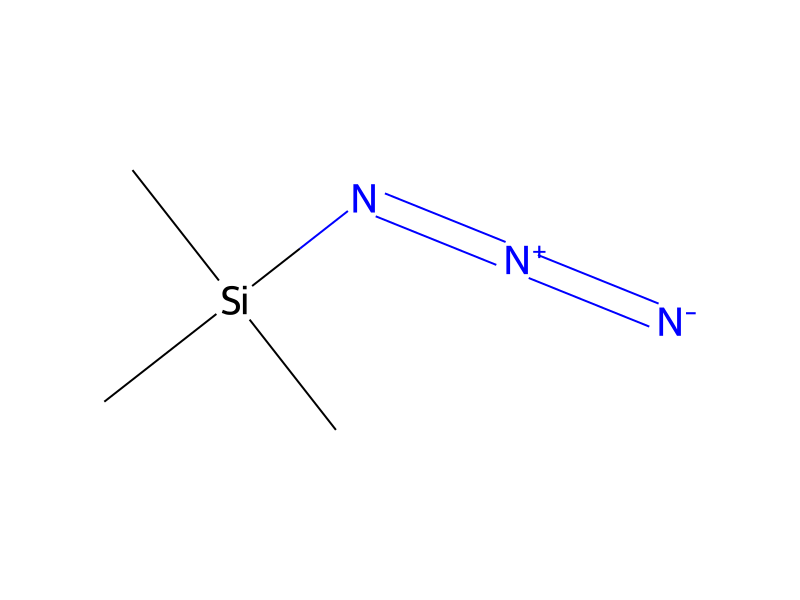
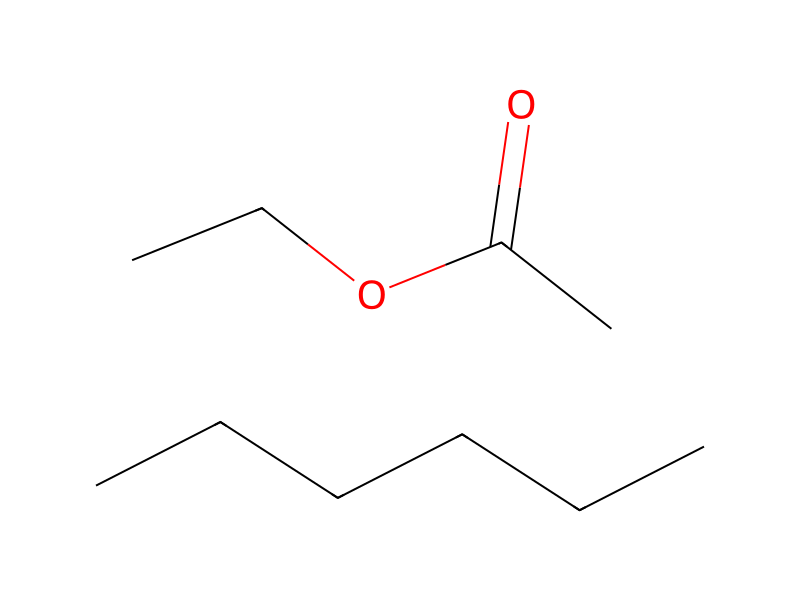
[C:1]([O:5][C:6]([NH:8][C@@H:9]([CH2:17][C:18]1[CH:23]=[CH:22][C:21]([C:24]2[CH:29]=[CH:28][CH:27]=[CH:26][CH:25]=2)=[CH:20][CH:19]=1)[C:10]([NH:12][CH2:13][CH2:14][C:15]#[N:16])=O)=[O:7])([CH3:4])([CH3:3])[CH3:2].C1(P(C2C=CC=CC=2)C2C=CC=CC=2)C=CC=CC=1.N(C(OC(C)C)=O)=NC(OC(C)C)=O.C[Si]([N:67]=[N+:68]=[N-:69])(C)C.[SiH3]N=[N+]=[N-]>C(#N)C.C(OCC)(=O)C.CCCCCC>[C:1]([O:5][C:6]([NH:8][C@H:9]([C:10]1[N:12]([CH2:13][CH2:14][C:15]#[N:16])[N:69]=[N:68][N:67]=1)[CH2:17][C:18]1[CH:23]=[CH:22][C:21]([C:24]2[CH:29]=[CH:28][CH:27]=[CH:26][CH:25]=2)=[CH:20][CH:19]=1)=[O:7])([CH3:4])([CH3:3])[CH3:2]Participants
Reactant 5


Product 1

Reagents, catalysts & solvents 2
Procedure
To a stirred solution of (S)-2-t-butoxycarbonylamino-3-biphenyl-4-yl-N-(2-cyanoethyl)-propionamide (20 g, 51.2 mmol) in acetonitrile (220 mL) under nitrogen is added triphenyl phosphine (33.6 g, 128 mmol). The suspension is cooled to 0°. Diisopropyl azodicarboxylate (24.8 mL, 125.6 mmol) is placed in an addition funnel. In a separate addition funnel is placed trimethylsilyl azide (16.8 mL, 127.2 mmol). The two reagents are introduced dropwise, allowing the azoester to be added about 1 minute faster than the silyl azide and keeping the reaction temperature below 10°. The slightly yellow suspension is gradually (10°/hour) warmed up to 35°. The reaction is then monitored by TLC (ethyl acetate/hexane:3/1) until practically complete conversion is observed. A clear solution is then usually obtained. The excess of azide is destroyed by cooling the solution to 10° and adding sodium nitrite (3.2 g) in water (16 mL), followed by acetic acid (16 mL). The mixture is stirred at 20°-25° for at least 2 hours, until a nitrite-free aliquot of the acetonitrile layer shows a negative zide test (ferric chloride paper). The lower salt phase is separated and the organic layer is concentrated in vacuo at 45°. The semi-solid residue is dissolved in isopropanol at 80°. Some insoluble material is filtered from the hot solution. The title compound crystallizes at about 60° after seeding. The suspension is cooled to 25° within 2 hours then left at 0°-5° for 1 hour. The product is filtered, washed with cold ispropanol (3×20 mL) and dried under reduced pressure at 50° to constant weight to obtain (S)-3-[5-(1-t-butoxycarbonylamino-2-biphenyl-4-yl-ethyl)-tetrazol-1-yl]-propionitrile.
Workup
- temperatureThe suspension is cooled to 0°
- additionIn a separate addition funnel
- additionThe two reagents are introduced dropwise
- customthe reaction temperature below 10°
- temperaturewarmed up to 35°
- customA clear solution is then usually obtained
- customThe excess of azide is destroyed
- temperatureby cooling the solution to 10°
- additionadding sodium nitrite (3.2 g) in water (16 mL)
- customThe lower salt phase is separated
- concentrationthe organic layer is concentrated in vacuo at 45°
- dissolutionThe semi-solid residue is dissolved in isopropanol at 80°
- filtrationSome insoluble material is filtered from the hot solution
- customThe title compound crystallizes at about 60° after seeding
- temperatureThe suspension is cooled to 25° within 2 hours
- filtrationThe product is filtered
- washwashed with cold ispropanol (3×20 mL)
- customdried under reduced pressure at 50° to constant weight
Sources & evidence
- ORD record
- ord-c9b4e305865b4c5485bb9b851042738e
- Source dataset
- uspto-grants-1993_12
- Patent number
- US05273990
Reaction notes
Loading…