2-(4-bromophenyl)-3,6-dihydro-2H-pyran → 2-(4-Bromophenyl)oxolane
Reaction equation

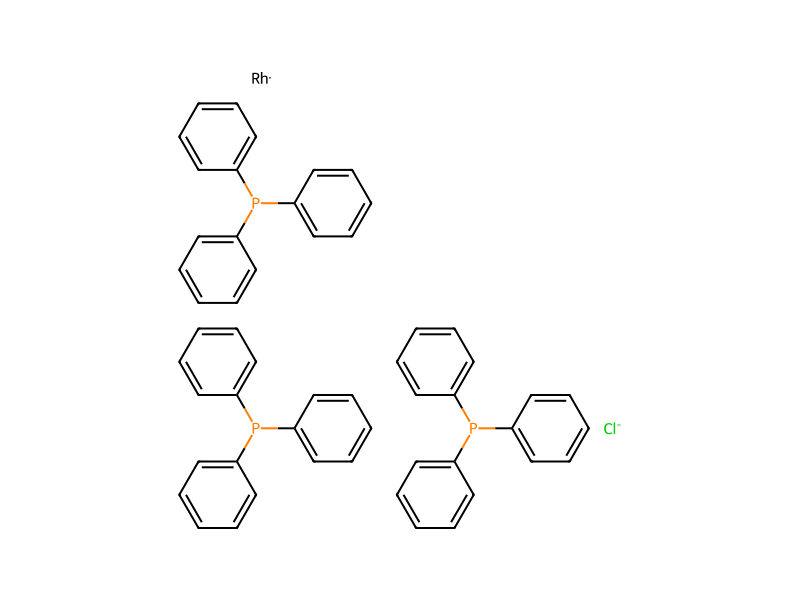
[Br:1][C:2]1[CH:7]=[CH:6][C:5]([CH:8]2[CH2:13][CH:12]=[CH:11]C[O:9]2)=[CH:4][CH:3]=1.[H][H]>C1(C)C=CC=CC=1.C(O)C.C1C=CC(P(C2C=CC=CC=2)C2C=CC=CC=2)=CC=1.C1C=CC(P(C2C=CC=CC=2)C2C=CC=CC=2)=CC=1.C1C=CC(P(C2C=CC=CC=2)C2C=CC=CC=2)=CC=1.[Cl-].[Rh]>[Br:1][C:2]1[CH:3]=[CH:4][C:5]([CH:8]2[CH2:13][CH2:12][CH2:11][O:9]2)=[CH:6][CH:7]=1Participants
5




Procedure
A solution of 2-(4-bromophenyl)-3,6-dihydro-2H-pyran (140 mg, 0.586 mmol) in toluene/ethanol (10 mL, v/v=1/1) was charged into a hydrogenation Parr bottle followed by tris(triphenylphosphine)rhodium(I) chloride (55 mg, 0.0586 mmol). The mixture was set up for 45 psi of hydrogen at 80° C. overnight. The mixture was filtered through celite and the filtrate was concentrated. The residue was purified by silica gel chromatography to give the title compound (50 mg, 35%) as a colorless oil. 1H NMR (400 MHz, CDCl3) δ ppm 7.46 (d, 2H) 7.23 (d, 2H) 4.29 (d, 1H) 4.13 (m, 1H) 3.60 (t, 1H) 1.95 (m, 1H) 1.81 (d, 1H) 1.60 (m, 3H) 1.27 (m, 1H).
Workup
- filtrationThe mixture was filtered through celite
- concentrationthe filtrate was concentrated
- customThe residue was purified by silica gel chromatography
Sources & evidence
- ORD record
- ord-7f39b4808d9a470a9121ee8f78e4dbcc
- Source dataset
- uspto-grants-2014_11
- Patent number
- US08889730B2
Reaction notes
Loading…