Formaldehyde → 5-(2-Piperidinomethylpropionyl)-3-phenylisoxazole
Reaction equation

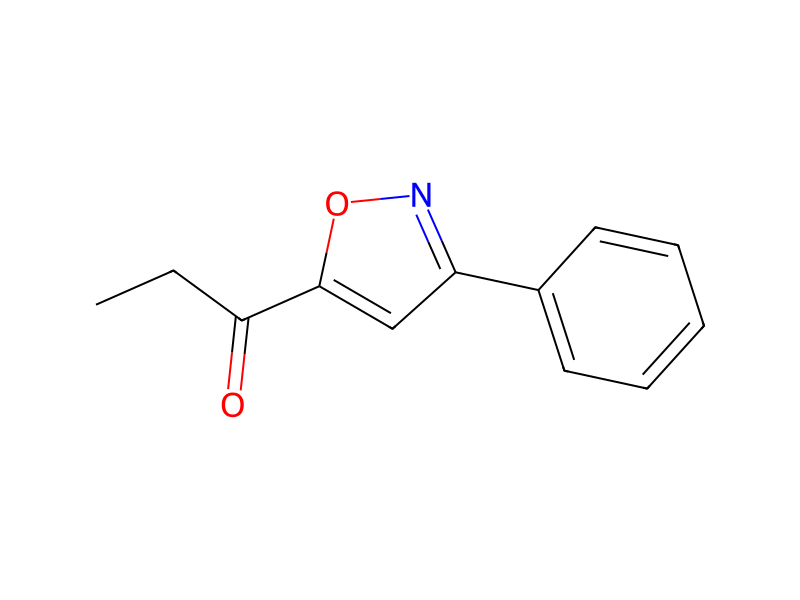
[C:1]([C:5]1[O:9][N:8]=[C:7]([C:10]2[CH:15]=[CH:14][CH:13]=[CH:12][CH:11]=2)[CH:6]=1)(=[O:4])[CH2:2][CH3:3].[NH:16]1[CH2:21][CH2:20][CH2:19][CH2:18][CH2:17]1.[CH2:22]=O>C(O)C>[N:16]1([CH2:3][CH:2]([CH3:22])[C:1]([C:5]2[O:9][N:8]=[C:7]([C:10]3[CH:15]=[CH:14][CH:13]=[CH:12][CH:11]=3)[CH:6]=2)=[O:4])[CH2:21][CH2:20][CH2:19][CH2:18][CH2:17]1Participants
5
Reactant 3


Product 1

Reagents, catalysts & solvents 1

Procedure
Added to 10 ml of ethyl alcohol were 2.0 g (10.0 mmol) of 5-propionyl-3-phenylisoxazole and 1.7 g (20.0 mmol) of piperidine, followed by the dropwise addition of 1.63 ml (20.0 mmol) of a 37% aqueous solution of formaldehyde under ice cooling. After the reaction mixture was stirred for 2 hours at room temperature, the solvent was distilled off under reduced pressure. The residue was dissolved in ethyl ether. The organic layer was washed with water and then dried over anhydrous sodium sulfate. The solvent was distilled off under reduced pressure, whereby the target compound, namely, 5-(2-piperidinomethylpropionyl)-3-phenylisoxazole was obtained as crystals.
Workup
- distillationthe solvent was distilled off under reduced pressure
- dissolutionThe residue was dissolved in ethyl ether
- washThe organic layer was washed with water
- dry with materialdried over anhydrous sodium sulfate
- distillationThe solvent was distilled off under reduced pressure, whereby the target compound
Sources & evidence
- ORD record
- ord-4e207a65436b45e18fb44158e76e4887
- Source dataset
- uspto-grants-1991_10
- Patent number
- US05055585
Reaction notes
Loading…