Formaldehyde → 4-Phenoxy-2-butynyl acetate
Reaction equation

[CH2:1]([O:4][C:5]1[CH:10]=[CH:9][CH:8]=[CH:7][CH:6]=1)[C:2]#[CH:3].C([Li])CCC.C=O.N1C=CC=CC=1.[C:24]([O:27][C:28](=O)C)(=[O:26])[CH3:25]>C1COCC1>[C:24]([O:27][CH2:28][C:3]#[C:2][CH2:1][O:4][C:5]1[CH:10]=[CH:9][CH:8]=[CH:7][CH:6]=1)(=[O:26])[CH3:25]Participants
Reactant 5

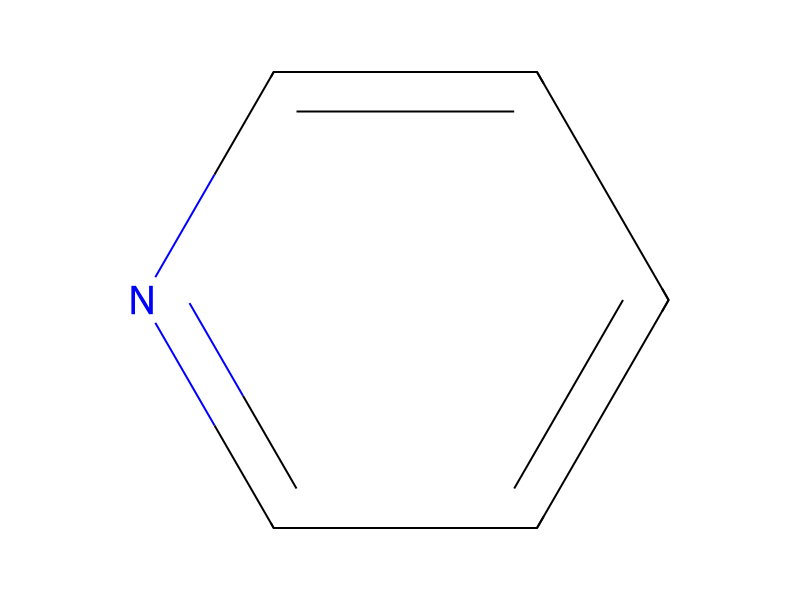
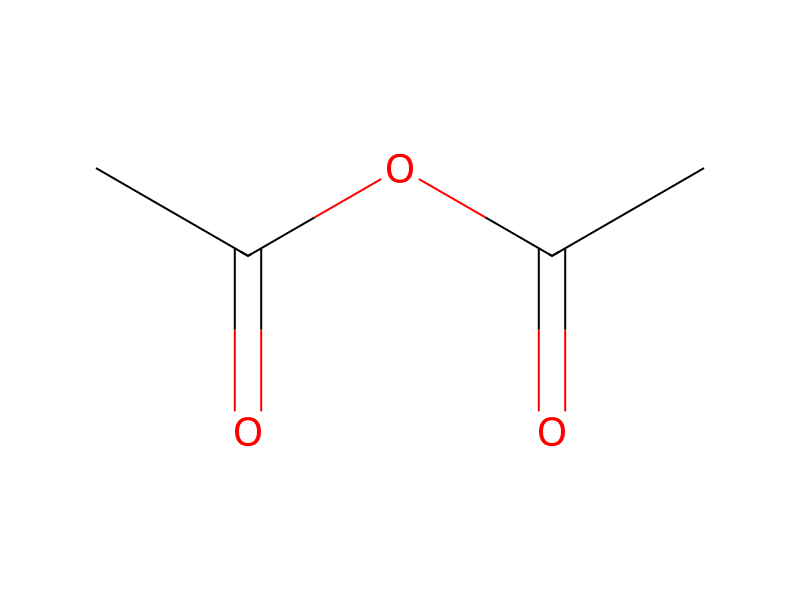

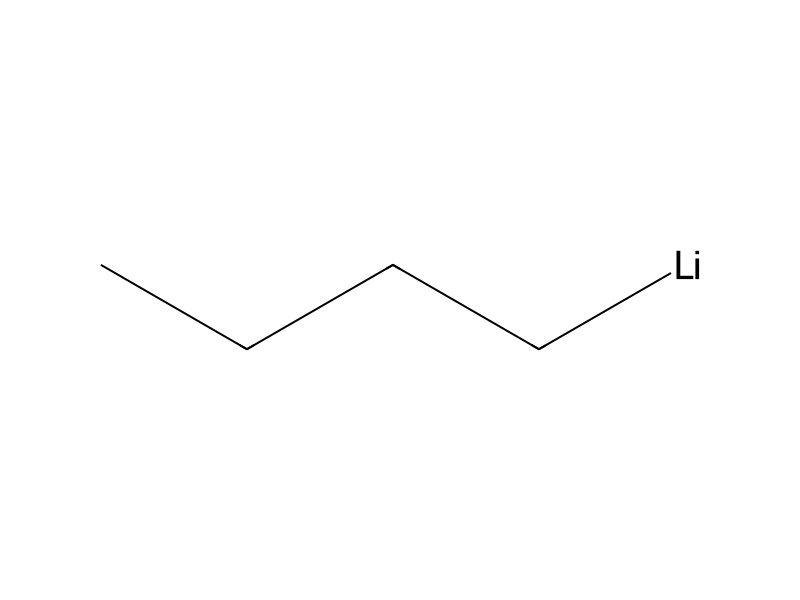
Product 1

Reagents, catalysts & solvents 1
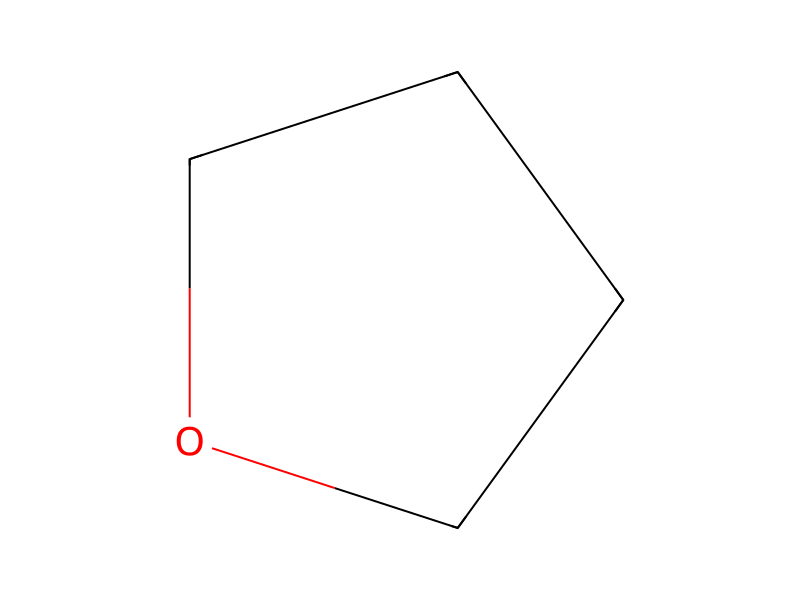
Conditions
- Temperature
- -20 °C
Procedure
A 0.5-L reactor (#1) was equipped with a thermometer, an addition funnel, an overhead stirrer, and a nitrogen inlet. 150 mL of THF was charged followed by 27.5 g (0.21 mole) of phenyl propargyl ether. The solution was cooled to −20° C. 100 mL (0.25 mole) of n-butyllithium in hexanes was charged into an addition funnel. This solution was added to the reactor at a temperature between −25 and −35° C. The temperature was controlled by the rate of addition and the mixture was stirred for 1 h at −25 to −35° C. A second 1-L reactor (#2) was equipped with a thermometer, an overhead stirrer and a cannulation device. 120 mL of THF was charged followed by 9.4 g (0.42 mol) of paraformaldehyde as a solid in one portion. The resulting suspension was stirred for 5 min. and cooled to 5–10° C. The contents of reactor #1 were cannulated into reactor #2 maintaining temperature in reactor #2 between 5 and 15° C. The temperature in reactor #1 was maintained below −15° C. The cooling bath from reactor #2 was removed and the reaction mixture was allowed to warm up slowly to 20–25° C. Stirring was continued for 16 h at ambient temperature. 200 mL of water was added to the reaction mixture and the mixture was stirred for 15–30 min at ambient temperature. The reaction mixture was extracted twice with 200 mL and then 100 mL of ethyl acetate. The combined organic solution was washed with 200 mL of water. The organic solution was dried with 50 g of anhydrous sodium sulfate. The drying agent was filtered off and rinsed with 50 mL of ethyl acetate. The filtrate was transferred into a 1-L reactor fitted with an overhead stirrer. Pyridine (67 mL, 0.83 mol) was charged followed by acetic anhydride (39 mL, 0.42 mol). The solution was stirred overnight at ambient temperature. The solution was washed sequentially with water (200 mL), sodium bicarbonate solution (2×150 mL) until pH=7–8, hydrochloric acid solution (2×150 mL) until pH=1–3, and brine (1×150 mL). The solution was dried with anhydrous sodium sulfate (50 g). The drying agent was filtered off, and the filtrate was concentrated in vacuo at a temperature that did not exceed 60° C. to yield 37 g (87% yield, HPLC strength 65%) of product as a dark-red slightly viscous fluid.
Workup
- additionThis solution was added to the reactor at a temperature between −25 and −35° C
- additionThe temperature was controlled by the rate of addition
- stirringThe resulting suspension was stirred for 5 min.
- temperaturecooled to 5–10° C
- customThe contents of reactor #1 were cannulated into reactor
- custom#2 between 5 and 15° C
- temperatureThe temperature in reactor #1 was maintained below −15° C
- customThe cooling bath from reactor #2 was removed
- temperatureto warm up slowly to 20–25° C
- stirringStirring
- waitwas continued for 16 h at ambient temperature
- addition200 mL of water was added to the reaction mixture
- stirringthe mixture was stirred for 15–30 min at ambient temperature
- extractionThe reaction mixture was extracted twice with 200 mL
- washThe combined organic solution was washed with 200 mL of water
- dry with materialThe organic solution was dried with 50 g of anhydrous sodium sulfate
- filtrationThe drying agent was filtered off
- washrinsed with 50 mL of ethyl acetate
- customThe filtrate was transferred into a 1-L reactor
- customfitted with an overhead stirrer
- stirringThe solution was stirred overnight at ambient temperature
- washThe solution was washed sequentially with water (200 mL), sodium bicarbonate solution (2×150 mL) until pH=7–8, hydrochloric acid solution (2×150 mL) until pH=1–3, and brine (1×150 mL)
- dry with materialThe solution was dried with anhydrous sodium sulfate (50 g)
- filtrationThe drying agent was filtered off
- concentrationthe filtrate was concentrated in vacuo at a temperature that
- customdid not exceed 60° C.
- customto yield 37 g (87% yield, HPLC strength 65%) of product as a dark-red slightly viscous fluid
Sources & evidence
- ORD record
- ord-f0007eb910ae49088d3df96af4e35434
- Source dataset
- uspto-grants-2007_02
- Patent number
- US07179911B2
Reaction notes
Loading…