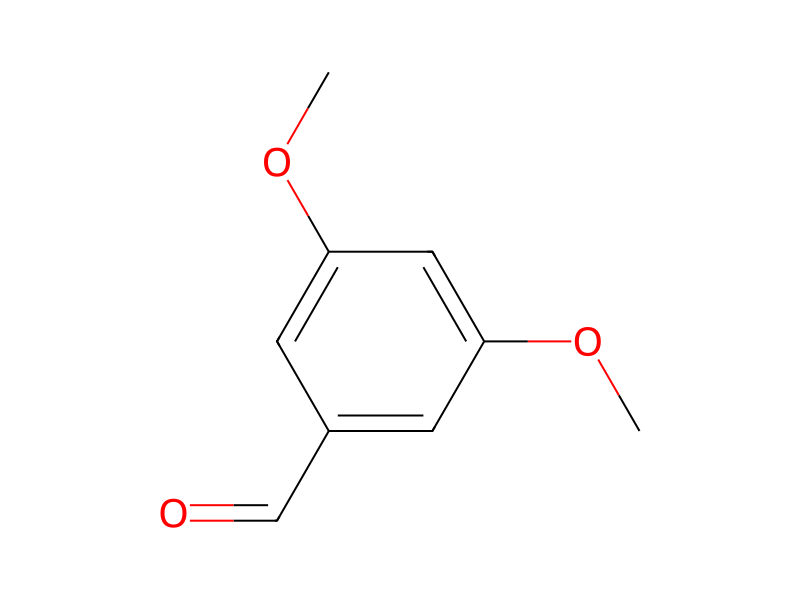
3,5-Dimethoxybenzaldehyde → 1-(3,5-Dimethoxyphenyl)-5-phenoxy-1-pentene
Reaction equation

[Br-].C1([P+](C2C=CC=CC=2)(C2C=CC=CC=2)[CH2:9][CH2:10][CH2:11][CH2:12][O:13][C:14]2[CH:19]=[CH:18][CH:17]=[CH:16][CH:15]=2)C=CC=CC=1.C([Li])CCC.[CH3:37][O:38][C:39]1[CH:40]=[C:41]([CH:44]=[C:45]([O:47][CH3:48])[CH:46]=1)[CH:42]=O>CCOCC>[CH3:48][O:47][C:45]1[CH:44]=[C:41]([CH:42]=[CH:9][CH2:10][CH2:11][CH2:12][O:13][C:14]2[CH:15]=[CH:16][CH:17]=[CH:18][CH:19]=2)[CH:40]=[C:39]([O:38][CH3:37])[CH:46]=1Participants




Procedure
The triphenyl(4-phenoxybutyl)phosphonium bromide was converted to an ylide using n-butyllithium and refluxing with 3,5-dimethoxybenzaldehyde in ether for 3 hours gave 1-(3,5-dimethoxyphenyl)-5-phenoxy-1-pentene as a 2:1 mixture of E:Z isomers. Purification was by column chromatography and gave a 60% yield. Subsequently, hydrogenation of 1-(3,5-dimethyoxypheny)-5-phenoxy-1-pentene over palladium on carbon (10%) under 50 psi of hydrogen gas resulted in the quantitative reduction of the pentene carbon-carbon double bond in to yield 1-(3,5-dimethoxyphenyl)-5-phenoxy-1-pentane. This phenoxy-l-pentane was then contacted with boron tribromide in benzene for 72 hours at 25° C. to deprotect the methoxy groups of the compound and substitute the phenoxy moiety with bromide to form 5'-bromo olivetol. After purification, an 80% yield was achieved.
Sources & evidence
- ORD record
- ord-8fba8a20c66c48e081972ffe5846b190
- Source dataset
- uspto-grants-1999_02
- Patent number
- US05872148
Reaction notes
Loading…