Baccatin Iii → 10-deacetylbaccatin III
Reaction equation
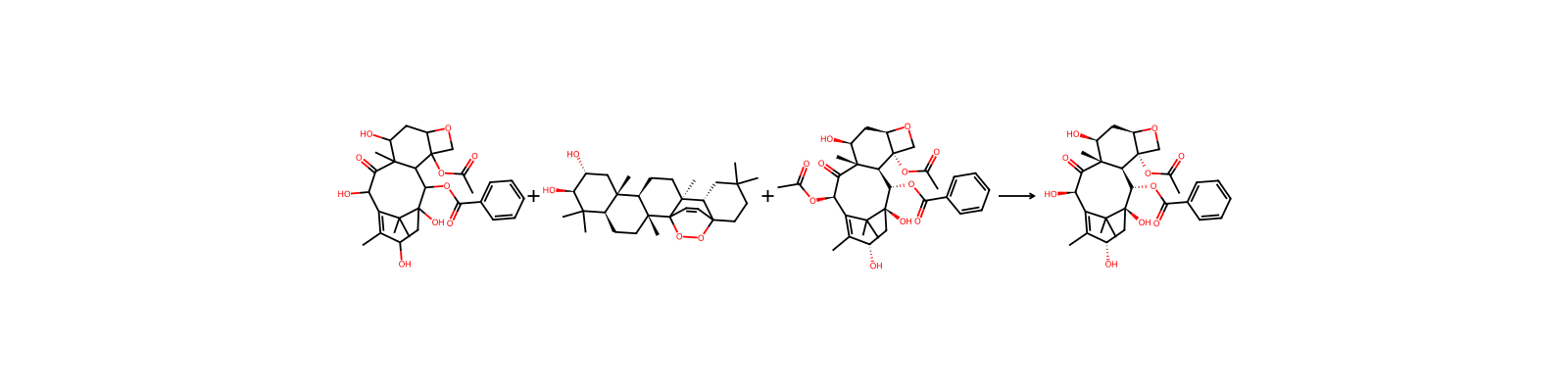
[CH3:1][C:2]1[CH:19]([OH:20])[CH2:18][C:14]2([OH:21])[C:15]([CH3:17])([CH3:16])[C:3]=1[CH:4]([OH:39])[C:5]([C:7]1([CH3:38])[CH:12]([CH:13]2[O:22][C:23]([C:25]2[CH:30]=[CH:29][CH:28]=[CH:27][CH:26]=2)=[O:24])[C:11]2([O:33][C:34]([CH3:36])=[O:35])[CH2:31][O:32][CH:10]2[CH2:9][CH:8]1[OH:37])=[O:6].C[C@]12C34OOC5(CCC(C)(C)C[C@H]5[C@]3(C)CC[C@@H]1[C@@]1(C)C[C@@H](O)[C@H](O)C(C)(C)[C@@H]1CC2)C=C4.CC1[C@@H](O)C[C@]2(O)C(C)(C)C=1[C@@H](OC(C)=O)C([C@@]1(C)[C@H]([C@@H]2OC(C2C=CC=CC=2)=O)[C@]2(OC(C)=O)CO[C@@H]2C[C@@H]1O)=O>>[CH3:1][C:2]1[C@@H:19]([OH:20])[CH2:18][C@:14]2([OH:21])[C:15]([CH3:16])([CH3:17])[C:3]=1[C@@H:4]([OH:39])[C:5]([C@@:7]1([CH3:38])[C@H:12]([C@@H:13]2[O:22][C:23]([C:25]2[CH:26]=[CH:27][CH:28]=[CH:29][CH:30]=2)=[O:24])[C@:11]2([O:33][C:34]([CH3:36])=[O:35])[CH2:31][O:32][C@@H:10]2[CH2:9][C@@H:8]1[OH:37])=[O:6]Participants


Procedure
Alternatively, C-7 CBZ baccatin III can be synthesized directly from 1 0-deacetylbaccatin III as follows: ##STR9## Here, 10-DAB III is dissolved in THF to form a first solution which is cooled to a reduced temperature of less than -20° C., and preferably to -40° C., under a nitrogen atmosphere. At least two equivalents of n-butyl lithium (1.6 M in hexane) are then added dropwise to the first solution to form a second solution which is then stirred for approximately five minutes at the reduced temperature. Preferably, acetyl chloride (one equivalent) is added to the second solution to form a third solution which is stirred at the reduced temperature for approximately thirty minutes. Alternatively, acetic anhydride (one equivalent) may possibly be used in place of the acetyl chloride to acylate the 10-DAB III. In either case, benzyl chloroformate (one equivalent) is next added, and this fourth solution is stirred for an additional thirty minutes at the reduced temperature and then warmed to 0° C. over thirty minutes. The fourth solution is then quenched with cold saturated ammonium chloride at the reduced temperature to remove any excess n-butyl lithium, acetyl chloride and CBZ-Cl; this mixture is then warmed to room temperature. The solvent is removed under vacuum to yield an initial residue which is taken up in ethyl acetate and washed with water to remove unwanted salts. The organic layer is then washed with brine, dried and concentrated under vacuum to yield a final residue. The final residue is chromatographed (silica gel hexanes:ethyl acetate) to yield C-7 CBZ baccatin III. It is important to note that this method represents a direct synthesis of C-7 CBZ baccatin III from 10-DAB III, as the intermediate formed in this reaction is a C-7 lithium alkoxide of baccatin II, that is, the intermediate is not baccatin III itself.
Workup
- customas the intermediate formed in this reaction
Sources & evidence
- ORD record
- ord-c56f3aa086d046a38b16bd4a1129b43e
- Source dataset
- uspto-grants-2000_10
- Patent number
- US06136999
Reaction notes
Loading…